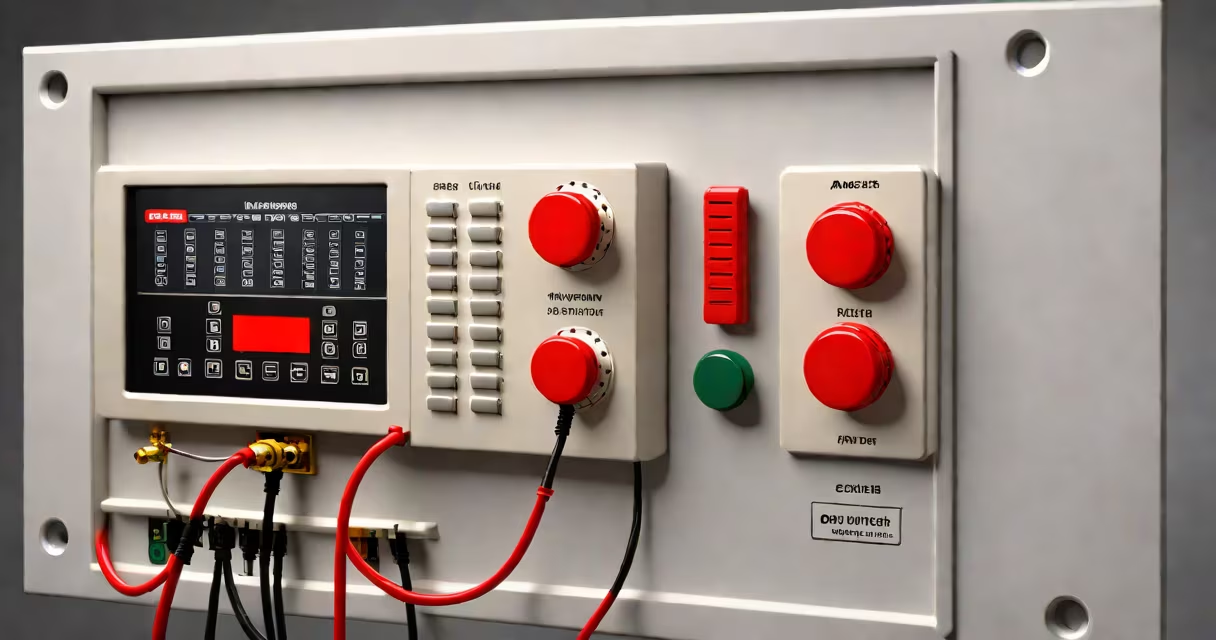
A monitored fire alarm system is a network of interconnected devices that detects smoke, heat, or manual activation and sends real-time alerts to a 24/7 monitoring center, which then notifies emergency services. Unlike basic systems that only sound local alarms, monitored systems ensure immediate professional intervention during emergencies.
These systems are required in many commercial buildings, healthcare facilities, and multi-unit residential properties due to fire safety codes. They integrate sensors, control panels, notification devices, and communication pathways to deliver automated alerts to trained personnel who verify incidents and dispatch firefighters within minutes.
The National Fire Protection Association (NFPA) 72, the standard for fire alarm systems, mandates that monitored systems maintain continuous signal integrity and have backup power sources. A failure in communication or power triggers a fault condition, ensuring ongoing oversight.
When a fire event occurs, detectors sense changes in environmental conditions-such as rising temperature or increased particulate levels-and send signals to the control panel. The panel processes the input and activates audible and visual alarms locally. Simultaneously, it transmits a digital alert via telephone line, cellular network, or IP-based internet connection to a certified monitoring center.
At the monitoring center, trained agents receive the alert and verify the situation using video feeds, access to building schematics, or direct communication with on-site personnel. Once confirmed, they contact local fire departments and provide precise location details, reducing response time. The entire process typically takes under three minutes from alarm activation to emergency dispatch.
For example, a hospital in Chicago installed a monitored system with 12 smoke detectors and 6 manual pull stations. During a kitchen grease fire, the system triggered an alert at 2:14 a.m. The monitoring center verified the alarm through a connected camera feed and dispatched the fire department within 90 seconds. The fire was contained before spreading beyond the kitchen.
Monitored fire alarm systems consist of several integrated parts:
| Component | Purpose | Example Standard |
|---|---|---|
| Control Panel (FACP) | Central processor that receives signals, manages alarms, and communicates with monitoring centers | NFPA 72 Chapter 10 |
| Detectors | Sense smoke, heat, or flame; include ionization, photoelectric, and dual-sensor models | UL 217 (smoke), UL 268 (heat) |
| Manual Pull Stations | Allow occupants to trigger alarms manually in emergencies | UL 1076 |
| Notification Appliances | Strobe lights and horns that warn people to evacuate | UL 1971 (sounders), UL 1998 (strobe lights) |
| Communication Interface | Transmits alarm signals to the monitoring center via landline, cellular, or IP networks | Communications standards per NFPA 72 |
There are two primary types: conventional and addressable. Conventional systems group zones and report zone-level alarms, while addressable systems assign unique IDs to each device, allowing pinpoint location tracking. Addressable systems are preferred in large facilities such as airports and high-rises because they reduce false alarms and improve response accuracy.
One non-obvious distinction: monitored systems do not automatically call emergency services-they rely on human verification at the monitoring center. This prevents accidental dispatches but requires reliable communication. A 2021 study by the Fire Protection Research Foundation found that 94% of monitored system activations were verified correctly, compared to 78% in unmonitored setups.
Monitored fire alarm systems are legally required in most commercial buildings, schools, nursing homes, and hotels. The International Building Code (IBC) mandates their use in structures over 30 feet tall or with occupant loads exceeding 50 people. Failure to comply can result in fines up to $10,000 per violation and insurance policy cancellation.
They are especially critical in environments with high-risk operations. For instance, a data center in Dallas uses a monitored system with heat detectors in server racks. When a rack overheated due to a cooling fan failure, the system detected the rise in temperature and sent an alert. The monitoring center contacted facility staff, who shut down the rack before a fire started, preventing $2 million in potential equipment loss.
These systems also support life safety compliance. According to the U.S. Fire Administration, buildings with monitored alarms see a 40% faster evacuation rate during drills compared to those without. This speed reduces injury risk and improves survival outcomes in actual fires.
Many assume that installing a fire alarm system automatically meets safety requirements. That's incorrect. A monitored system must be inspected quarterly and annually by a licensed technician. The NFPA 72 standard requires that all components be tested for functionality, including battery backups and communication lines.
Another misconception is that all monitored systems are the same. In reality, the quality of service varies widely. Reputable monitoring centers are accredited by Underwriters Laboratories (UL) and undergo annual audits. A system linked to a non-accredited provider may fail to notify authorities properly during an incident.
I once observed a small retail store in Portland that had a monitored system but used a low-cost, unverified monitoring service. During a cooking fire in the back kitchen, the system alerted the center-but the operator didn't recognize the signal format and delayed calling the fire department. The fire spread to the ceiling before responders arrived. Afterward, the business owner learned that only UL-listed monitoring providers meet legal standards for emergency response.
Understanding the difference between a monitored system and a basic fire alarm is important. A standard system may alert nearby occupants but lacks remote verification and emergency dispatch. A monitored system helps help arrives quickly-even if no one is present to trigger the alarm.
Monitored fire alarm systems are not optional in high-risk environments. They are a proven method to reduce fatalities, property damage, and operational downtime. Their integration with emergency services through verified alerts makes them indispensable for public safety and regulatory compliance.