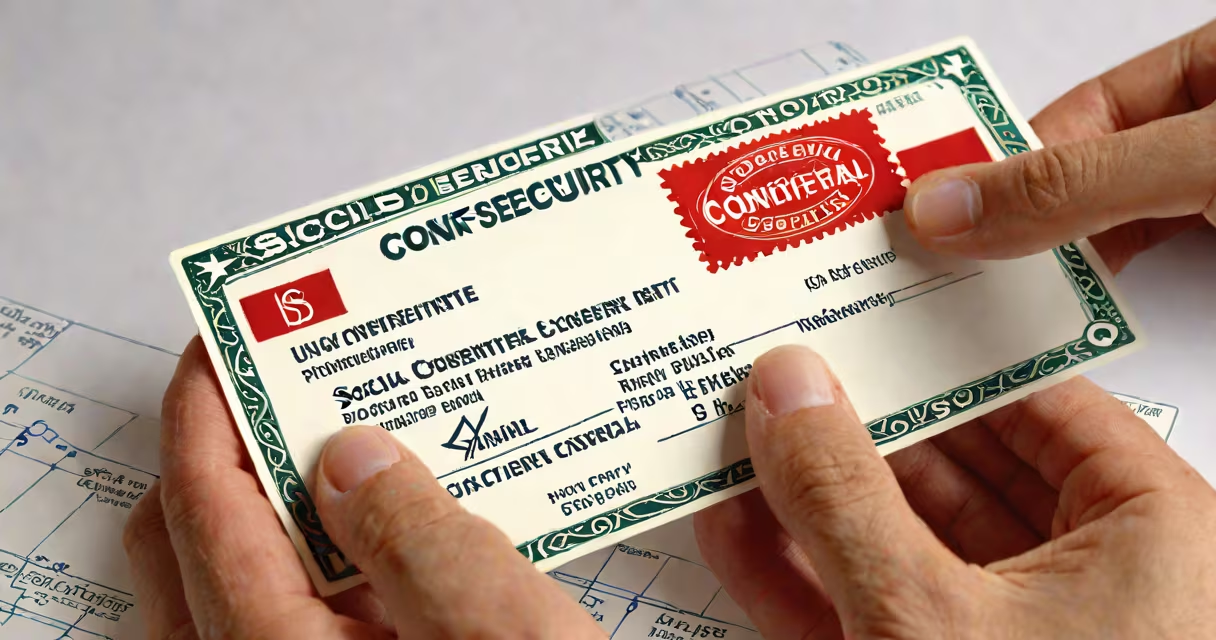
If someone obtains your Social Security Number (SSN), they can impersonate you to open credit accounts, file false tax returns, access medical services, and commit fraud under your name. This breach enables long-term financial and legal harm, often going undetected for months.
An SSN is a unique nine-digit identifier assigned by the U.S. Social Security Administration (SSA) to track individuals for tax and benefit purposes. It's not a government ID card, but it's used as a core identifier across banking, healthcare, employment, and credit systems. Once compromised, it becomes a tool for identity thieves to exploit your financial and personal records.
The Federal Trade Commission (FTC) reports that over 1.4 million identity theft complaints were filed in 2023, with SSN misuse being the most common entry point. Thieves don't need physical documents-just the number-to begin damaging your credit profile.
With your SSN, criminals can apply for loans, credit cards, or cell phone contracts in your name. They may open utility accounts or rent apartments using your identity. These actions appear on your credit report, lowering your score and making it harder to secure housing or financing.
For example, in 2022, a man in Florida discovered his SSN had been used to open five credit lines. He was denied a mortgage because his credit score dropped from 760 to 520 after unauthorized activity. The accounts were closed only after he spent six weeks disputing charges with credit bureaus and filing police reports.
Medical identity theft is less visible but equally harmful. A thief using your SSN can receive treatment under your name, leading to inaccurate records in your health history. The National Health Care Anti-Fraud Association notes that such cases cost the U.S. healthcare system $60 billion annually.
Thieves gain access through phishing emails, data breaches, stolen mail, or social engineering. A 2023 Equifax breach exposed 143 million SSNs, including those of users who had no prior credit history. Many victims didn't realize their numbers were compromised until they received IRS notices about unfiled taxes.
Phishing scams often mimic banks or government agencies. One scam email claimed to be from the SSA and asked recipients to "verify" their SSN via a fake portal. Over 12,000 people entered their details before the site was shut down by the FTC.
Even casual sharing poses risk. Posting your SSN on a job application form without encryption or misplacing a document with your number can lead to exposure. The SSA advises never sharing your SSN unless absolutely required-and then only with verified institutions.
If you suspect your SSN has been stolen, contact the three major credit bureaus-Equifax, Experian, and TransUnion-and place a fraud alert on your file. This requires creditors to verify your identity before opening new accounts. A fraud alert lasts one year and can be renewed.
File a report with the FTC at IdentityTheft.gov. The site generates a recovery plan, including steps to freeze your credit, dispute fraudulent charges, and correct your credit report. According to the FTC, victims who follow the plan recover faster and reduce average losses by 78%.
Place a credit freeze with each bureau. Unlike a fraud alert, a freeze blocks all access to your credit report. This stops new accounts from being opened. Freezes are free and can be lifted temporarily when you need to apply for credit.
While SSN theft is central to identity fraud, it's not the only method. Thieves may use your driver's license number, passport, or bank account details to commit crimes. But the SSN is uniquely useful because it ties together financial, medical, and employment records.
Consider this: a thief with your SSN can file a tax return claiming your refund. The IRS detected over 1.2 million fraudulent federal tax returns in 2023, many tied to stolen SSNs. Victims must wait months to resolve claims and may lose refunds entirely if the IRS processes the fraudulent return first.
Unlike a stolen credit card, which triggers automatic alerts, SSN misuse often goes unnoticed. Credit reports don't flag suspicious activity based on SSN alone-only the resulting accounts do. That delay allows damage to accumulate.
| Threat Type | How It Works | Typical Outcome |
|---|---|---|
| SSN theft | Used to open new accounts or file false tax returns | Credit damage, tax fraud, medical record errors |
| Bank account takeover | Access via stolen login or SSN + PIN | Funds drained, overdraft fees |
| Medical identity theft | Use of SSN to receive care under victim's name | Incorrect diagnoses, insurance denial |
In 2021, Sarah M., a teacher in Oregon, noticed her credit report listed a car loan she never applied for. Her SSN had been used to secure a $28,000 auto loan with a dealership in Nevada. The lender reported payments to her credit file, but she never made them.
She contacted the FTC and began the recovery process. After submitting proof of identity and disputing the loan, the credit bureaus removed the account. However, her FICO score dropped from 780 to 610 during the dispute period. She spent 11 months rebuilding trust with lenders and paying higher interest rates on future borrowing.
"I thought my SSN was safe," she said. "But I'd shared it on a job application years earlier. The company wasn't hacked-someone just accessed the database."
Never carry your SSN card in your wallet. Store it in a locked safe or fireproof box. Only provide your SSN when legally required-such as on W-2 forms or tax filings. Ask why it's needed and whether alternatives exist.
Monitor your credit regularly. Use free services like AnnualCreditReport.com to review reports quarterly. Set up alerts with credit monitoring tools like Experian's IdentityWorks or Credit Karma's fraud detection.
As a personal note: I once used a public Wi-Fi network to check my credit score. Within 48 hours, I received a call from a debt collector claiming I owed money on a credit card I never opened. My SSN had been scraped from an unsecured form. I froze my credit immediately and changed all passwords. That experience taught me that even low-risk online behavior can trigger high-stakes consequences.
Understanding what happens if someone gets your SSN is the first step toward protection. The damage extends beyond finances-it affects your reputation, health, and future opportunities. Take action now to limit exposure and respond quickly if compromised.