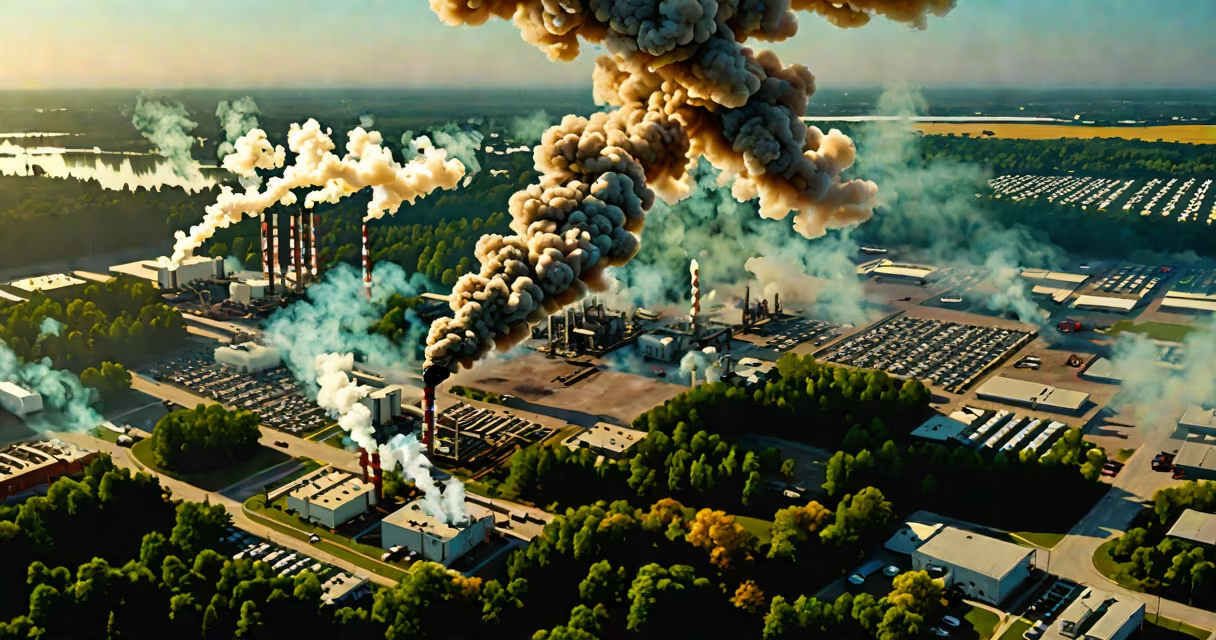
Human activity drives widespread environmental change through pollution, habitat destruction, resource overuse, and greenhouse gas emissions. These actions disrupt ecosystems, reduce biodiversity, and accelerate climate change. The scale of human influence now exceeds natural processes in most regions.
Human impacts stem from industrialization, agriculture, urban development, and energy production. Since the Industrial Revolution, atmospheric carbon dioxide levels have risen from ~280 ppm to over 420 ppm, primarily due to burning fossil fuels. This increase is directly linked to global temperature rise, melting glaciers, and intensified weather events. According to NASA's Goddard Institute for Space Studies, Earth's average surface temperature has increased by 1.2°C since the late 19th century, with most warming occurring since 1970.
Land use changes are among the most visible effects. The World Bank reports that between 1990 and 2020, the world lost 4.2 million square kilometers of tree cover-equivalent to the size of South Africa. Deforestation in the Amazon rainforest, driven by cattle ranching and soy farming, reduces carbon sequestration and threatens indigenous species. In Indonesia, palm oil plantations replaced 6 million hectares of tropical forest between 1990 and 2015, contributing to habitat loss for orangutans and Sumatran tigers.
Humans modify environments through direct physical interventions and indirect chemical changes. Infrastructure projects fragment habitats, blocking animal migration routes. Roads bisect wildlife corridors, increasing vehicle collisions and isolating populations. A study published in *Science* found that 75% of Earth's land surface has been altered by human activity, reducing connectivity between ecosystems.
Pollution alters air, water, and soil chemistry. Nitrogen runoff from fertilizers creates dead zones in oceans. The Gulf of Mexico's dead zone, caused by agricultural runoff from the Mississippi River, spans over 20,000 km² annually-larger than the state of New Jersey. Plastic waste enters marine food chains; researchers estimate 11 million metric tons of plastic entered oceans in 2019 alone, according to a study in *Science Advances*.
Overfishing depletes fish stocks faster than they can recover. The United Nations Food and Agriculture Organization reports that 34% of global fish stocks are overexploited, depleted, or recovering from depletion. Atlantic cod populations collapsed in the 1990s after decades of industrial fishing, leading to economic hardship in coastal communities and long-term ecological shifts in North Atlantic food webs.
Environmental effects fall into distinct categories based on mechanism and scale:
| Type | Primary Cause | Example | Impact Scale |
|---|---|---|---|
| Climate Change | Fossil fuel combustion, deforestation | Arctic sea ice decline (40% reduction since 1979) | Global |
| Habitat Loss | Agriculture, urban expansion | Amazon deforestation (17% lost since 1970) | Regional to global |
| Water Pollution | Industrial discharge, agricultural runoff | Dead zone in Gulf of Mexico | Regional |
| Biodiversity Decline | Overharvesting, invasive species | Amur leopard population: fewer than 100 individuals | Global |
Each category interacts with others. For example, deforestation contributes to both climate change and habitat loss. A single action often triggers cascading effects across multiple systems.
Some assume that environmental damage is inevitable with population growth. But data shows that per capita environmental impact varies widely by country. The U.S. generates 16.5 tons of CO₂ per person annually, while India produces 1.8 tons. This disparity highlights that consumption patterns-not population size-are central to environmental outcomes.
Another misconception is that natural disasters are purely "acts of nature." While storms and wildfires occur naturally, human-caused climate change increases their frequency and intensity. The 2020 California wildfire season burned 4.3 million acres-more than double the previous record-due to hotter, drier conditions exacerbated by climate change, according to Cal Fire.
There is also confusion between local and systemic impacts. Clearing a single forest patch may seem minor, but cumulative effects across thousands of sites lead to irreversible changes. The loss of pollinators like bees-driven by pesticide use and habitat fragmentation-threatens global food security. The Intergovernmental Science-Policy Platform on Biodiversity and System Services (IPBES) estimates that 40% of insect species are declining globally, with 35% facing extinction.
One of the clearest illustrations of human environmental impact is the shrinking of the Aral Sea. Once the fourth-largest lake in the world, it has lost 90% of its volume since the 1960s. The Soviet Union diverted rivers feeding the sea for cotton irrigation in Central Asia. By 2007, the sea had split into four disconnected bodies of water.
The consequences were severe. Dust storms from exposed seabed carried salt and toxic pesticides across Kazakhstan and Uzbekistan. Respiratory illness rates rose sharply in nearby towns. Fishermen lost livelihoods. The region's economy and public health deteriorated rapidly. Restoration efforts began in the 2000s, with a dam built in Kazakhstan reducing evaporation and partially reviving the northern Aral Sea. However, the southern portion remains dry.
This case demonstrates how centralized resource decisions can trigger long-term ecological collapse. It also shows that recovery is possible-but only with sustained political and financial commitment.
I once visited a coastal town in Maine where lobster populations declined by over 60% in ten years. Local fishermen reported warmer waters and fewer juvenile lobsters. Scientists confirmed that rising ocean temperatures disrupted larval development. This was not a sudden disaster-it was a slow shift driven by global emissions, yet it destroyed livelihoods and changed community identity.
What stands out is that many environmental changes unfold gradually. They are hard to notice until thresholds are crossed. The tipping point for coral bleaching, for example, occurs when sea temperatures exceed normal levels for just a few weeks. Once bleached, corals die unless conditions improve quickly. The Great Barrier Reef has experienced five mass bleaching events since 1998, with the most recent in 2020 affecting 91% of reefs.
Humans have profound and measurable effects on the environment through pollution, habitat destruction, resource extraction, and climate change. These impacts are not hypothetical-they are documented in scientific records, satellite imagery, and field observations. Addressing them requires coordinated policy, technological innovation, and behavioral change. Understanding the mechanisms behind these effects is the first step toward mitigation.