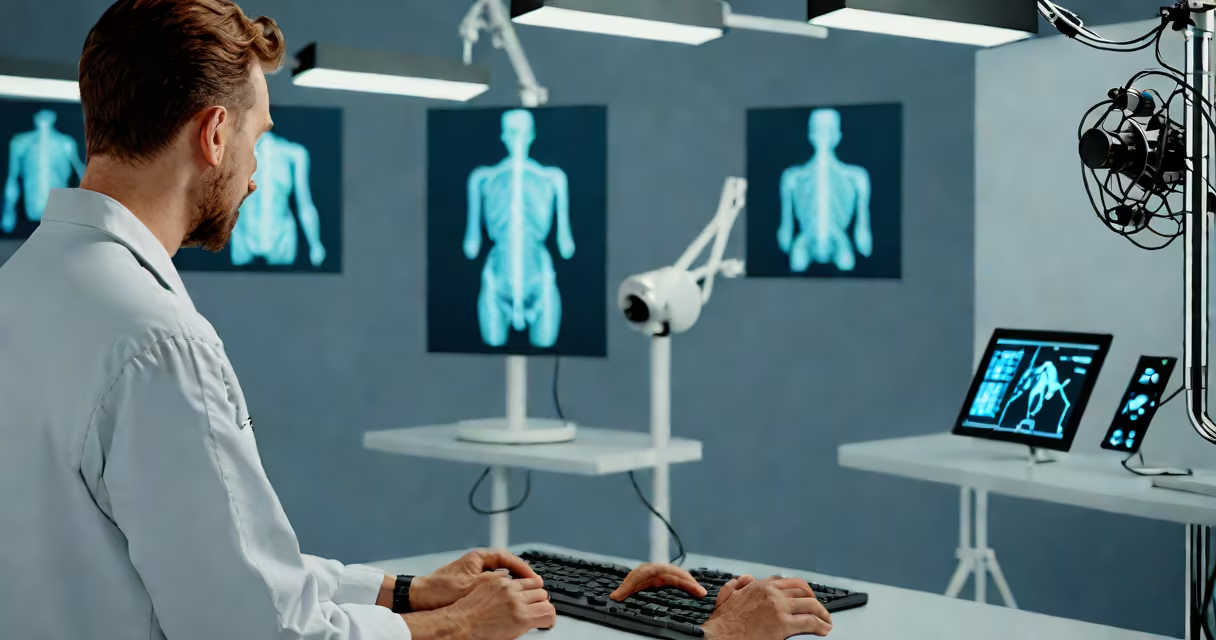
An ultrasound tech major studies diagnostic medical sonography, focusing on using high-frequency sound waves to create real-time images of internal body structures. This field trains students to operate imaging equipment, interpret scans, and support patient care in clinical settings.
Students in an ultrasound tech major learn to produce detailed images of organs, blood flow, and fetal development without radiation exposure. Programs emphasize hands-on training in abdominal, obstetric, gynecologic, vascular, and cardiac sonography. Graduates earn an associate degree or certificate and qualify for certification exams administered by the American Registry for Diagnostic Medical Sonography (ARDMS).
According to the U.S. Bureau of Labor Statistics, employment for diagnostic medical sonographers is projected to grow 12% from 2022 to 2032-faster than average-for all occupations. This growth stems from aging populations needing more non-invasive diagnostics and increased demand for early disease detection.
Ultrasound tech programs combine classroom instruction with clinical rotations. Students study anatomy, physiology, physics of sound wave propagation, and patient communication. They also learn to identify normal versus abnormal tissue patterns in real-time imaging.
Clinical experiences occur in hospitals, outpatient clinics, or private practices. A typical program includes 1,000-1,200 hours of supervised scanning under licensed sonographers. Students rotate through specialties such as obstetrics (monitoring fetal development), vascular (assessing blood vessel health), and echocardiography (heart imaging).
For example, a student in a 24-month associate program at a community college completes courses in medical terminology, biophysics, and patient safety. During their third semester, they spend 16 weeks performing scans on pregnant patients, learning to detect fetal anomalies like spina bifida using transabdominal and transvaginal techniques.
While all ultrasound tech majors share foundational coursework, they often specialize during advanced training. The most common tracks include:
| Type | Focus Areas | Typical Clinical Hours | Common Employers |
|---|---|---|---|
| Abdominal | Liver, kidneys, gallbladder, pancreas | 200-300 | Hospitals, imaging centers |
| Obstetric/Gynecologic | Pregnancy monitoring, fetal abnormalities, reproductive health | 250-350 | OB-GYN clinics, birthing centers |
| Vascular | Arteries and veins, blood clots, aneurysms | 300-400 | Vascular labs, cardiology departments |
| Cardiac (Echocardiography) | Heart structure, valve function, blood flow | 350-450 | Cardiac units, specialty clinics |
Some programs offer dual specialization, allowing students to train in both obstetric and vascular sonography. These programs typically take 2.5 to 3 years and prepare graduates for higher-paying roles in specialized clinics.
A key distinction often missed: ultrasound techs do not interpret results independently. They perform scans and report findings to physicians, who make formal diagnoses. Misconception persists that sonographers diagnose diseases-this is incorrect. Their role is technical and observational, not medical decision-making.
Ultrasound techs work in diverse healthcare environments. Most common workplaces include hospital radiology departments, outpatient imaging centers, and private physician offices. Obstetric clinics rely heavily on sonographers to monitor fetal development throughout pregnancy.
For example, a sonographer in a maternity clinic performs routine 20-week scans to assess fetal anatomy, amniotic fluid levels, and placental placement. They use Doppler ultrasound to measure blood flow in the umbilical cord and detect signs of fetal distress. These images help doctors decide whether to intervene early.
Another use case: in vascular labs, sonographers evaluate patients with leg pain or swelling. Using duplex ultrasound, they detect deep vein thrombosis (DVT) and assess arterial blockages. A 2021 study published in *Journal of Vascular Surgery* found that ultrasound screening reduced DVT-related complications by 34% in high-risk surgical patients.
Many confuse ultrasound techs with radiologists or MRI technicians. Radiologists are MDs who interpret imaging results across modalities including X-rays, CT scans, and MRIs. MRI technicians operate magnetic resonance imaging machines-different from ultrasound.
Ultrasound techs differ from physical therapists or chiropractors. While all may interact with patients experiencing pain, ultrasound techs focus solely on imaging, not treatment. They do not administer therapy or adjust spinal alignment.
Also, ultrasound techs are not interchangeable with general medical assistants. Medical assistants handle administrative tasks, important signs, and basic procedures. Sonographers require specific certification and advanced training in imaging physics and anatomy.
I once observed a student in a cardiac sonography rotation struggle to differentiate between normal and abnormal heart wall motion. After correcting their technique and reviewing standard reference images, they successfully identified a region of poor contraction consistent with prior heart attack. That moment underscored how precision in positioning and interpretation directly impacts patient outcomes.
Look for programs accredited by the Commission on Accreditation of Allied Health Education Programs (CAAHEP) or the Joint Review Committee on Education in Diagnostic Medical Sonography (JRC-DMS). Accreditation ensures curriculum meets national standards and qualifies students for ARDMS certification.
Most programs require prerequisite courses in biology, chemistry, and math. Some schools offer online didactic components but require in-person clinical rotations. Tuition ranges from $10,000 to $30,000 depending on institution and location.
After completing training, graduates take the ARDMS Sonography Principles and Instrumentation (SPI) exam and specialty exams. Passing scores lead to credentials like Registered Diagnostic Medical Sonographer (RDMS) or Registered Vascular Technologist (RVT).
For those considering this path, explore how to tech for guidance on choosing a program and preparing for admission. If you're exploring options beyond ultrasound, see what can you major in to compare healthcare fields and educational requirements.
Graduates enter a stable, growing field with median annual pay of $77,740 in 2023, according to BLS. Many work full-time with flexible shifts, including evenings and weekends. The combination of technical skill, patient interaction, and non-invasive imaging makes ultrasound tech a rewarding career choice.