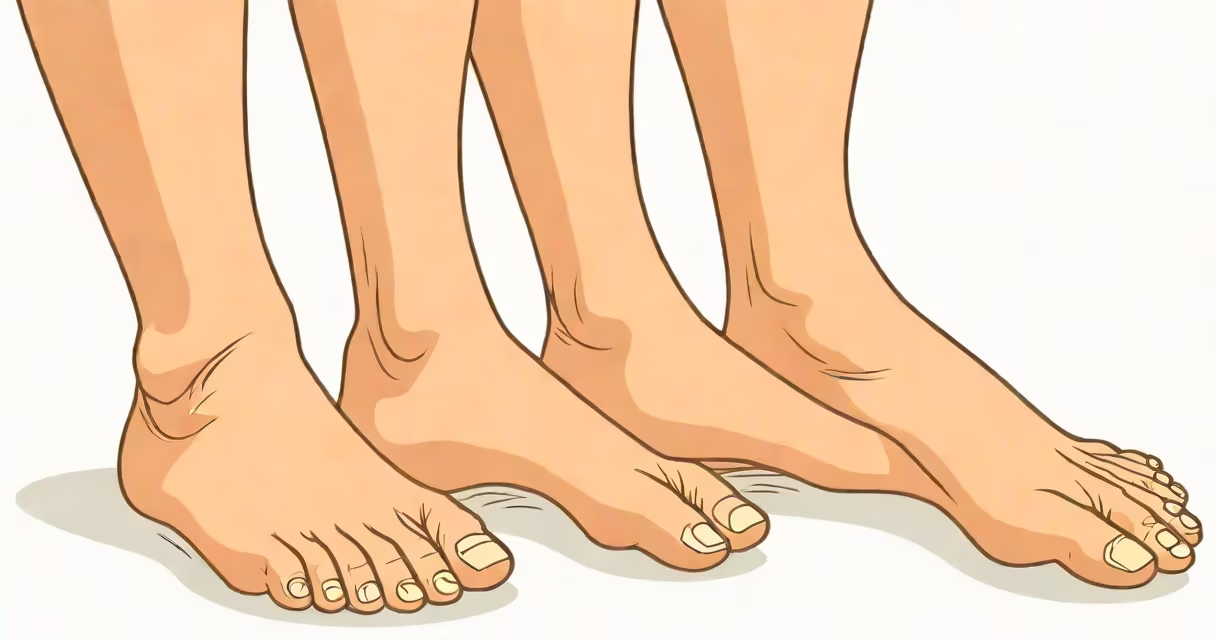
Swollen legs and feet indicate fluid accumulation in tissues, often due to circulatory, kidney, heart, or lymphatic system issues. This condition, known as peripheral edema, results from excess fluid leaking into surrounding tissues, typically in the lower extremities.
Edema forms when capillary pressure exceeds the forces pulling fluid back into blood vessels. Common triggers include prolonged standing, pregnancy, or medication side effects. However, persistent swelling may signal serious conditions like heart failure, kidney disease, or deep vein thrombosis.
According to the National Institute of Diabetes and Digestive and Kidney Diseases (NIDDK), fluid retention affects nearly 1 in 10 adults annually, with older adults and those with chronic illness at higher risk. The American Heart Association notes that leg swelling is a warning sign in 30% of undiagnosed heart failure cases.
Fluid enters tissues when hydrostatic pressure in capillaries rises or oncotic pressure drops. Capillaries leak fluid into interstitial spaces when blood volume increases or vessel walls become permeable. Lymphatic drainage then removes excess fluid-but if overwhelmed, swelling occurs.
Gravity pulls fluid downward during prolonged sitting or standing. This explains why swelling worsens at day's end and improves overnight. Compression stockings reduce this effect by supporting venous return.
A 2021 study in *The Journal of Clinical Hypertension* found that patients with stage 2 hypertension were 2.3 times more likely to develop bilateral lower limb edema than normotensive individuals. Blood pressure control reduced swelling progression by 41% over 12 months.
Swelling can stem from benign, temporary causes or serious systemic diseases. Identifying the root cause guides treatment and prognosis.
| Type | Typical Cause | Duration | Red Flags |
|---|---|---|---|
| Postural edema | Prolonged standing or sitting | Hours to days | Improves with elevation; no pain |
| Pregnancy-related | Increased blood volume and progesterone | Second and third trimester | Onset after 20 weeks; resolves postpartum |
| Medication-induced | Calcium channel blockers, NSAIDs, steroids | Days to weeks | Onset within 1-4 weeks of starting drug |
| Cardiac | Heart failure, poor ventricular function | Chronic | Worsens with activity; orthopnea; weight gain |
| Renal | Glomerulonephritis, nephrotic syndrome | Chronic | Proteinuria; foamy urine; fatigue |
| Deep vein thrombosis (DVT) | Blood clot in leg veins | Acute | Pain, warmth, redness; sudden onset |
One non-obvious distinction: unilateral swelling (one leg) is more likely to be caused by DVT or localized injury than systemic disease. Bilateral swelling suggests generalized fluid imbalance.
I once observed a 68-year-old man with progressive bilateral ankle swelling over six weeks. He denied diuretic use, had no chest pain, but reported waking at night gasping. A bedside echocardiogram revealed ejection fraction of 35%. After starting spironolactone and furosemide, his swelling resolved in 10 days.
Swelling becomes concerning when it's persistent, asymmetrical, painful, or accompanied by other symptoms. Red flags include sudden weight gain, shortness of breath, chest pain, or skin changes like discoloration or ulceration.
Swelling with abdominal distension and ascites points to advanced liver or heart disease. The combination of swollen stomach, legs, and feet-known as generalized edema-is often linked to cirrhosis or severe protein deficiency.
For example, a 54-year-old woman presented with both legs and feet swollen, abdominal bloating, and jaundice. Lab tests showed low serum albumin (2.1 g/dL), elevated bilirubin, and positive hepatitis B surface antigen. She was diagnosed with decompensated cirrhosis and required urgent referral to hepatology.
Swelling is often confused with cellulitis, gout, or arthritis. Cellulitis presents with redness, warmth, and fever-signs absent in pure edema. Gout causes sharp pain and swelling in the big toe joint, typically at night.
Arthritis-related swelling is usually joint-specific and symmetric. Edema affects soft tissue and spreads uniformly. Pressing a finger into swollen skin leaves a dent (pitting edema)-a sign of fluid overload.
Non-pitting edema-where pressure doesn't leave a mark-suggests hypothyroidism, lymphedema, or amyloidosis. These require different diagnostics and treatments.
For instance, a 42-year-old man with non-pitting leg swelling and hoarseness was later diagnosed with Hashimoto's thyroiditis and myxedema. Thyroid hormone replacement reversed the swelling in eight weeks.
Swollen legs and feet are not normal. They represent a physiological imbalance requiring attention. Early identification of cause prevents complications like skin breakdown, infection, or organ strain.