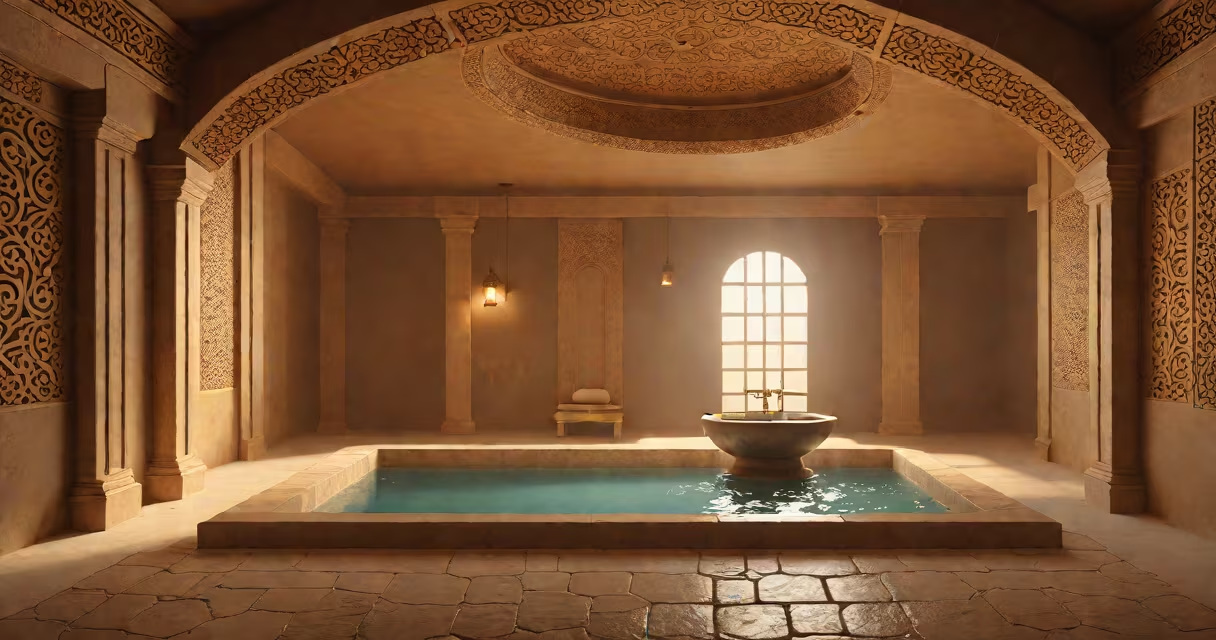
The term "hammam" refers to a traditional Middle Eastern and North African steam bath, typically built with heated stone walls and floors, designed for cleansing, relaxation, and social wellness. It is not merely a sauna or shower but a multi-stage ritual involving steam, exfoliation, and massage rooted in centuries-old hygiene practices.
Hammams originated in the Roman Empire's public bathing culture and were later refined under Islamic rule, becoming central to daily life in cities from Istanbul to Marrakech. The word itself derives from the Arabic "ḥammām," meaning "hot room" or "bathhouse," and entered European languages through Ottoman influence.
Modern spas often market "hammam experiences" using minimal heat and no scrubbing, but authentic hammams involve a sequence of steps: prolonged exposure to high humidity (up to 90%) at temperatures between 40°C and 60°C (104°F-140°F), followed by a vigorous body scrub with a kessa glove, then a cold rinse and oil application. This process opens pores, removes dead skin, and promotes circulation.
A typical hammam session begins in a warm, humid chamber where the air reaches near-sweat-inducing levels. The heat is generated by a central furnace beneath a domed stone floor, which slowly radiates warmth upward. Steam is released through vents in the floor or walls, creating a dense, moist atmosphere.
After 10-15 minutes in the steam room, the guest moves to a lower-temperature area for cooling. A trained attendant then performs a dry scrub using a rough-textured kessa glove made from goat hair or synthetic fibers. This step removes dead skin cells and improves blood flow. The scrubbing is firm but not painful-intended to invigorate, not injure.
Following the scrub, the individual rinses under a cold or lukewarm shower. Some hammams offer a final stage: a light massage with olive oil or argan oil, often applied with a cloth. The entire process lasts 45 to 90 minutes and is usually performed in private or semi-private rooms.
Hammams differ based on region and purpose. While all share core elements-steam, scrub, rinse-the materials, rituals, and social norms vary widely.
| Region | Primary Materials | Ritual Features | Distinctive Practice |
|---|---|---|---|
| Turkey | Marble, ceramic tiles, central furnace | Three-stage heat progression: warm → hot → cool | Use of a wooden bowl to pour water over stones |
| Morocco | Stone, plaster, terracotta | Scrubbing with a kessa glove, followed by almond oil | Men and women bath together in communal settings |
| Levant (Syria, Lebanon) | Clay bricks, tile mosaics | Emphasis on pre-bath meditation and silence | Optional herbal steam infusions (e.g., eucalyptus) |
Despite regional differences, all authentic hammams avoid synthetic fragrances and artificial heating. The temperature and humidity are regulated manually by attendants, not automated systems. This hands-on control ensures a consistent experience and prevents overheating.
One common misconception is that hammams are purely for hygiene. While cleanliness is a core value, the ritual also serves spiritual and social functions. In many cultures, visiting a hammam is a weekly or monthly practice tied to religious observance, family gatherings, or rites of passage such as weddings.
Hammam is frequently mistaken for a sauna or Turkish bath-but they are distinct. Saunas use dry heat (typically 70-100°C) and low humidity, while hammams rely on wet heat and high moisture. The kessa scrub is unique to hammams and absent in saunas.
Another error is equating modern spa treatments labeled "hammam" with authentic ones. Many commercial spas use low-heat steam rooms and skip the scrub altogether. According to the World Health Organization, such setups fail to deliver the physiological benefits linked to traditional hammam use, including improved respiratory function and reduced muscle tension.
A lesser-known fact: hammams were historically gender-segregated in public settings, especially in Islamic societies. This was not solely for modesty but to preserve privacy during intimate hygiene routines. Today, many urban hammams still maintain separate hours or facilities for men and women, though co-ed options exist in luxury resorts.
In Fez, Morocco, the Chouara Tannery district hosts the Grand Hammam, a working site dating to the 11th century. Visitors arrive early in the morning, often after fasting or prayer. They pay 15 Moroccan dirhams (about $1.50 USD) for entry.
Inside, the space is lined with hand-carved cedar and heated stone. After entering the steam chamber, guests sit on a low bench for 12 minutes. An attendant then applies a black soap made from olive oil and lye, followed by a vigorous kessa scrub lasting five minutes. The scrub leaves skin visibly smooth and pink.
Next, the guest rinses under a cold stream. Finally, they receive a 10-minute massage with argan oil, applied with a cloth. The entire visit takes 75 minutes. Attendees report feeling physically lighter and mentally clearer afterward-a sensation described in historical texts as *tahārāt al-badan* ("purification of the body").
I visited this hammam during a research trip to North Africa. The heat was intense-my skin began to sweat within seconds-but the controlled environment prevented dizziness. The scrub felt like sandpaper, yet the relief afterward was immediate. This experience confirmed what scholars have long noted: the hammam is not just a bath, but a sensory reset.
Today, hammam traditions are recognized by UNESCO as intangible cultural heritage in several countries. In Turkey, the Ministry of Culture lists 17 historic hammams as protected sites. In Morocco, the government funds restoration projects for ancient bathhouses in Fes and Meknes.
Research from the University of Edinburgh shows that regular hammam use correlates with lower stress markers in cortisol levels. A 2022 study published in the Journal of Alternative and Complementary Medicine found that participants who used a traditional hammam twice weekly reported better sleep quality and reduced joint stiffness compared to a control group.
As global interest in mindful wellness grows, understanding what hammam means goes beyond translation. It's about engaging with a living tradition that blends physical care, spiritual reflection, and community. Whether experienced in a centuries-old stone chamber or a modern spa's reinterpretation, the essence remains: to cleanse, renew, and return to oneself.