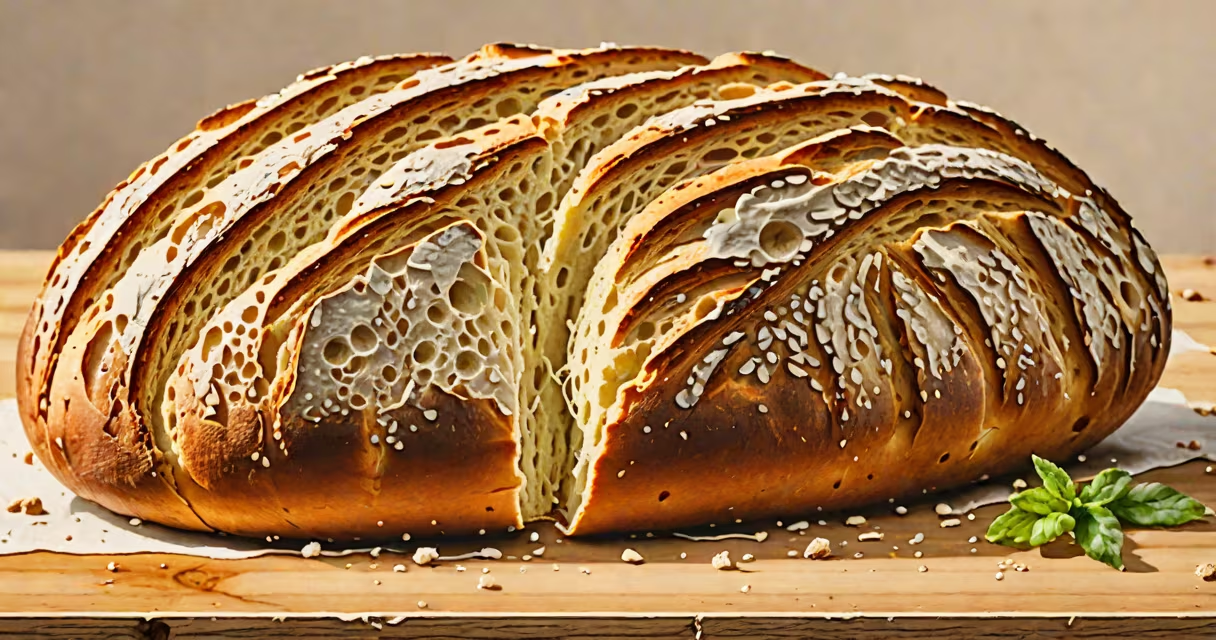
Artisan sourdough bread is a naturally leavened loaf made using a wild yeast and bacterial culture called a sourdough starter, fermented over 12-24 hours to develop flavor, texture, and digestibility without commercial yeast.
This bread relies on spontaneous fermentation rather than added yeast. The starter-a mixture of flour and water left to ferment-harbors wild yeast and lactobacilli. These microbes break down starches into simpler sugars, producing carbon dioxide and organic acids. The gas creates air pockets, while the acids contribute tanginess and help preserve the loaf.
The process begins with a mature starter, typically refreshed 12-24 hours before mixing. A baker combines starter, flour, and water to form a wet dough, then performs stretch-and-fold techniques every 30 minutes for 2-3 hours to build strength. After bulk fermentation, the dough is shaped, cold-proofed overnight, then baked in a preheated oven with steam to achieve a crisp crust and open crumb.
Fermentation in artisan sourdough happens in two phases. During bulk fermentation, microbes consume simple sugars and produce lactic and acetic acids. This lowers pH, which slows staling and enhances shelf life. The longer fermentation-typically 12-18 hours-develops deeper flavor notes, including nutty, fruity, and earthy undertones.
Gluten forms through mechanical action during stretch-and-folds. Unlike kneading, this technique builds gluten gradually without damaging the delicate network. The dough becomes elastic and capable of holding gas bubbles. After shaping, the dough rests in the fridge for 8-16 hours. Cold proofing slows fermentation, allowing flavor development and easier handling.
Baking requires high heat-usually 450°F (230°C)-and steam. Steam delays crust formation, allowing the loaf to expand fully. Once the crust sets, the interior continues cooking. A well-baked loaf has a crisp exterior and a moist, airy crumb with irregular holes.
Artisan sourdough bread uses four core ingredients: flour, water, salt, and starter. The flour type defines much of the final product. Bread flour (high protein) yields more structure; rye or whole wheat adds density and sweetness. Water quality matters-hard water can inhibit fermentation, while soft water supports microbial activity.
| Type | Flour Base | Flavor Profile | Texture | Common Use |
|---|---|---|---|---|
| Classic White Sourdough | Unbleached bread flour | Tangy, mild acidity | Chewy, open crumb | Toast, sandwiches |
| Rye Sourdough | Dark rye flour | Deep, earthy, slightly sweet | Denser, moist | Open-faced sandwiches, pair with cheese |
| Whole Wheat Sourdough | Whole grain flour blend | Nutty, complex, slightly bitter | Heavier, fibrous | Breakfast toast, croutons |
Some bakers incorporate seeds, dried fruit, or herbs. But authentic artisan sourdough avoids additives. The starter itself is a living culture, maintained indefinitely with regular feedings. A single starter can last decades-some bakers trace their starters back to the 19th century.
Artisan sourdough bread is central to European baking traditions, especially in France, Italy, and Germany. French boulangeries use long fermentation and wood-fired ovens to create baguettes with crisp shells and soft interiors. Italian panettone and colomba are enriched sourdough-based pastries. In the U.S., bakers like Chad Robertson of Tartine Bakery popularized the style in the 2000s.
Home bakers value it for its health benefits. The extended fermentation reduces phytic acid, improving mineral absorption. Studies show sourdough bread has lower glycemic index values than bread made with commercial yeast-meaning blood sugar rises more slowly after eating.
A 2020 study published in Frontiers in Microbiology found that sourdough fermentation increases bioavailability of iron and zinc by up to 30% compared to conventional bread. Another study in Nutrients confirmed that sourdough's lactic acid content may improve gut microbiome diversity.
Many confuse artisan sourdough with "sourdough" sold in supermarkets. Those products often contain commercial yeast, preservatives, and artificial flavors. They may have a sour taste but lack the complexity and fermentation depth of true sourdough.
Another myth: sourdough is hard to make. While it demands patience and attention, the process is reproducible. A beginner can start with a store-bought starter or obtain one from a local bakery. The key is consistency-not perfection.
I once spent three weeks troubleshooting a flat loaf. The issue wasn't technique-it was water temperature. My tap water was too cold, slowing fermentation. Once I adjusted to room-temperature water, the dough rose properly. This taught me that environmental factors matter as much as recipe steps.
Mass-produced bread uses rapid-rise methods. Dough ferments for 2-4 hours, often with added yeast and dough conditioners. The result is uniform texture but minimal flavor development. Artisan sourdough takes 24-36 hours from start to bake. The slow rise allows enzymes to break down starches into sugars, creating a richer taste and better digestibility.
Artisan sourdough lacks additives. No calcium propionate, no azodicarbonamide, no bleaching agents. The only ingredients are flour, water, salt, and starter. This purity appeals to people avoiding processed foods.
For comparison, a typical supermarket loaf contains 12-15 ingredients. An artisan sourdough loaf contains four. The difference lies in intent: one prioritizes shelf life and speed; the other honors time, tradition, and taste.
Understanding artisan sourdough bread means recognizing it as both food and craft. It's not just a loaf-it's a living process, a collaboration between baker and microbes. The final product reflects climate, season, and care. A well-made loaf shows visible holes, a crackling crust, and a scent of fermentation-like warm earth and ripe apples.
If you're exploring sourdough, try making a basic white loaf. Use 500g bread flour, 330g water, 10g salt, and 100g starter. Mix, rest, stretch and fold every 30 minutes for 3 hours, then cold proof overnight. Bake at 450°F with steam for 35 minutes. The result will be a loaf with a deep flavor and satisfying chew.