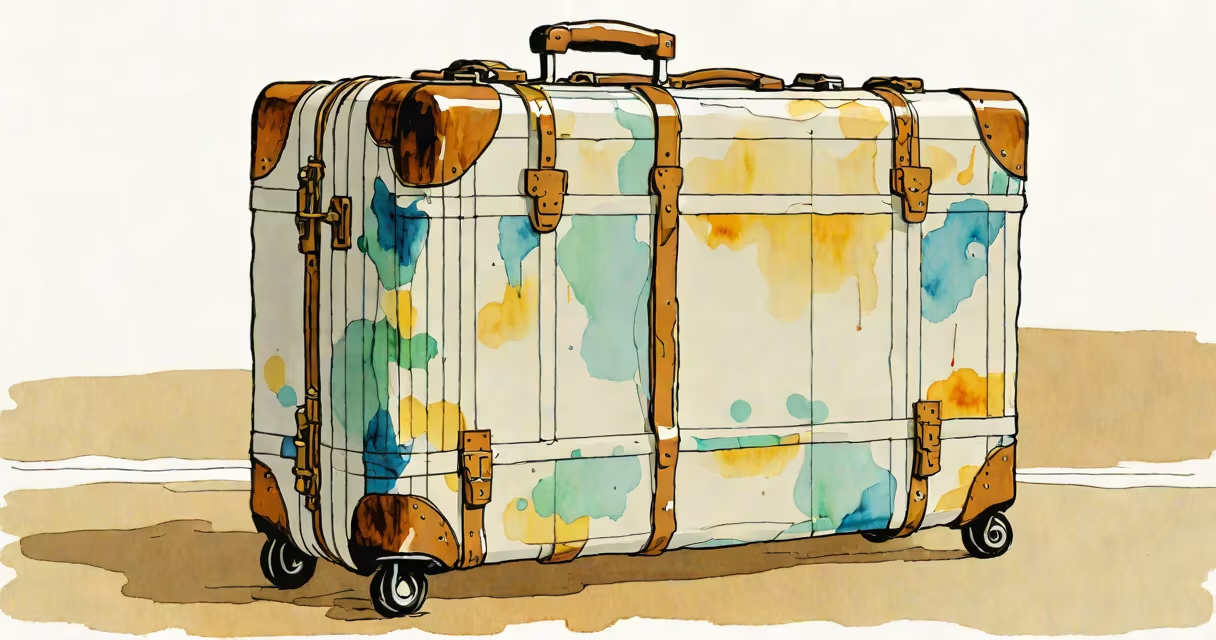
A 62-inch luggage piece measures roughly 62 inches (about 157 cm) from the bottom of the base to the top of the handle when upright. This size exceeds standard checked baggage limits on most airlines and appears as a large, bulky suitcase-often taller than a person's waist and wider than a typical carry-on.
Most 62-inch pieces are hard-shell suitcases made of polycarbonate or ABS plastic, designed for durability during long-haul flights. They feature four spinner wheels, a telescoping handle, and reinforced corners. The exterior surface is typically smooth, with visible seams along the edges and a zipper closure across the front. When standing upright, the bag extends well above the average adult's shoulder height, making it difficult to maneuver without assistance.
These bags are not standard checked luggage. Most airlines limit checked bags to 62 linear inches (length + width + height). A 62-inch bag may still exceed this when measured properly. For example, a bag measuring 30 inches long, 20 inches wide, and 12 inches high totals 62 inches-but if it's 62 inches tall, even with smaller dimensions, it counts as oversized. Airlines often charge extra fees for such bags.
62-inch luggage functions similarly to standard checked bags but with structural adaptations for size. The internal frame includes reinforced ribs and a flexible interior divider system to stabilize contents during transit. Most models have a compression strap system to secure clothing and reduce shifting. The handle extends to about 42 inches when fully extended, allowing users to pull the bag while walking.
Spinner wheels rotate 360 degrees, enabling easy side-to-side movement. However, due to the bag's weight-often 15-20 pounds empty-the user must apply significant force to move it on uneven surfaces. Some models include a built-in TSA lock, which allows security agents to inspect the bag without breaking the lock.
Despite their size, many 62-inch bags are designed for air travel. They're frequently used by athletes, musicians, and international travelers transporting specialized gear. For example, a professional soccer player might pack a 62-inch bag with cleats, training kits, and personal equipment for a tournament abroad.
There are two primary types of 62-inch luggage: hard-shell and soft-sided. Hard-shell bags offer better protection against dents and moisture. Soft-sided versions are lighter and more compressible but less resistant to impact. Both types are available in multiple colors and finishes, including matte, glossy, and textured fabrics.
| Type | Weight Range | Best For | Common Brands |
|---|---|---|---|
| Hard-shell | 15-22 lbs | Delicate electronics, fragile items, international travel | Rimowa, Samsonite, American Tourister |
| Soft-sided | 10-16 lbs | Domestic trips, frequent flyers, budget-conscious users | Travelpro, Eagle Creek, Away |
These bags are commonly used by professional sports teams, touring musicians, and international students. A 62-inch suitcase might hold a full set of performance costumes, a drum kit, or multiple sets of uniforms. For example, a college basketball team traveling to a regional tournament might use six 62-inch bags to transport jerseys, shoes, and practice gear.
One non-obvious fact: many airlines do not allow 62-inch bags as checked luggage unless they meet both dimensional and weight requirements. Delta Air Lines, for instance, permits checked bags up to 62 linear inches but charges $100 for bags exceeding 50 pounds. A 62-inch bag weighing 60 pounds would incur a fee regardless of size. Always verify carrier-specific rules before packing.
Many people mistake 62-inch luggage for standard checked baggage. Standard checked bags are usually capped at 62 linear inches-not 62 inches in height. A bag that is 62 inches tall but only 10 inches wide and 10 inches deep still totals 82 linear inches and qualifies as oversized. This misunderstanding leads to unexpected fees at airport counters.
Another misconception is that 62-inch luggage is only for professionals. While athletes and performers use them frequently, families traveling with children's sports equipment or individuals relocating overseas also rely on this size. A family moving from New York to Tokyo might pack a 62-inch bag with baby clothes, strollers, and toys-items that wouldn't fit in smaller luggage.
I once observed a passenger at JFK Airport attempting to check a 62-inch bag labeled "Personal Effects." The bag was 62 inches tall, 24 inches wide, and 18 inches deep-totaling 104 linear inches. The agent refused it and charged a $250 fee for oversized baggage. The traveler had assumed the height limit applied directly, not the combined measurement.
Consider a musician preparing for a five-city tour. Their gear includes:
They choose a 62-inch hard-shell suitcase from Samsonite. The bag is 32 inches long, 20 inches wide, and 10 inches deep-totaling 62 linear inches. It weighs 24 pounds empty. After packing, the total weight reaches 58 pounds. The airline allows this under their free checked bag policy, but the passenger must confirm that the bag's height doesn't trigger a size override.
If the same musician had chosen a 62-inch bag that was 62 inches tall, even with small width and depth, it would be flagged as oversized. The bag would require special handling and additional fees. Always measure all three dimensions before checking in.
For travelers who regularly fly with heavy or bulky items, a 50-pound luggage piece offers a more manageable alternative. These bags are designed to stay within airline weight limits while still providing ample space. If you're unsure how much your luggage weighs, consider using a portable luggage scale before reaching the airport.
Understanding what 62-inch luggage looks like-and how it differs from standard bags-is essential for avoiding surprise fees and delays. frequent flyer, knowing the exact dimensions and airline rules ensures smoother travel.