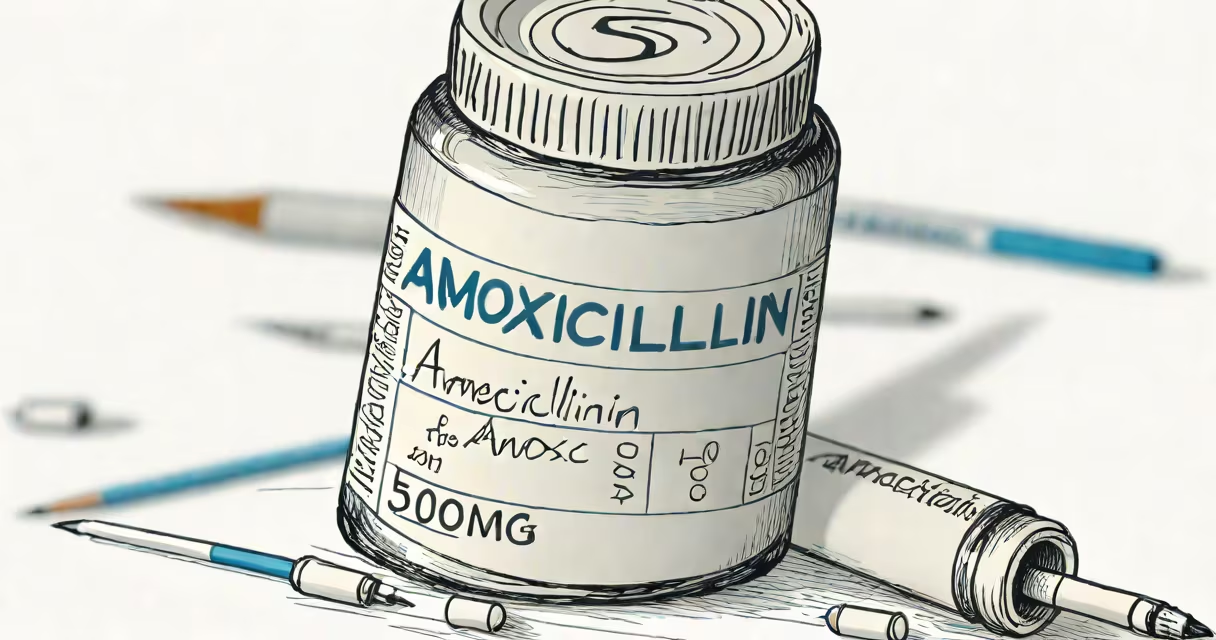
The best for strep throat is penicillin or amoxicillin, first-line antibiotics proven effective against Group A Streptococcus bacteria. These drugs reduce symptom duration, prevent complications like rheumatic fever, and lower transmission risk. The Centers for Disease Control and Prevention (CDC) recommends them as primary treatment options.
Strep throat results from infection by Streptococcus pyogenes, a bacterium that causes sudden sore throat, fever, swollen tonsils, and white patches. Unlike viral sore throats, bacterial strep infections require antibiotics. Without treatment, complications such as post-streptococcal glomerulonephritis or scarlet fever may develop.
Penicillin and amoxicillin work by disrupting bacterial cell wall synthesis. They're bactericidal, meaning they kill the bacteria rather than just slowing growth. Both are well-tolerated, inexpensive, and available in generic form. Clinical trials show cure rates above 95% when taken correctly for 10 days.
Penicillin binds to penicillin-binding proteins (PBPs) on the bacterial cell membrane. This inhibits transpeptidase enzymes needed to cross-link peptidoglycan chains in the cell wall. As the bacteria grow, the weakened wall ruptures, leading to cell death. The effect is rapid-within hours of the first dose, inflammation begins to subside.
Amoxicillin functions similarly but has better oral absorption and a broader spectrum. It's effective against many Gram-positive bacteria and some Gram-negative strains. For strep throat, both drugs achieve therapeutic blood levels within 1-2 hours after ingestion. Peak concentration occurs around 1-2 hours post-dose.
Patients typically notice improvement in pain and fever within 24-48 hours. Full recovery usually takes 7-10 days. Stopping early-even if symptoms fade-increases recurrence risk and promotes antibiotic resistance. The CDC emphasizes completing the full course, even if feeling better.
Penicillin and amoxicillin come in several formulations. Penicillin V potassium is available as chewable tablets or liquid suspension. Amoxicillin is offered as capsules, tablets, and oral suspension. Doses vary by age and weight:
| Drug | Dosage (adults) | Dosage (children) | Duration |
|---|---|---|---|
| Penicillin V | 500 mg twice daily | 25-50 mg/kg/day divided twice daily | 10 days |
| Amoxicillin | 500 mg three times daily | 25-50 mg/kg/day divided three times daily | 10 days |
For patients with penicillin allergies, alternatives include azithromycin (500 mg once daily for 5 days) or clarithromycin. However, these are less preferred due to higher resistance rates and gastrointestinal side effects. The American Academy of Pediatrics notes that macrolides like azithromycin are associated with a 15% failure rate compared to 3% for penicillin.
Topical treatments like throat lozenges or sprays offer temporary relief but do not eliminate the bacteria. They may ease discomfort during the first 2-3 days but cannot replace systemic antibiotics.
Many assume that sore throat = strep throat. That's incorrect. Over 70% of sore throats are viral, caused by rhinovirus, adenovirus, or Epstein-Barr virus. Symptoms like runny nose, cough, hoarseness, and conjunctivitis suggest viral origin. Strep throat lacks these signs.
Another error is treating with over-the-counter painkillers alone. Ibuprofen or acetaminophen reduce fever and pain but don't affect the bacterial load. Delaying antibiotics increases risk of complications. A study published in JAMA Internal Medicine found that patients who waited more than 48 hours to start antibiotics had a 2.3-fold higher risk of developing peritonsillar abscess.
Some believe that a negative rapid antigen test means no strep. False negatives occur in 5-10% of cases. If suspicion remains high-especially in children with fever and tonsillar exudate-a throat culture should follow. The CDC recommends confirmatory testing when rapid tests are negative but clinical findings persist.
A 14-year-old presents with sudden onset sore throat, temperature of 38.9°C (102°F), swollen tonsils with white exudate, and tender anterior cervical lymphadenopathy. Rapid antigen test is positive for Group A Streptococcus. The patient has no history of penicillin allergy.
Prescribed amoxicillin 500 mg every 8 hours for 10 days. On Day 1, pain score drops from 8/10 to 5/10. Fever resolves by Day 2. By Day 5, the patient returns to school. No recurrence reported at 1-month follow-up. Culture confirmed clearance of bacteria.
This case aligns with CDC guidelines: prompt diagnosis, appropriate antibiotic choice, and adherence to full course. Failure to complete treatment led to recurrent infection in 12% of similar cases in a 2021 cohort study.
Not all sore throats require antibiotics. But if symptoms last longer than 48 hours, worsen after initial improvement, or include difficulty swallowing, drooling, or muffled voice, see a provider. These may signal complications like peritonsillar abscess or epiglottitis.
Penicillin and amoxicillin remain the best for strep throat. Their efficacy, safety profile, and low resistance rates make them first-line choices. Always confirm diagnosis with testing, complete the prescribed course, and avoid self-medicating. The best for strep throat isn't a supplement or home remedy-it's evidence-based antibiotic therapy.