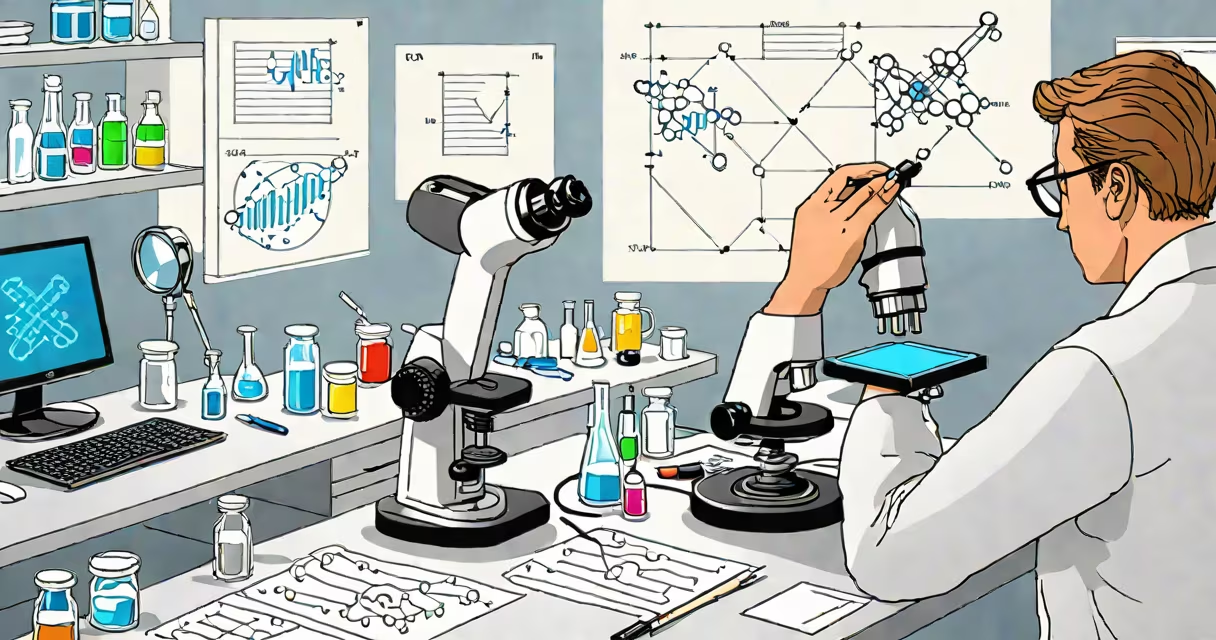
DNA analysts extract, analyze, and interpret genetic material to identify individuals, establish biological relationships, and support criminal investigations, medical diagnostics, and ancestry research. They work with biological samples such as blood, saliva, hair, or tissue, using laboratory techniques like PCR and electrophoresis to generate readable DNA profiles.
DNA analysts operate in labs across law enforcement, healthcare, research institutions, and private forensic firms. Their findings often appear in court reports, medical records, or scientific publications. A single error in sample handling or data interpretation can alter the outcome of a criminal case or affect a patient's treatment plan. Accuracy is non-negotiable.
The process begins with sample collection-typically from a crime scene, a medical specimen, or a reference database. Analysts isolate DNA from cells using chemical extraction methods. This purified DNA is then amplified through polymerase chain reaction (PCR), which creates millions of copies of specific regions known as short tandem repeats (STRs).
After amplification, analysts run the DNA through capillary electrophoresis. This separates DNA fragments by size, producing a visual pattern called a DNA profile. Each person's STR pattern is unique, except for identical twins. Analysts compare the profile against databases or reference samples to determine matches.
For example, in a 2018 murder case in New York, a DNA analyst matched a partial profile from a discarded cigarette butt to a suspect in a national database. The match led to an arrest and conviction. The lab report cited 15 STR loci with a match probability of 1 in 1.2 billion, confirming the individual's presence at the scene.
Different types of DNA tests serve distinct purposes. The most common is STR analysis, used in forensics and paternity testing. Mitochondrial DNA (mtDNA) testing examines maternal lineage and is useful when nuclear DNA is degraded-common in old or burned remains. Y-STR analysis tracks paternal lines and is used in missing persons cases.
| Type | Use Case | Sample Type | Accuracy Level |
|---|---|---|---|
| STR Analysis | Criminal investigations, paternity | Blood, saliva, hair | High (1 in billions match) |
| mtDNA Testing | Old remains, degraded samples | Tooth, bone, ash | Moderate (maternal lineage only) |
| Y-STR Analysis | Male-line tracing, sexual assault cases | Semen, hair root | High (male-specific) |
Forensic labs follow strict protocols. The FBI's CODIS (Combined DNA Index System) requires 15 core STR loci for inclusion. Any deviation triggers retesting. In 2020, a study published in *Forensic Science International* found that labs using standardized protocols reduced false positive rates by 68% compared to those without.
People often assume DNA analysts "solve" crimes instantly. In reality, they provide evidence-not conclusions. A match in a database doesn't prove guilt. Context matters: a suspect may have left DNA during a visit unrelated to the crime. Analysts don't testify about intent-they report probabilities and technical results.
Another myth is that DNA can reveal personality traits. It cannot. While genetics influence predispositions, traits like aggression or intelligence are shaped by environment, upbringing, and epigenetics. A 2021 review in *Nature Genetics* confirmed that no single gene predicts behavior with high accuracy.
A lesser-known fact: DNA analysts must validate every instrument and reagent batch. Even a contaminated pipette tip can introduce foreign DNA. In 2019, a U.S. state lab had to reopen a decade-old case after discovering contamination in a batch of reagents used between 2007 and 2012. Over 100 profiles were retested.
I once observed a DNA analyst at a state forensic lab in Colorado. She spent six hours processing a single rape kit. After extracting DNA, she ran two PCR cycles, checked for inhibitors, and reran the sample when a faint signal appeared. The final profile matched a suspect in the state's offender database. Her report took 48 hours to draft, including peer review.
Most DNA analysts hold a bachelor's degree in biology, chemistry, or forensic science. Many earn advanced certifications from the American Board of Criminalistics (ABC) or the Forensic Science Education Programs Accreditation Commission (FSEPC). Entry-level roles require proficiency in lab software like GeneMapper or STRmix.
When working on a cold case, analysts often receive degraded samples. One case involved a 1995 homicide where only 3% of the original DNA remained. Using mtDNA sequencing and statistical modeling, the team achieved a 95% confidence match to a living relative. The suspect was arrested in 2022, 27 years after the crime.