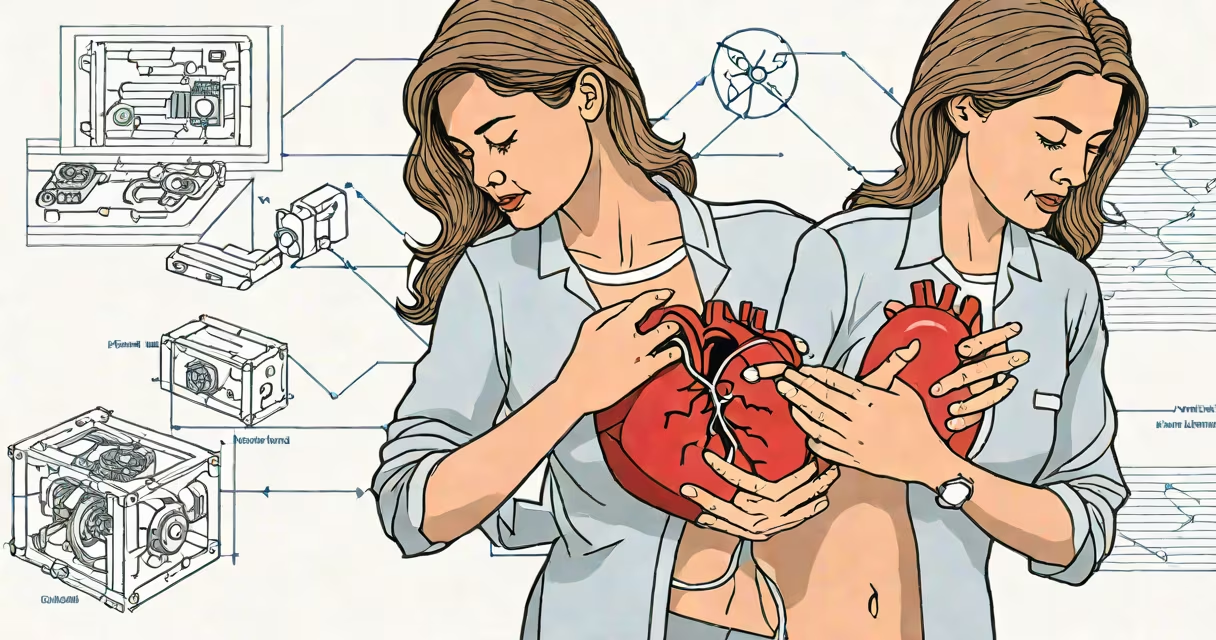
Broken heart syndrome, medically known as Takotsubo cardiomyopathy, is a temporary condition where intense emotional or physical stress causes the left ventricle of the heart to weaken suddenly, leading to symptoms resembling a heart attack. It typically affects women over 50 and resolves within weeks with proper care.
This condition occurs when extreme stress floods the body with adrenaline and other hormones, overwhelming the heart's ability to contract normally. Unlike a heart attack caused by blocked arteries, broken heart syndrome involves no blocked vessels-instead, the heart muscle becomes stunned, often due to psychological trauma such as grief, shock, or fear.
According to the American Heart Association, Takotsubo cardiomyopathy accounts for about 1-2% of cases initially diagnosed as acute myocardial infarction. The name "Takotsubo" comes from the Japanese word for an octopus trap, which the affected heart resembles during contraction-bulging at the base and narrowing at the apex.
When a person experiences severe stress-whether from losing a loved one, a sudden accident, or even a surprise party-the brain signals the adrenal glands to release large amounts of epinephrine (adrenaline) and norepinephrine. These hormones prepare the body for fight-or-flight, increasing heart rate and blood pressure.
In rare cases, especially in postmenopausal women, this surge overwhelms the heart muscle. The coronary arteries don't close, but the heart cells go into dysfunction. The left ventricle balloons out at the bottom while the tip contracts poorly, reducing pumping efficiency. This leads to acute heart failure symptoms: chest pain, shortness of breath, low blood pressure, and irregular heartbeat.
A 2021 study published in *JACC: Cardiovascular Imaging* found that nearly 90% of patients with Takotsubo had experienced a significant emotional event in the preceding 24 hours-such as a funeral, divorce, or public humiliation-before symptom onset.
Beyond emotional events, broken heart syndrome can be triggered by physical stressors. While emotional triggers dominate the literature, physical stress-including surgery, severe infection, or stroke-can also initiate the syndrome.
| Trigger Type | Common Examples | Prevalence in Studies |
|---|---|---|
| Emotional | Death of a spouse, sudden diagnosis, public embarrassment | 60-70% |
| Physical | Major surgery, severe trauma, acute illness | 20-30% |
| Unknown | No clear trigger identified | 5-10% |
One documented case involved a woman who fainted upon seeing her husband's photo at a memorial service. She was rushed to the hospital with chest pain and elevated troponin levels-markers usually linked to heart attacks. But angiography revealed no blocked arteries. The diagnosis was Takotsubo cardiomyopathy.
Research from the Mayo Clinic shows that men are less likely to develop broken heart syndrome, though they do experience it-especially under extreme physical stress. Women make up 85-90% of reported cases, possibly due to hormonal differences in stress response.
Broken heart syndrome is frequently mistaken for a heart attack because both cause chest pain, shortness of breath, and abnormal EKGs. However, the underlying mechanisms differ.
Heart attacks result from plaque rupture and clot formation in coronary arteries, blocking blood flow. In contrast, broken heart syndrome involves no arterial blockage. Instead, the heart's muscle cells temporarily stop working due to neurohormonal overload.
A key diagnostic difference lies in coronary angiography: in heart attacks, arteries appear blocked; in Takotsubo, they remain open. A 2019 review in *European Heart Journal* emphasized that misdiagnosis rates were as high as 30% in emergency departments before advanced imaging became standard.
Another common confusion is equating broken heart syndrome with depression. While emotional distress can trigger it, the condition is physiological-not mental health-related. It's not a form of anxiety or sadness-it's a direct cardiovascular reaction to stress.
In 2020, Maria, a 63-year-old teacher from Chicago, collapsed during a school board meeting after learning her son had died in a car crash. She was rushed to the ER with crushing chest pain and hypotension. Initial tests showed elevated cardiac enzymes and ST-segment elevation on EKG-classic signs of a heart attack.
Doctors performed an emergency angiogram. No blockages were found. An echocardiogram revealed apical ballooning-her left ventricle looked like a takotsubo. She was diagnosed with Takotsubo cardiomyopathy.
After five days of monitoring and beta-blocker therapy, her heart function returned to normal. She recovered fully within six weeks. Her doctors noted that she had no history of heart disease and no risk factors for atherosclerosis.
This case illustrates how sudden emotional trauma can mimic a heart attack but stem from a different mechanism entirely.
One overlooked factor is estrogen's role in protecting the heart. After menopause, estrogen levels drop sharply. This loss may reduce the heart's resilience to stress hormones like adrenaline.
Research from the National Institutes of Health confirms that postmenopausal women have higher levels of circulating catecholamines during stress compared to premenopausal women. This heightened sensitivity increases the risk of transient cardiac stunning-exactly what happens in broken heart syndrome.
Men, despite lower incidence, can still develop it. A 2022 case series in *Circulation Reports* described four men aged 60-75 who developed Takotsubo after major surgeries. Their presentations mirrored those of women-but their recovery times were slightly longer.
If someone experiences sudden chest pain, dizziness, or difficulty breathing after a traumatic event-especially if they're female and over 50-they should seek immediate medical attention. Early diagnosis prevents complications like heart failure or arrhythmias.
Treatment focuses on stabilizing the patient and supporting heart function. Most people recover fully within one to four weeks. Medications like beta blockers and ACE inhibitors are used to manage blood pressure and reduce strain on the heart.
Long-term outcomes are generally positive. A 2023 follow-up study in *The Lancet* found that 95% of patients had normal heart function at one year. Recurrence is rare-about 2-5% over five years.
For those going through emotional recovery after such an episode, healing emotionally is essential. While the heart heals physically, unresolved grief can increase future risk. Addressing mental health supports recovery.
Understanding what causes broken heart syndrome helps distinguish it from actual heart attacks. Knowing the triggers-especially sudden emotional shocks-can lead to faster diagnosis and better outcomes. If you've experienced intense stress followed by heart-like symptoms, consult a cardiologist. The condition is real, treatable, and reversible.
Blood tests, imaging, and careful observation confirm the diagnosis. Once ruled out, patients can return to normal life. Awareness saves lives.