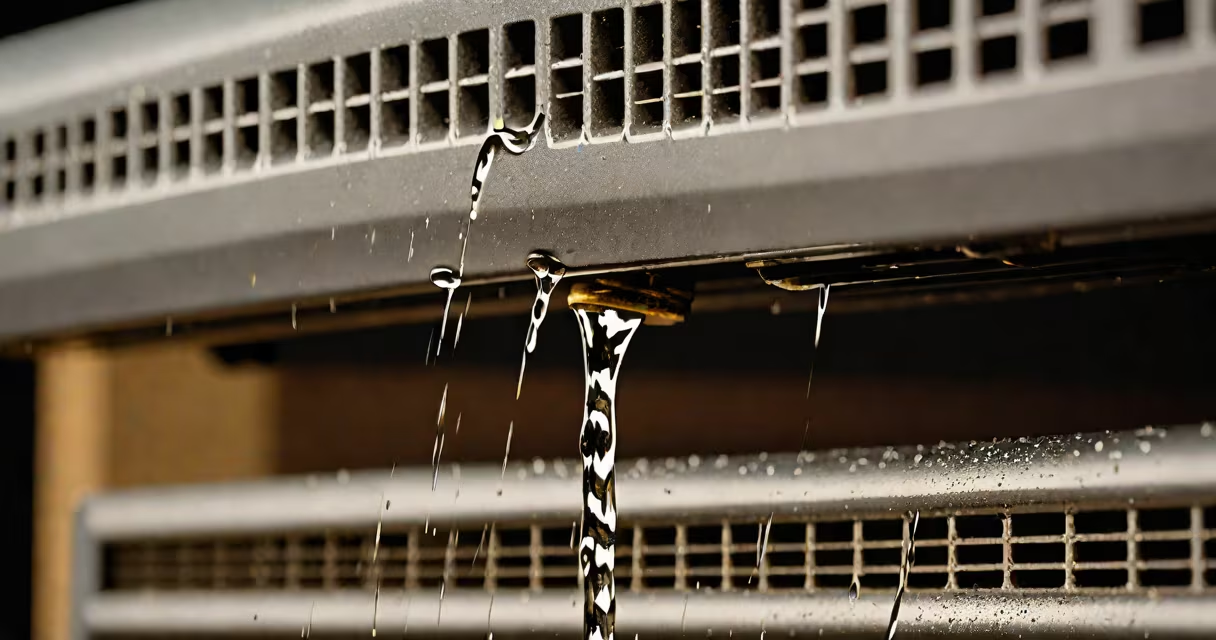
A leaking air conditioner results from water accumulation due to blocked drainage, frozen evaporator coils, or refrigerant system failure. Leaks appear as puddles near indoor units or drips from outdoor condensers. Immediate attention prevents mold growth and system damage.
Water leaks originate from two primary sources: condensation from cooling air and refrigerant system failures. Condensation forms when warm, humid air contacts cold surfaces inside the indoor unit. This moisture collects in a drain pan and flows out through a PVC tube. If the pan overflows or the tube clogs, water escapes. Refrigerant leaks involve pressurized coolant escaping from cracked or corroded copper lines, which can cause ice buildup and internal flooding.
The Environmental Protection Agency (EPA) notes that refrigerant leaks contribute to ozone depletion and are regulated under the Clean Air Act. Improper handling of refrigerants like R-410A requires certified technicians. A single drop of refrigerant can reduce efficiency by up to 15%, according to the U.S. Department of Energy.
When the air handler runs, the evaporator coil cools incoming air. Moisture condenses on the coil surface and drips into the drain pan. A properly functioning system directs this water through a drain line to a floor drain or exterior outlet. If the line becomes blocked by algae, dust, or debris, water backs up and spills over the pan.
Frozen coils occur when airflow is restricted. A dirty air filter, closed supply vents, or a failing blower motor reduces airflow. Cold air cannot absorb enough heat, causing the coil to drop below freezing. Ice forms, melts slowly, and overwhelms the drain system. This often happens during high humidity periods or when the unit runs continuously.
Refrigerant leaks develop from corrosion, physical damage, or manufacturing defects. Over time, copper tubing erodes internally, especially in coastal areas with salt-laden air. A small hole allows refrigerant to escape, lowering pressure and reducing cooling capacity. The system may run longer to meet temperature settings, increasing wear and energy use.
Leak types differ by location and cause. Identifying the source guides repair decisions.
| Type | Location | Common Cause | Repair Required? |
|---|---|---|---|
| Condensation Leak | Indoor unit, near drain pan | Blocked drain line, clogged filter, low refrigerant | Yes |
| Drain Pan Overflow | Inside HVAC cabinet | Cracked pan, improper slope, debris buildup | Yes |
| Refrigerant Leak | Indoor or outdoor unit, around copper lines | Corrosion, puncture, faulty solder joints | Yes - requires EPA-certified technician |
| External Drip | Outdoor condenser unit | Normal condensation from outdoor coil | No - normal operation |
External dripping from the outdoor unit is normal. The condenser coil sheds heat and moisture during operation. This is not a sign of failure unless water appears indoors or near the foundation.
One overlooked issue is improper installation slope. Drain lines must fall at least 1/4 inch per foot. A flat or reversed line traps water and causes overflow. I once inspected a home where the drain line was routed upward into a wall cavity. After correcting the slope, the leak stopped within 24 hours.
Many assume all leaks come from refrigerant. This is false. Most leaks stem from condensation and drainage issues. Refrigerant leaks are rarer and require specialized tools to detect. A technician uses a refrigerant leak detector or soap solution to locate bubbles at joints.
Another error is cleaning the drain line with bleach. Bleach kills algae but damages rubber hoses and PVC joints over time. The EPA warns against using harsh chemicals in HVAC systems. Instead, use a mixture of vinegar and water or a biodegradable drain cleaner.
Some homeowners replace the drain pan themselves. But pans are designed to fit specific models. Using a generic pan risks misalignment and further leakage. Always match the pan to the manufacturer's specifications.
In a suburban home in Atlanta, a family reported water pooling near their furnace. The AC ran constantly during a heatwave. I inspected the indoor unit and found the evaporator coil covered in ice. The drain pan was full, and water had seeped into the basement ceiling.
Root cause: a clogged air filter reduced airflow. The coil dropped below freezing. As ice melted, the drain line couldn't handle the volume. The pan overflowed because the drain line had a kink from improper routing.
Fix: Replace the filter, defrost the coil, clear the drain line with a wet/dry vacuum, and reposition the line with proper slope. The system operated normally after 90 minutes of work. No refrigerant was lost.
Prevention: Schedule monthly filter checks and annual maintenance. A trained technician can spot early signs of strain, such as uneven cooling or delayed startup.
Most AC leaks are preventable. Regular maintenance cuts failure rates by 60%, per the National Association of Home Builders. Keep filters clean, inspect drains annually, and monitor for unusual dampness. Early detection avoids costly repairs and protects indoor air quality.