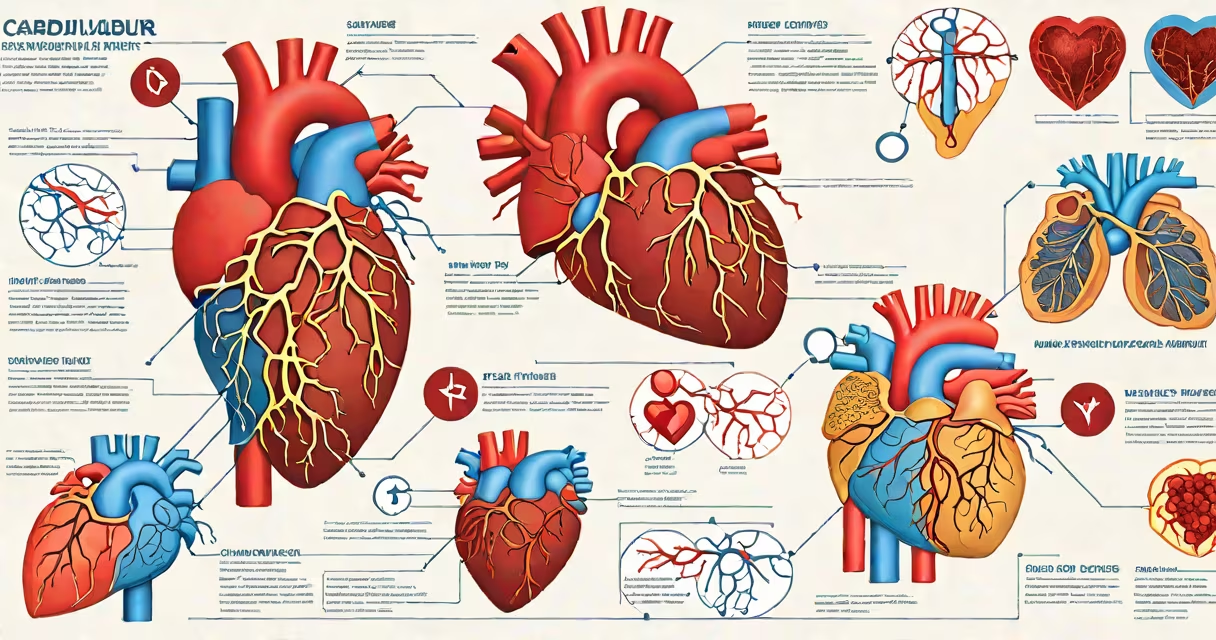
Cardiovascular disease refers to a group of conditions affecting the heart and blood vessels, including coronary artery disease, stroke, hypertension, and peripheral artery disease. These disorders arise from damage to blood vessels or impaired heart function, often due to plaque buildup, high blood pressure, or clot formation.
Cardiovascular disease is the leading cause of death globally, responsible for nearly 18 million deaths annually according to the World Health Organization. It encompasses both acute events-like heart attacks-and chronic conditions, such as long-term high blood pressure. Early detection and management reduce complications, yet many cases go undiagnosed until symptoms appear.
At its core, cardiovascular disease results from damage to the endothelium-the inner lining of blood vessels. This damage triggers inflammation and the accumulation of fatty deposits, known as plaques. Over time, plaques narrow arteries, reducing blood flow to important organs. When a plaque ruptures, it can form a clot that blocks blood flow entirely, causing a heart attack or stroke.
For example, a person with untreated high cholesterol may develop atherosclerosis-a hardening and narrowing of the arteries. As plaque builds, the heart muscle receives less oxygen-rich blood during exertion. This leads to angina, chest pain that worsens with activity and improves with rest. If the blockage becomes complete, a myocardial infarction occurs, killing heart tissue.
Another pathway involves hypertension. Sustained high blood pressure damages arterial walls, making them stiff and prone to rupture. This increases the risk of hemorrhagic stroke, where a blood vessel bursts in the brain. A 2021 study published in *The Lancet* found that uncontrolled hypertension contributes to 60% of global stroke cases.
Several distinct conditions fall under the umbrella of cardiovascular disease. Each has unique causes, symptoms, and treatment approaches.
| Type | Primary Cause | Key Symptoms | Prevalence in U.S. Adults |
|---|---|---|---|
| Coronary artery disease (CAD) | Plaque buildup in heart arteries | Chest pain, shortness of breath, fatigue | ~15% |
| Stroke (ischemic) | Blood clot blocking brain artery | Sudden numbness, confusion, vision loss | ~1 in 4 Americans will have one |
| Hypertension | Chronic high blood pressure | Often asymptomatic | ~48% of U.S. adults |
| Peripheral artery disease (PAD) | Narrowing of leg arteries | Leg pain during walking, slow-healing wounds | ~12% of adults aged 45+ |
These conditions share common risk factors-smoking, diabetes, obesity, and sedentary behavior-but differ in onset and progression. CAD typically develops over decades, while stroke can occur suddenly. Hypertension often goes unnoticed until organ damage appears, making regular screening essential.
Cardiovascular disease affects people across all age groups, though incidence rises sharply after age 45. In the United States, over 100 million adults live with some form of cardiovascular disease, according to the American Heart Association. The burden is higher among Black, Hispanic, and Native American populations due to disparities in access to care and higher rates of comorbidities.
A 2020 CDC report showed that 1 in 3 U.S. adults has at least one major risk factor for heart disease-high blood pressure, high cholesterol, or smoking. Without lifestyle changes, these individuals face a 30% greater chance of developing cardiovascular disease within ten years.
Environmental and genetic factors play roles too. For example, familial hypercholesterolemia-a rare inherited condition-causes extremely high LDL cholesterol levels from birth. People with this disorder often develop coronary artery disease before age 40, even if they maintain a healthy diet and exercise regularly.
Many assume cardiovascular disease only affects older men. In reality, women are underdiagnosed and undertreated. The Women's Health Initiative found that women are more likely to die within a year of a heart attack than men, partly because symptoms differ-women often report fatigue, nausea, and back pain rather than classic chest pain.
Another misconception is that heart attacks are always sudden and dramatic. Most begin gradually. A 2019 study in *JAMA Internal Medicine* tracked 1,200 patients and found that 60% experienced warning symptoms for at least a week before the event, including mild chest discomfort and unexplained exhaustion.
Not all chest pain signals heart disease. Gastroesophageal reflux, musculoskeletal strain, and anxiety can mimic cardiac symptoms. However, persistent or worsening pain-especially with exertion-should prompt immediate medical evaluation. Delaying care increases mortality risk.
In 2022, a 54-year-old male with a history of smoking and high cholesterol visited his primary care provider complaining of fatigue and occasional chest tightness during walks. His blood pressure was 152/96 mm Hg, and his LDL cholesterol was 190 mg/dL. An electrocardiogram showed ST-segment depression, indicating reduced blood flow to the heart.
He underwent a coronary angiography, which revealed 75% blockage in the left anterior descending artery. He was diagnosed with stable angina due to coronary artery disease. After starting statins, aspirin, and a supervised cardiac rehabilitation program, his symptoms resolved within six weeks.
This case illustrates how early intervention prevents progression to a full heart attack. It also shows that symptoms can be subtle-many patients delay seeking care until the condition worsens.
Recognizing early signs is critical. Chest pain lasting more than five minutes, especially with sweating, nausea, or arm pain, requires emergency care. Sudden weakness on one side of the body, slurred speech, or vision loss indicates a stroke and demands immediate attention.
Prevention starts with managing modifiable risks. The American Heart Association recommends at least 150 minutes of moderate aerobic exercise weekly, a Mediterranean-style diet rich in vegetables, whole grains, and healthy fats, and annual blood pressure and cholesterol screenings after age 40.
For those with existing conditions, adherence to medication regimens reduces hospitalization rates by up to 40%, per a 2023 meta-analysis in *Circulation*. Monitoring blood pressure at home and tracking medication side effects can improve outcomes.
Cardiovascular disease includes coronary artery disease, stroke, hypertension, and peripheral artery disease-all rooted in vascular dysfunction. Awareness of their signs, causes, and prevention strategies saves lives.