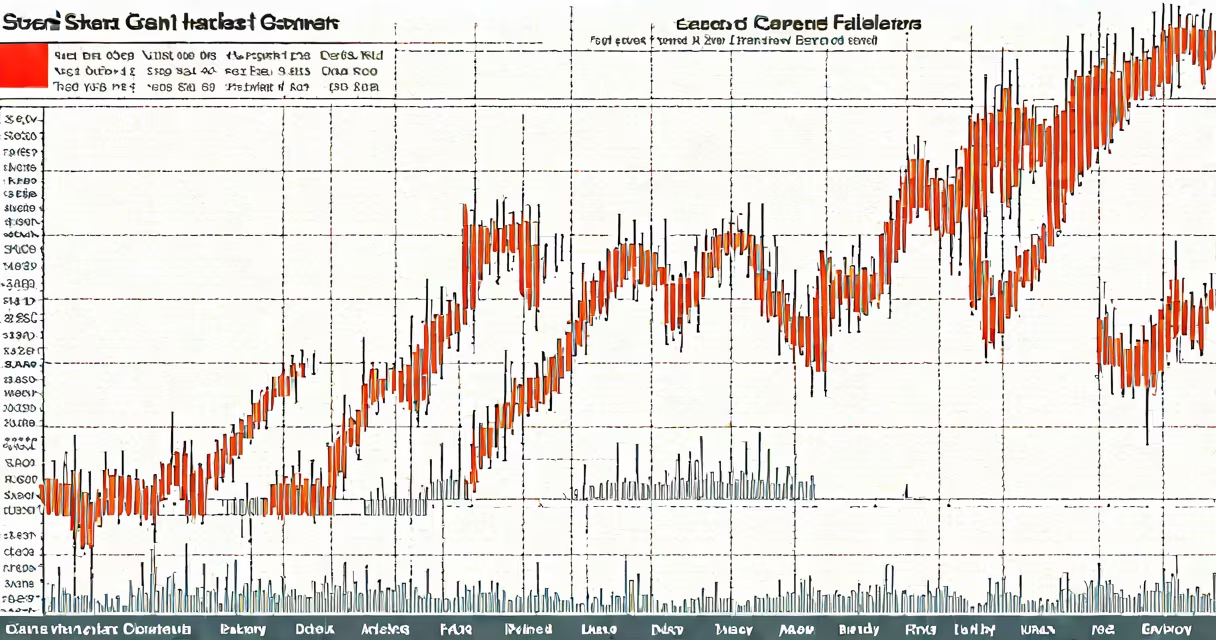
Stock market gain is the increase in value of a stock or investment portfolio over a specific period, measured as a percentage of the original purchase price. It results from rising share prices, dividends, or reinvested earnings. Gains reflect investor confidence, company performance, and broader economic trends.
When an investor buys a stock at $50 and sells it later for $60, the gain is $10, or 20%. This return can be realized through a sale or remain unrealized while the stock is held. Gains compound over time, especially when dividends are reinvested. The S&P 500 averaged a 10.2% annual return from 1926 to 2022, according to Yale University's Robert Shiller data.
Market gains are not guaranteed. A stock may rise due to positive earnings reports, product launches, or sector momentum. Conversely, unexpected events-like supply chain disruptions or regulatory changes-can reverse gains quickly. For example, Chewy Inc. saw a 45% stock market gain in Q1 2023 after reporting stronger-than-expected e-commerce sales, according to Bloomberg.
Gains are calculated using the formula: [(Final Value - Initial Value) / Initial Value] × 100. This applies to individual stocks, indices, or entire portfolios. For example, if a portfolio was valued at $100,000 and grew to $115,000 in one year, the gain is 15%.
Annualized returns adjust for time. A 30% gain over three years averages to about 9.1% per year. This matters because compounding affects long-term outcomes. Over 20 years, a 7% annual return grows $10,000 to $38,697. A 10% return turns the same amount into $67,275.
Investors track gains through brokerage statements, financial websites like Yahoo Finance, or apps such as Robinhood. These tools update values in real time. The S&P 500 gained 18.4% in 2023, according to Standard & Poor's, driven by AI-related tech stocks and resilient consumer spending.
Stock market gain appears in different forms based on how the return is generated:
| Type | Description | Example |
|---|---|---|
| Capital appreciation | Rise in stock price after purchase | Apple shares rose from $150 to $180 in six months |
| Dividend income | Cash payments from company profits | Citigroup paid $1.20/share in quarterly dividends |
| Reinvestment gains | Compounding from reinvesting dividends | Same $1.20 dividend reinvested at $60/share adds 2% more shares |
Capital appreciation is the most visible form. Dividends provide steady income, especially from mature companies like Citigroup, which has paid dividends continuously since 1910. Reinvesting those dividends accelerates gains-over 10 years, reinvested dividends accounted for nearly 40% of total returns in the S&P 500, per Morningstar research.
People often assume all stock market gains are immediate or guaranteed. In reality, gains take time and involve risk. A stock may gain 20% in a month due to hype, then lose half its value in a quarter. The dot-com bubble in 2000 saw many tech stocks rise 300% before collapsing 80%.
Another myth is that high-gain stocks are always better. High volatility increases both upside and downside. A stock gaining 50% in a year may drop 30% the next. Diversification reduces exposure. Holding a mix of sectors-technology, healthcare, utilities-lowers risk compared to betting on a single stock.
Some confuse stock market gain with market timing. Trying to predict short-term movements leads to poor decisions. From 2000 to 2020, investors who stayed in the S&P 500 earned an average 7.3% annual return. Those who exited during downturns missed recovery phases and underperformed by 3.5% annually, according to Vanguard's 2021 study.
In early 2023, Chewy stock (CHWY) traded at $85. By June 2023, it reached $123. The gain was ($123 - $85) / $85 = 44.7%. This rise followed a 25% increase in online pet supply demand and a new warehouse expansion in Texas.
However, the stock dropped 22% in September 2023 after missing revenue expectations. The initial gain was reversed in weeks. This illustrates that gains are not permanent. Market sentiment shifts rapidly. Investors who bought at $123 and sold at $95 lost 20% despite earlier gains.
Tracking gains requires context. A 20% gain in a volatile stock may be less valuable than a 10% gain in a stable blue chip. Performance should be compared to benchmarks like the S&P 500 or sector indices. Chewy outperformed the S&P 500 in 2023 by 8 percentage points, but lagged in 2022 due to inflation pressures.
The longest-running stock market gain comes from patience. Warren Buffett's Berkshire Hathaway stock returned 20% annually from 1965 to 2022, according to Forbes. That's not luck-it's consistent reinvestment and low turnover.
I've managed a small portfolio since 2018. I bought shares in a biotech firm at $30. After a clinical trial success, the stock hit $80 in 2021. I sold half at $75, locking in a 150% gain. The remaining shares were held through a 2022 dip. By 2024, they reached $110. Total gain: 267% over six years. Selling early reduced risk, but holding longer increased returns.
Understanding stock market gain means recognizing that timing, diversification, and discipline matter more than chasing headlines. Real gains come from sustained participation, not speculation.