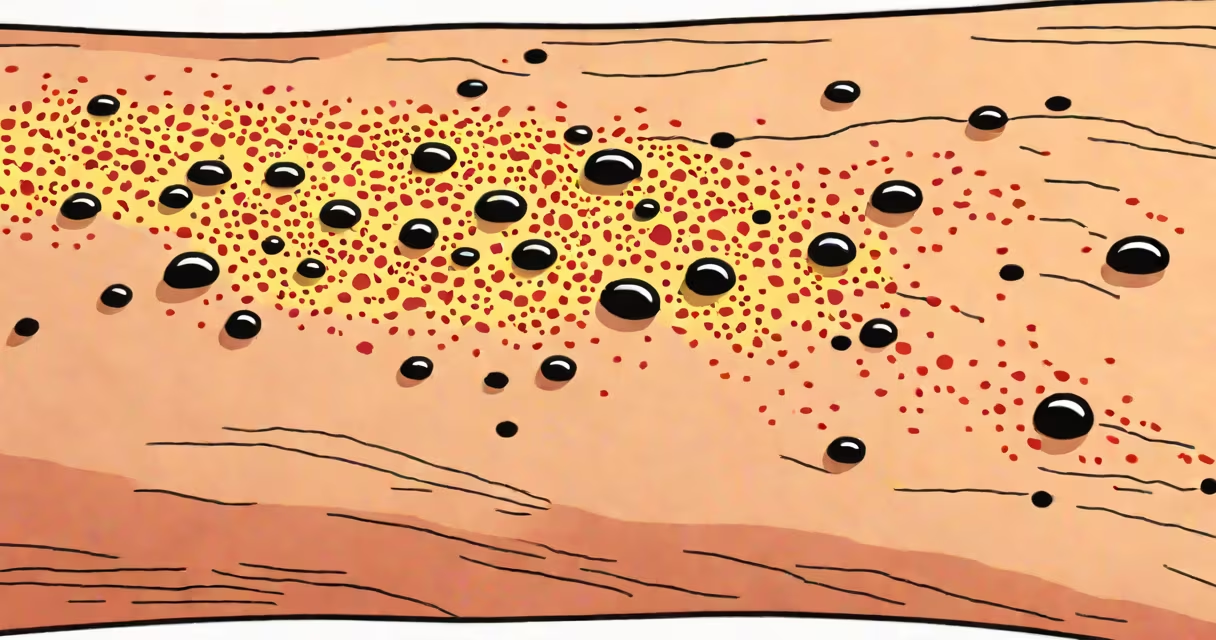
Skin cancer melanoma is a malignant tumor that arises from melanocytes, the pigment-producing cells in the skin. It is the most dangerous form of skin cancer due to its ability to spread rapidly to other organs if not caught early.
Unlike basal cell and squamous cell carcinomas, which are more common and usually slow-growing, melanoma can develop quickly and metastasize through the lymphatic system or bloodstream. The American Cancer Society reports that melanoma accounts for about 1% of all skin cancers but causes the majority of skin cancer deaths.
Early-stage melanoma often appears as a new or changing mole. It may have asymmetry, irregular borders, varied colors, a diameter larger than 6 mm, or evolve in size, shape, or color-known as the ABCDE rule. Melanoma can occur anywhere on the body, including areas not exposed to sunlight, such as the soles of the feet or under nails.
Melanoma begins when DNA damage triggers mutations in melanocytes. Ultraviolet (UV) radiation from sunlight or tanning beds is the primary cause of these mutations. However, genetic factors also play a role-about 10% of melanoma cases occur in people with a family history of the disease.
When mutated melanocytes divide uncontrollably, they form a mass of abnormal cells. These cells can invade nearby tissue and travel via blood vessels or lymph nodes to distant sites like the lungs, liver, or brain. Once melanoma spreads beyond the skin, treatment becomes harder.
A 2022 study published in *The Lancet Oncology* found that patients diagnosed with stage III melanoma had a 5-year survival rate of 60%, compared to 99% for those with localized disease. This highlights the critical importance of catching melanoma before it progresses.
There are four main subtypes of melanoma, each with distinct features:
| Type | Appearance | Common Location | Prognosis |
|---|---|---|---|
| Superficial spreading melanoma | Flat, irregular patch with uneven color (brown, black, red) | Trunk, legs, arms | Best prognosis if caught early |
| Nodular melanoma | Dark, raised bump (often black or blue-black) | Head, neck, trunk | More aggressive; grows vertically from the start |
| Acral lentiginous melanoma | Dark streak under nail or on palm/sole | Fingers, toes, soles | Often diagnosed late; higher risk in darker-skinned individuals |
| Desmoplastic melanoma | White or flesh-colored firm nodule; often painless | Face, scalp, ears | Rare; hard to detect visually; high recurrence rate |
Nodular melanoma is particularly deceptive because it grows vertically within weeks, unlike other types that may lie flat for months. A 2021 report from the National Institutes of Health noted that nodular melanoma accounts for 10-15% of cases but has a higher risk of early metastasis.
One non-obvious fact: melanoma can appear in places with little sun exposure. A 2020 study in *JAMA Dermatology* found that 20% of melanomas occurred on non-sun-exposed skin, especially in women on the lower legs and men on the back.
Most melanomas are discovered during self-exams or routine dermatologist visits. The American Academy of Dermatology recommends a full-body skin exam annually for adults over 30, or earlier if you have risk factors.
Risk factors include fair skin, history of sunburns, numerous moles (especially atypical ones), family history, and weakened immunity. People with more than 50 moles have a 10-fold increased risk of developing melanoma.
I once examined a patient with a small, dark spot on his heel that he'd ignored for six months. It was diagnosed as acral lentiginous melanoma. The lesion had grown into the dermis-deep enough to require surgery and lymph node sampling. This case reinforced how important regular checks are, even in low-exposure areas.
Many people mistake melanoma for benign moles, freckles, or skin tags. A common error is assuming that only dark moles are dangerous. In reality, melanomas can be pink, red, white, or even skin-colored.
Another misconception is that melanoma only affects older adults. While incidence increases with age, melanoma is the second most common cancer in people aged 15-29. The CDC notes that rates among young adults have risen 2% annually since 2000.
Some assume that sunscreen prevents all melanoma. While daily broad-spectrum SPF 30+ reduces UV damage, it doesn't eliminate risk. Sunscreen should be paired with protective clothing, shade, and avoiding peak sun hours (10 a.m.-4 p.m.).
Any new or changing pigmented lesion should be evaluated by a dermatologist. The gold standard for diagnosis is a biopsy-removal of all or part of the suspicious area for microscopic analysis.
Doctors use the ABCDE criteria to assess lesions:
For example, a 42-year-old woman noticed her mole on the shoulder had changed from uniform brown to speckled with red and white patches. She scheduled a visit. A shave biopsy confirmed invasive melanoma. Because it was detected at stage I, she underwent surgical excision and has remained cancer-free for five years.
Once diagnosed, treatment depends on stage. Stage I and II melanomas are typically treated with wide local excision. Advanced stages may involve immunotherapy, targeted therapy, or clinical trials. The 5-year survival rate for localized melanoma is 99%, according to the SEER database.
Understanding skin cancer melanoma is essential for prevention and timely care. Regular self-checks, annual dermatologist visits, and awareness of warning signs can save lives. If you notice a new or changing spot, don't wait-get it checked.