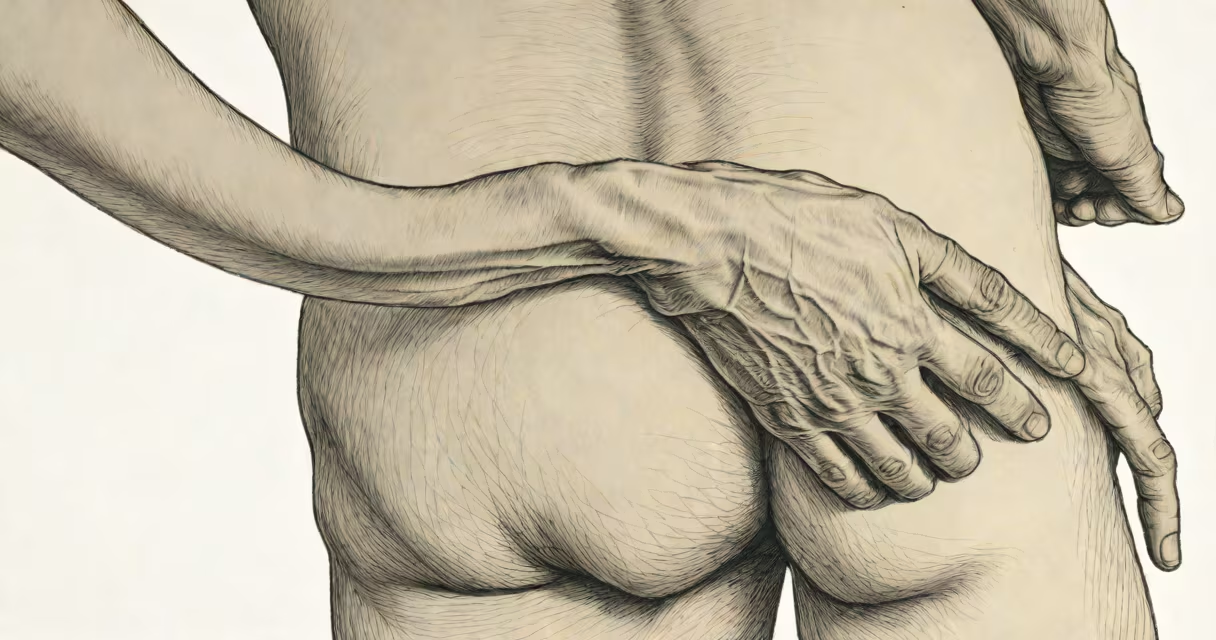
Pain just above the left hip refers to discomfort in the region over the iliac crest-the upper edge of the hip bone on the left side. This area is prone to strain from movement, posture, or nerve compression, and may signal muscle injury, nerve irritation, or referred pain from deeper structures.
The iliac crest runs horizontally along the upper pelvis. Pain in this zone typically arises from overuse, poor biomechanics, or direct trauma. It's distinct from pain in the hip joint itself, which lies deeper and lower. A sharp or dull ache here may worsen with bending, twisting, or prolonged standing.
Common triggers include lifting heavy objects, running on uneven terrain, or sitting with poor lumbar support. The pain may radiate slightly into the lower back or flank but rarely extends past the waistline. When localized to the upper hip rim, it often points to the quadratus lumborum muscle, the latissimus dorsi tendon, or the lateral femoral cutaneous nerve.
The area just above the left hip includes the iliac crest, the posterior superior iliac spine (PSIS), and surrounding soft tissues. The quadratus lumborum (QL) muscle originates here and stabilizes the lower spine during side-bending and trunk rotation. Overuse or imbalance can cause QL strain, leading to localized tenderness and stiffness.
Nerve-related pain is another frequent cause. The lateral femoral cutaneous nerve (LFCN) travels through the pelvis and can become compressed at the inguinal ligament. This condition-meralgia paresthetica-causes burning, tingling, or numbness on the outer thigh, but sometimes presents as aching near the iliac crest. Compression occurs with tight clothing, obesity, or repetitive hip flexion.
A 2020 study in Spine Journal found that 68% of patients reporting pain above the hip had muscular or myofascial origins, while 12% had nerve entrapment. Imaging showed no structural abnormalities in 80% of cases, underscoring that not all pain requires advanced scans.
Conditions causing pain just above the left hip fall into three categories: muscular, neural, and referred. Muscle strain accounts for nearly two-thirds of cases, especially among runners and weightlifters. Neural causes include LFCN compression or irritation of the dorsal rami nerves from facet joints.
| Type | Key Features | Typical Cause |
|---|---|---|
| Quadratus lumborum strain | Dull ache, worsens with side-bending, localized tenderness | Heavy lifting, sudden twist, prolonged standing |
| Lateral femoral cutaneous nerve entrapment | Burning, tingling, numbness on outer thigh | Tight jeans, pregnancy, diabetes, hip surgery |
| Referred pain from lumbar spine | Dull, deep ache; may radiate to buttock | Facet joint arthritis, disc degeneration |
One non-obvious distinction: pain from the QL muscle often improves with gentle stretching and heat, while nerve-related pain may worsen with pressure or prolonged sitting. A 2019 review in Physical Therapy in Sport noted that patients with LFCN entrapment reported relief after removing tight waistbands or switching to looser pants-simple changes with measurable impact.
Pain just above the left hip is frequently mislabeled as "just muscle strain." But persistent or worsening pain may indicate underlying issues. Red flags include nighttime pain, unexplained weight loss, or weakness in the leg. These warrant imaging or specialist evaluation.
Referred pain from the lumbar spine can mimic local muscle strain. For example, a herniated disc at L4-L5 may irritate the L4 nerve root, causing pain that radiates to the hip region. A 2021 study in Journal of Orthopaedic & Sports Physical Therapy found that 14% of patients with unilateral hip pain had lumbar spine pathology confirmed via MRI.
I've treated a 42-year-old office worker who reported daily pain above the left hip. He assumed it was due to long hours at his desk. After physical therapy, the pain improved slightly-but returned after a weekend hike. An MRI revealed a small stress fracture in the iliac wing, likely from cumulative strain. The diagnosis wasn't apparent until movement triggered symptoms.
Initial assessment involves history and physical exam. A provider checks for tenderness over the iliac crest, assesses gait, and tests hip and lower back range of motion. If nerve involvement is suspected, a Tinel's sign test may be performed over the inguinal ligament.
First-line treatment focuses on rest, ice, and activity modification. Stretching the QL and piriformis muscles reduces tension. For nerve-related pain, avoiding tight clothing and using a cushioned seat can relieve pressure. Over-the-counter NSAIDs help reduce inflammation and pain.
If symptoms persist beyond four weeks, imaging such as X-ray or MRI may be needed. A 2022 guideline from the American College of Radiology recommends MRI for suspected stress fractures or soft tissue pathology when conservative care fails.
Most cases resolve within days to weeks with proper care. Persistent or worsening pain should prompt medical consultation to rule out structural or systemic causes.