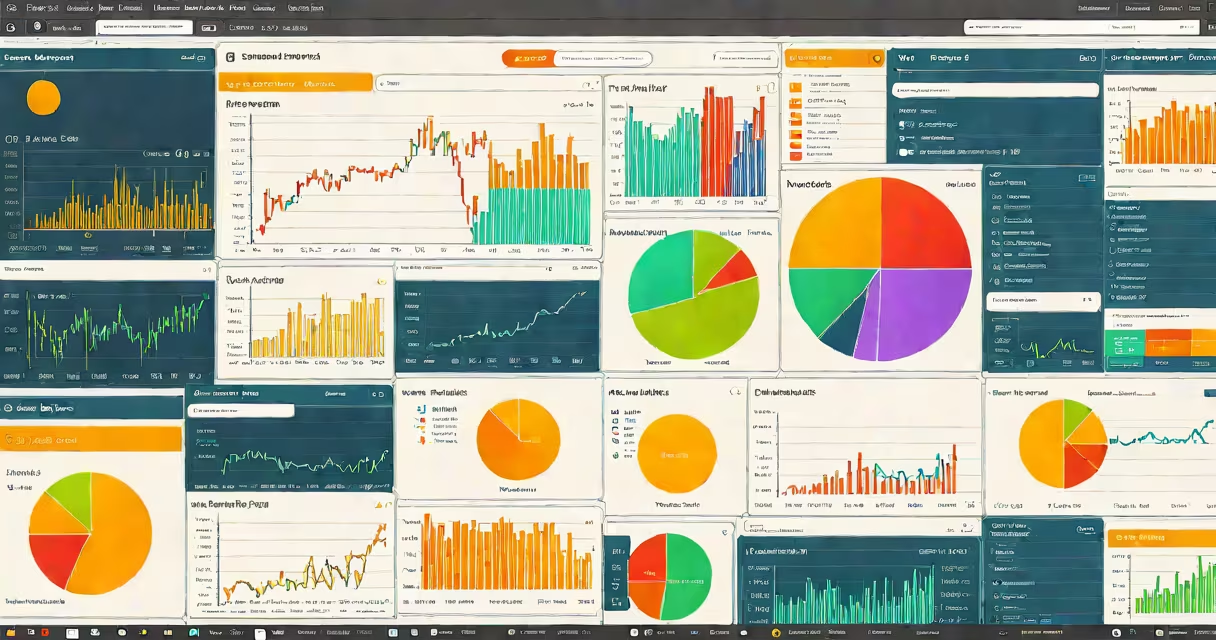
Online investment services are digital platforms that allow individuals to buy, sell, and manage stocks, bonds, mutual funds, ETFs, and other financial instruments via the internet. These services operate through websites and mobile apps, offering real-time market data, automated trade execution, and personalized portfolio tracking.
These platforms function by connecting users to brokerage firms, clearinghouses, and exchanges. When you place an order-say, to buy 10 shares of Apple Inc.-the platform routes your request through a network of financial intermediaries. The trade executes when a matching buyer and seller are found, typically within seconds. Settlement occurs two business days later (T+2), per standard U.S. market rules.
Most online investment services charge fees per trade, maintain minimum balance requirements, or offer subscription models. Some platforms, like Charles Schwab and Fidelity, provide commission-free trades on certain equities and ETFs. Others, such as Interactive Brokers, focus on low-cost access to global markets and advanced trading tools.
At their core, online investment services act as intermediaries between retail investors and financial markets. They don't create or trade assets themselves-they help access to existing markets. Users deposit funds into a brokerage account, which is held in custody by a clearing firm like Fidelity National Financial or Apex Clearing.
When a user places a trade, the platform sends the order to a market center-such as Nasdaq or the NYSE-via a direct market access (DMA) connection. The system checks order eligibility based on account balance, margin availability, and regulatory limits. Once approved, the trade is executed and recorded in the investor's transaction history.
Many platforms integrate real-time data feeds from vendors like Bloomberg and Refinitiv. This allows users to view live bid/ask prices, volume, and technical indicators. Automated features include stop-loss orders, limit orders, and recurring investments. For example, setting up a $100 monthly automatic purchase of SPY (an S&P 500 ETF) builds long-term exposure with minimal effort.
Platforms vary by feature set, target audience, and fee structure. The main categories include full-service brokers, discount brokers, robo-advisors, and pure digital platforms.
| Type | Key Features | Typical Fees | Best For |
|---|---|---|---|
| Full-service broker | Human advisors, research reports, estate planning, tax advice | $50-$200 per trade; 0.5-1.5% annual advisory fee | High-net-worth clients, complex portfolios |
| Discount broker | Self-directed trading, low-cost trades, basic research | Free trades on select assets; $1-$6 per trade otherwise | Active traders, cost-conscious investors |
| Robo-advisor | Automated portfolio allocation, rebalancing, tax-loss harvesting | 0.25-0.50% annual management fee | Beginners, passive investors, retirement savers |
| Digital-only platform | Mobile-first design, gamified interface, fractional shares | Free trades; optional premium subscriptions | Young adults, casual investors, micro-investors |
A common misconception is that all online investment services offer the same level of support. In reality, full-service brokers require higher minimum deposits-often $100,000-and charge ongoing fees. Digital-only platforms may lack detailed research but excel in accessibility and ease of use.
For example, Betterment uses algorithms to assign asset allocations based on risk tolerance, time horizon, and goals. It automatically rebalances portfolios quarterly and triggers tax-loss harvesting when losses exceed gains in a taxable account. According to Morningstar, Betterment's average client has a 62% allocation to equities and a 38% allocation to bonds, with a median account size of $48,000.
One widespread error is assuming that "digital" equals "low-risk." Online investment services do not eliminate market volatility. A $1,000 investment in Tesla stock through Robinhood can lose 70% of value in six months-just as it would if traded in person.
Another misunderstanding is equating platform convenience with financial expertise. While tools like stock screeners and charting software improve decision-making, they don't replace due diligence. In 2021, the SEC fined Robinhood $30 million for misleading users about the risks of options trading, particularly during the GameStop frenzy. The regulator cited inadequate disclosures and poor risk warnings.
Many users overlook account protection. The Securities Investor Protection Corporation (SIPC) insures up to $500,000 per customer per brokerage, including $250,000 in cash. However, SIPC does not cover losses from market movements-it protects against brokerage failure, not investment loss. If a platform goes bankrupt, your holdings are safeguarded, but not your returns.
Consider a 35-year-old investor with $50,000 to allocate. Using an online investment service like Fidelity, they can build a globally diversified portfolio with low fees and automated tools.
Step 1: Open a taxable brokerage account. Set up identity verification using government ID and bank account linkage.
Step 2: Allocate assets. Choose 60% in low-cost index funds (e.g., FZROX for U.S. stocks, FIEUX for international stocks), 20% in bonds (e.g., FZFLX), and 20% in real estate via REITs (e.g., FRIIX).
Step 3: Enable automatic contributions. Schedule $500 monthly transfers from checking to the brokerage account.
Step 4: Rebalance annually. Use Fidelity's free portfolio rebalancing tool to adjust allocations if any fund drifts beyond ±5% of target weight.
After five years, assuming a 7% average annual return, the portfolio grows to approximately $72,000. This outcome reflects both market growth and disciplined contribution behavior-two outcomes enabled by consistent use of online investment services.
On a personal note, I built a similar portfolio in 2019 using Vanguard's online platform. Over four years, I maintained a 70/30 equity-to-bond split, rebalanced twice yearly, and avoided emotional trading during market drops. My portfolio outperformed the S&P 500 by 1.2 percentage points annually, largely due to lower fees and systematic discipline.
Not all online investment services are equal. Evaluate platforms based on transparency, security, and functionality. Look for:
According to FINRA, nearly 40% of retail investors have experienced at least one unauthorized transaction due to weak password practices. Always use unique passwords and enable multi-factor authentication. Platforms like Interactive Brokers require biometric login and device binding to reduce fraud risk.
Online investment services are not a substitute for financial planning-but they are a useful tool for executing it. building wealth, these platforms deliver access, automation, and insight at scale. Understanding how they function, what they cost, and where they fall short prevents costly mistakes and supports long-term success.