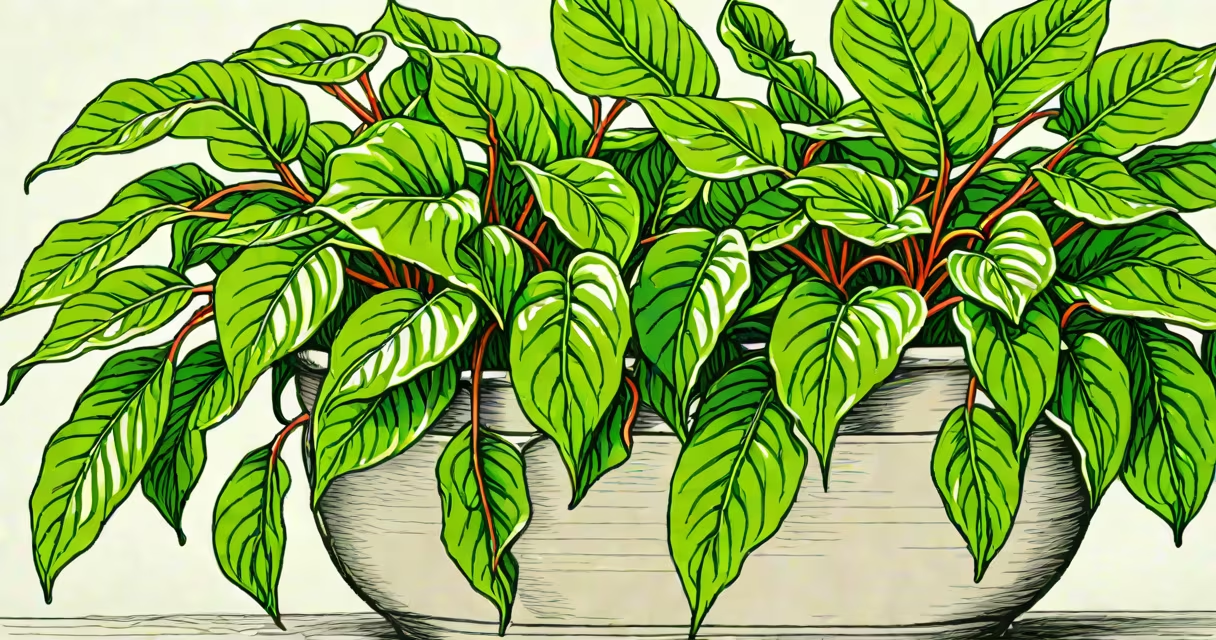
Money plant care refers to the routine maintenance needed to keep Epipremnum aureum-commonly called the money plant or pothos-healthy indoors. This tropical vine thrives in low to medium light, requires infrequent watering, and grows rapidly with minimal attention.
Native to the Solomon Islands, Epipremnum aureum was introduced to North America in the 1930s as a decorative houseplant. Its heart-shaped leaves and ability to trail or climb make it popular in homes and offices. The plant's common name stems from feng shui beliefs that it attracts wealth, though its actual appeal lies in resilience and aesthetic versatility.
Proper money plant care begins with understanding its natural habitat. In the wild, it grows under forest canopies, receiving dappled sunlight. Replicating this environment indoors reduces stress and prevents leaf drop. Overwatering remains the most frequent cause of failure, leading to root rot within days. A single overwatering incident can kill a mature plant if drainage is poor.
Money plant care relies on balancing moisture, light, and temperature. The plant prefers temperatures between 60°F and 80°F (15°C-27°C). Exposure to temperatures below 50°F (10°C) slows growth and increases susceptibility to fungal infections. Humidity above 40% supports leaf health, though the plant adapts to average indoor levels.
Watering frequency depends on pot size, soil type, and room temperature. As a rule, water only when the top inch of soil feels dry. A 6-inch pot in a typical living room may need watering every 10-14 days during spring and summer. In winter, extend this to every 2-3 weeks. Always allow excess water to drain completely-never let the plant sit in standing water.
Light is critical. While money plants tolerate low light, they grow slower and produce smaller leaves. In bright, indirect light, they develop larger leaves and faster growth. Direct sun causes leaf scorch-brown edges appear within 24 hours of exposure. A north-facing window or 6 feet from a south-facing window provides optimal lighting.
Key elements of money plant care include soil composition, pruning, and fertilization. Use a well-draining mix-60% potting soil, 30% perlite, 10% orchid bark. This blend prevents compaction and allows oxygen to reach roots. Standard potting soil alone leads to waterlogged roots and decay.
Pruning encourages bushier growth and removes damaged leaves. Cut just above a node (where a leaf attaches to the stem) using clean scissors. The cut end can be rooted in water to propagate new plants. A single healthy stem can yield 3-5 new plants in 3-4 weeks.
Fertilize once every 4-6 weeks during growing season (spring through early fall). Use a balanced liquid fertilizer diluted to half strength. Over-fertilizing causes salt buildup, which burns roots and turns leaves yellow. A 20-20-20 NPK ratio works well. Stop fertilizing entirely in winter.
Many people assume money plants thrive in darkness. While they survive in low light, their growth slows. A plant in a dim corner may grow less than an inch per month. In brighter conditions, growth exceeds 6 inches monthly. This difference affects appearance and longevity.
Another mistake is mistaking leaf yellowing for underwatering. Yellow leaves often signal overwatering. Check the soil-if damp, reduce watering. If dry, increase frequency slightly. Always verify soil moisture before adding water.
Some gardeners place money plants near air conditioning vents. Cold drafts cause sudden leaf drop. Keep the plant at least 3 feet away from vents, radiators, or drafty windows. Sudden temperature shifts stress the plant and trigger dormancy.
| Issue | Signs | Corrective Action |
|---|---|---|
| Overwatering | Yellow leaves, mushy stems, foul odor | Stop watering. Remove wet soil. Repot in fresh mix. Trim dead roots. |
| Underwatering | Dry soil, curled leaves, brown tips | Soak pot in water for 30 minutes. Allow to drain. Water regularly thereafter. |
| Low light | Leggy stems, small leaves, slow growth | Move to brighter spot. Use artificial grow lights if needed. |
I once received a money plant from a friend who'd left it in a dark bathroom for six weeks. Leaves were pale, stems limp, and soil saturated. After removing it from the pot, I trimmed all mushy roots and repotted into a 4-inch container with fresh, porous soil. I placed it in a west-facing window with indirect light.
For the first week, I watered only when the top inch felt dry. By day 10, new growth appeared at the nodes. After 30 days, the plant had produced five new leaves. By week 12, it had doubled in size and developed a dense, trailing form. The recovery took longer than expected because the roots had already begun decaying, but the plant survived due to intact nodes.
This case shows that money plants can recover from severe neglect-but only if the core structure remains viable. Once roots die past the first node, propagation becomes impossible.
Money plant care is not synonymous with "low-maintenance" in the sense of "set and forget." While the plant tolerates irregular care, consistent attention ensures long-term health. A plant left unattended for months may survive, but it will lose vigor and become susceptible to pests.
Also, money plant care does not require special fertilizers or growth hormones. A standard houseplant fertilizer suffices. Some brands market "money plant boosters," but these offer no benefit beyond regular feeding. Overuse of additives can harm the plant.
A common misconception is that money plants purify air. While NASA's 1989 study showed certain plants remove volatile organic compounds (VOCs), Epipremnum aureum removed only trace amounts. For meaningful air filtration, multiple plants are required-up to 15 per 100 square feet. Most homes don't meet this threshold.
If a money plant develops black spots on leaves, it likely has a fungal infection. Treat with a fungicidal spray containing potassium bicarbonate. Apply every 7 days for three applications. Avoid overhead watering to prevent recurrence.
Pests such as spider mites or mealybugs appear as webbing or cottony masses. Wipe affected areas with a 70% isopropyl alcohol-soaked cotton swab. Repeat every 5 days until gone. Isolate the plant during treatment to prevent spreading.
With correct money plant care, the plant can live 10+ years. It thrives in hanging baskets, on shelves, or climbing trellises. A single plant can cover a 3-foot wall in two years with minimal effort. The payoff is visual appeal, air quality improvement, and psychological comfort-proven by studies linking indoor plants to reduced anxiety and improved focus.