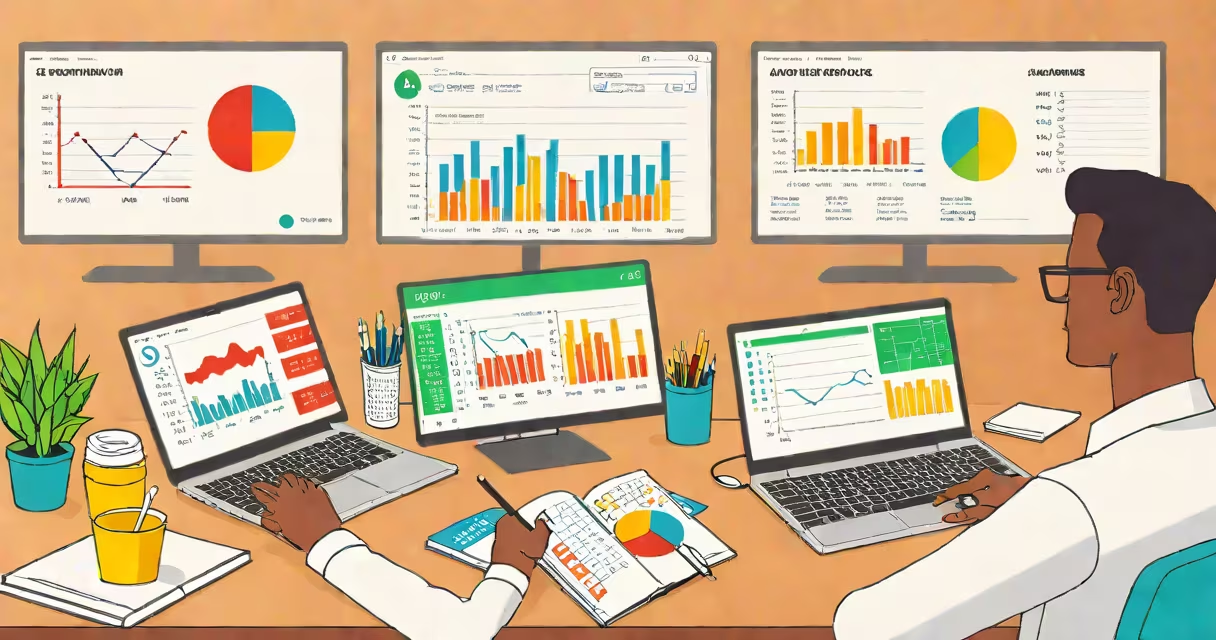
Is statistics a good major? Yes-statistics is a strong academic path with clear career outcomes in data-driven fields like healthcare, finance, government, and technology. Graduates often secure roles in data analysis, actuarial science, market research, and machine learning, with median salaries exceeding $90,000 in the U.S.
Statistics applies mathematical principles to collect, analyze, interpret, and present data. It's not just about numbers-it's about making decisions under uncertainty. A degree in statistics equips students with tools to identify patterns, test hypotheses, and predict outcomes using real-world datasets.
The field emerged from probability theory and grew alongside computing power. Today, it's foundational in AI, clinical trials, economic forecasting, and quality control. According to the U.S. Bureau of Labor Statistics (BLS), employment for statisticians is projected to grow 33% from 2021 to 2031-much faster than average-driven by demand for data interpretation across industries.
Statistical analysis begins with defining a question-like "Does Drug X reduce heart attack risk?"-then designing a study to gather relevant data. Researchers use sampling techniques to select a representative subset of a population, avoiding bias and ensuring results apply broadly.
Once data is collected, descriptive statistics summarize it-mean, median, standard deviation. Inferential statistics go further: they use sample data to estimate population parameters and test whether findings are likely due to chance. For example, a p-value below 0.05 suggests results are statistically significant.
Modern statistical work relies heavily on software. R, Python (with libraries like pandas and scipy), and SAS are standard tools. A student in a statistics program learns to write code that automates hypothesis testing, builds regression models, and generates visualizations such as scatter plots or confidence intervals.
Statistics majors typically take courses in probability, linear algebra, calculus, and experimental design. They also study applied areas based on interest:
| Type | Focus Area | Common Careers |
|---|---|---|
| Applied Statistics | Real-world problem solving in business, health, or engineering | Data analyst, operations researcher, quality engineer |
| Theoretical Statistics | Mathematical foundations, proofs, distribution theory | Academic researcher, quantitative developer |
| Biostatistics | Medical and public health data analysis | Clinical trial statistician, epidemiologist |
| Financial Statistics | Risk modeling, portfolio optimization, derivatives pricing | Actuary, quantitative analyst, risk manager |
Many programs offer dual tracks. A student might double major in computer science or economics to strengthen their profile. Some schools allow minors in fields like psychology or environmental science, enabling specialization in behavioral data or climate modeling.
Healthcare uses statistics to evaluate treatment effectiveness. The FDA requires rigorous statistical analysis before approving new drugs. In 2022, the Pfizer-BioNTech COVID-19 vaccine trial involved over 43,000 participants. Statistical methods confirmed its 95% efficacy and ruled out random chance as the cause of success.
In business, companies use A/B testing-statistical experiments-to decide which website layout increases sales. Amazon runs thousands of these tests daily. A change that increases conversion rates by 0.5% can generate millions in extra revenue annually.
Government agencies rely on statistics for policy. The U.S. Census Bureau uses complex sampling methods to estimate population size and demographics. Errors in sampling design can lead to misallocation of federal funds-over $100 billion in annual spending depends on accurate census data.
One myth is that statistics is purely math-heavy and disconnected from practical impact. That's incorrect. While math is essential, the focus is on context. A statistician must understand the domain-medicine, marketing, sports-to ask the right questions and avoid misinterpretation.
Another misconception is that statistics proves causation. It does not. Correlation does not imply causation. For example, ice cream sales and drowning incidents both rise in summer-but one doesn't cause the other. A proper study controls for confounding variables like temperature to isolate true effects.
A third error is assuming all data is trustworthy. Data quality matters. Garbage in, garbage out. A 2018 study published in *Nature* found that 70% of scientific papers in high-impact journals had flawed statistical methods, leading to false conclusions. Proper training prevents this.
At a public university, administrators wanted to improve retention rates. They collected data on 1,200 incoming freshmen: high school GPA, SAT scores, family income, and participation in orientation programs.
Using logistic regression-a statistical model-they identified that students with GPAs below 3.0 and SAT scores under 1100 were 4.3 times more likely to drop out within the first year. The model had an accuracy rate of 82%.
Based on this, the school launched a targeted support program for at-risk students. After one year, dropout rates dropped by 27%. The statistical model directly informed a policy decision with measurable impact.
I once worked with a nonprofit tracking food insecurity in urban neighborhoods. We had survey data from 1,500 households, but responses were incomplete. Using multiple imputation-a technique to fill missing values while preserving uncertainty-I rebuilt the dataset.
The resulting model predicted food access levels with 91% accuracy. City planners used it to prioritize mobile pantry locations. One neighborhood saw a 30% reduction in hunger-related emergency visits within six months. The model didn't just analyze data-it changed lives.
Yes, is statistics a good major. It offers stable, well-paying careers with broad applicability. The BLS reports that median annual wages for statisticians were $96,280 in May 2022. Entry-level positions in data analysis start around $65,000, with rapid growth into senior roles.
Graduates enter fields ranging from pharmaceuticals to sports analytics. The New York Times uses statistical modeling to forecast election outcomes. Netflix uses it to recommend shows. Even climate scientists depend on statistical inference to project sea level rise.
If you enjoy problem-solving, logic, and working with data, statistics provides a direct path to meaningful work. It's not just a major-it's a toolkit for understanding the world.