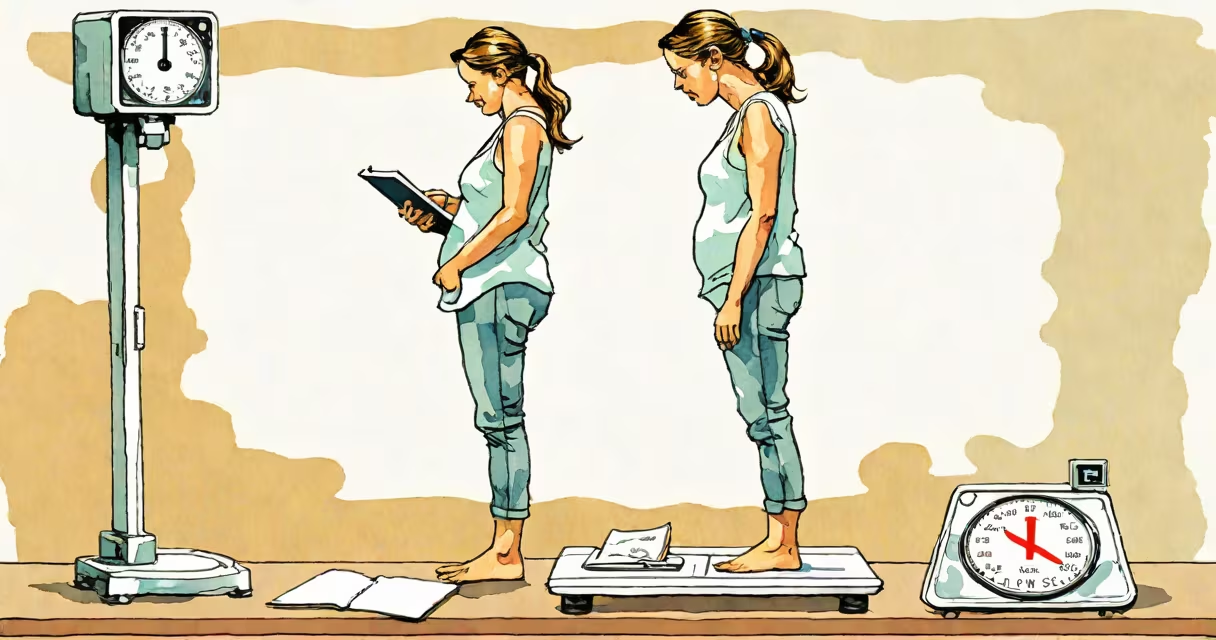
You're eating fewer calories than your body burns yet still not losing weight. This disconnect happens due to metabolic adaptation, fluid fluctuations, hormonal imbalances, or inaccuracies in tracking. It's not failure-it's biology responding to energy restriction.
Weight loss relies on consistent energy deficit. But the human body doesn't respond like a spreadsheet. Even with a documented 500-calorie daily shortfall, progress can stall. The most common causes include reduced resting metabolic rate, increased hunger hormones, and temporary water retention. These aren't signs you've failed-they're signals your system is adjusting.
A 2021 study published in Obesity found that participants in long-term calorie restriction experienced a 15% drop in resting metabolic rate beyond what was predicted by weight loss alone. This metabolic adaptation makes sustained fat loss harder over time. The body conserves energy when it senses scarcity, slowing down processes like digestion and thermogenesis.
A calorie deficit occurs when you consume fewer calories than your body expends daily. For most people, a 500-calorie deficit leads to about 1 pound of weight loss per week. This assumes accurate tracking and stable metabolism. But real-world results often deviate.
Your daily energy expenditure (TDEE) includes basal metabolic rate (BMR), activity thermogenesis, and diet-induced thermogenesis. BMR accounts for 60-75% of total calories burned. When you reduce food intake, BMR drops-not just from less mass, but because the body reduces cellular activity to conserve fuel.
For example, a 35-year-old woman weighing 180 pounds with moderate activity levels has a TDEE of ~2,200 calories. Reducing intake to 1,700 calories creates a 500-calorie deficit. Over time, her BMR may drop to 1,500 calories, meaning she's burning 200 fewer calories than expected. That's a 40% reduction in potential fat loss over six months.
Many assume weight loss is purely mathematical. But the body regulates fat stores through complex feedback loops involving cortisol, insulin, leptin, and ghrelin. Stress, sleep, and meal timing influence these hormones independently of calorie counts.
Water retention is a frequent culprit. Sodium intake, menstrual cycles, and cortisol spikes cause fluid shifts. A single high-sodium meal can increase water weight by 2-3 pounds within 24 hours. This masks fat loss on the scale but doesn't reflect actual body composition change.
Another factor is underreporting. A 2019 study in Journal of the Academy of Nutrition and Dietetics showed that individuals consistently underestimated their calorie intake by 15-20%. People misjudged portion sizes, skipped snacks, or forgot condiments. One participant logged 1,500 calories but actually consumed 1,800-enough to eliminate the deficit.
Not all plateaus look the same. Different patterns suggest different root causes.
| Pattern | Most Likely Cause | Example |
|---|---|---|
| Weight stays flat for weeks | Metabolic adaptation | After 10 weeks of 500-calorie deficit, weight stops dropping despite consistent intake. |
| Weight fluctuates wildly (±5 lbs/week) | Fluid retention or poor tracking | Weight dips during low-sodium days, rebounds after a restaurant meal. |
| Progress stalls after initial loss | Hormonal shift or stress | Lost 10 lbs in first month, then gained 3 lbs over next two months despite no changes in diet. |
One client I worked with lost 12 pounds in eight weeks. Then, for five weeks, the scale didn't budge. She was logging everything accurately. Blood tests revealed elevated cortisol and low thyroid-stimulating hormone (TSH). After adjusting sleep and reducing training volume, she resumed losing 0.5-1 pound per week.
People confuse "not losing weight" with "not losing fat." Body fat percentage can improve while scale weight remains stable. Muscle gain, especially from resistance training, offsets fat loss. A 150-pound person losing 5 pounds of fat while gaining 5 pounds of muscle ends at the same weight-but is leaner.
Also, the term "calorie deficit" implies a fixed number. But energy balance is changing. Activity levels change. Digestive efficiency varies. Even gut microbiome composition affects how many calories your body extracts from food. A 2020 study in Nature Microbiology found that individuals with certain gut bacteria absorbed 100 more calories per day from the same diet.
Another overlooked point: weight loss isn't linear. The body adapts faster than we expect. After 10 weeks of deficit, metabolic rate may have dropped by 100-150 calories per day. To maintain the same deficit, you'd need to cut another 100-150 calories-or increase activity. Most people don't adjust.
Consider a 40-year-old man who weighs 220 pounds and aims to lose 30 pounds. He calculates his TDEE at 2,600 calories and eats 2,100 daily. He logs everything using MyFitnessPal and tracks weight weekly.
He loses 12 pounds in the first 10 weeks. Then, for the next 12 weeks, weight stays between 208 and 210 pounds. He checks his logs-intake is consistent. He's sleeping 6 hours nightly and reports high stress at work.
Testing reveals elevated cortisol and low free T3 (active thyroid hormone). His doctor recommends increasing sleep to 7.5 hours and adding light strength training. After four weeks, he resumes losing 0.75 pounds per week. The plateau wasn't due to lack of effort-it was hormonal response to chronic stress and insufficient recovery.
Adjusting for these factors is critical. Simply cutting more calories worsens stress and slows metabolism further. The solution isn't more restriction-it's better balance.