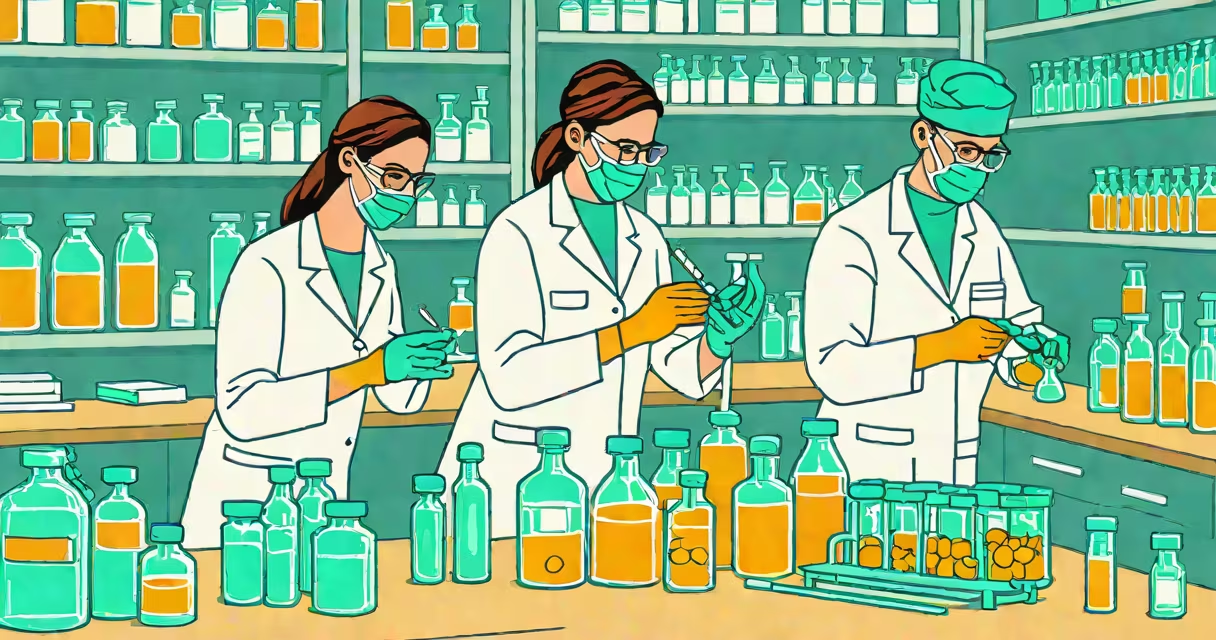
Rabies vaccine is produced by growing the rabies virus in controlled laboratory conditions using mammalian cell cultures, then inactivating it to remove toxicity while preserving immune recognition. The process relies on specific cell lines such as Vero cells, which support high-yield viral growth without causing disease in humans.
The core method involves cultivating the rabies virus in a stable, well-characterized cell line derived from African green monkey kidney cells. These Vero cells are grown in bioreactors under strict sterile conditions. Once the cell monolayer reaches optimal density, the rabies virus strain-typically the challenge virus standard (CVS) or similar-is introduced. The virus replicates within the host cells, producing large quantities of viral particles.
After replication, the virus is harvested from the cell culture medium. The next step is inactivation using chemicals such as formalin, which permanently alters the viral proteins and nucleic acid structure to eliminate infectivity. This ensures the vaccine cannot cause rabies while still presenting antigenic targets to the immune system. The inactivated virus is then purified through multiple filtration and chromatography steps to remove cellular debris, residual host cell proteins, and contaminants.
| Step | Description | Key Technology/Agent |
|---|---|---|
| Cell Culture | Grow Vero cells in bioreactors to form a dense monolayer | Bioreactor systems, nutrient media |
| Viral Infection | Expose cells to live rabies virus strain | CVS-11 strain, infection multiplicity of 0.1 |
| Harvest & Inactivation | Collect supernatant, treat with formalin for 7 days | Formalin (0.1%), temperature control |
| Purification | Ultrafiltration, affinity chromatography, diafiltration | Protein A columns, 100 kDa filters |
| Formulation | Add stabilizers (e.g., sucrose), adjust pH to 7.2 | Sodium phosphate buffer, aluminum hydroxide adjuvant |
Each batch undergoes rigorous quality control. The World Health Organization (WHO) sets standards requiring potency testing via mouse protection assays. A dose must protect 100% of mice challenged with a lethal dose of rabies virus., sterility, endotoxin levels, and residual DNA content are monitored. The U.S. FDA mandates that each vaccine lot pass release testing before distribution.
Modern rabies vaccines are typically administered in a series of four doses over 28 days for pre-exposure prophylaxis. Post-exposure treatment includes wound cleaning, immunoglobulin injection, and five doses of vaccine over 28 days. The vaccine's effectiveness hinges on consistent manufacturing processes and accurate dosing.
A common misconception is that rabies vaccine is made from live virus. It is not. All licensed human rabies vaccines are inactivated. The only exception is the live-attenuated vaccine used in animals, such as the SAD B19 strain in oral baits for wildlife. Human vaccines rely solely on inactivated or recombinant antigens.
Another misunderstanding is that the vaccine is derived from animal brains. Early versions used neural tissue from sheep or horse brain, which carried risks of allergic reactions and rare neurological side effects. Modern vaccines replaced those with cell-culture methods in the 1960s. The WHO estimates that over 95% of current global production uses Vero cell-based platforms, reducing adverse events.
In my lab work during a summer internship at a biopharmaceutical facility, I observed the purification stage. We ran samples through a 100 kDa ultrafiltration membrane to remove large protein aggregates. A single error in buffer composition caused a 30% drop in yield. That moment taught me how sensitive the process is-even minor deviations affect final product consistency.
One non-obvious fact: the choice of cell line impacts both safety and scalability. Vero cells are preferred because they grow rapidly, support high viral titers, and have low risk of harboring adventitious agents. In contrast, primary chick embryo fibroblasts were historically used but are less scalable and harder to maintain consistently. Regulatory agencies like the European Medicines Agency (EMA) require extensive characterization of the cell substrate, including genetic stability and absence of retroviruses.
For example, the human rabies vaccine Imovax Rabies (produced by Sanofi Pasteur) uses Vero cells and is approved in over 100 countries. Each vial contains 1.0 mL of inactivated virus suspended in saline with 0.02% phenol as preservative. The vaccine is stored at 2-8°C and remains stable for up to 3 years.
When considering whether you need vaccine, especially after a bite from a wild animal, offloading the decision to medical professionals is critical. Delaying vaccination increases mortality risk-rabies is nearly 100% fatal once symptoms appear. Prevention through timely vaccination is the only effective strategy.
Understanding how rabies vaccine is made reveals the precision required to balance safety, efficacy, and scalability. The process combines virology, cell biology, and regulatory science to produce a tool that prevents death in over 99% of cases when administered correctly.