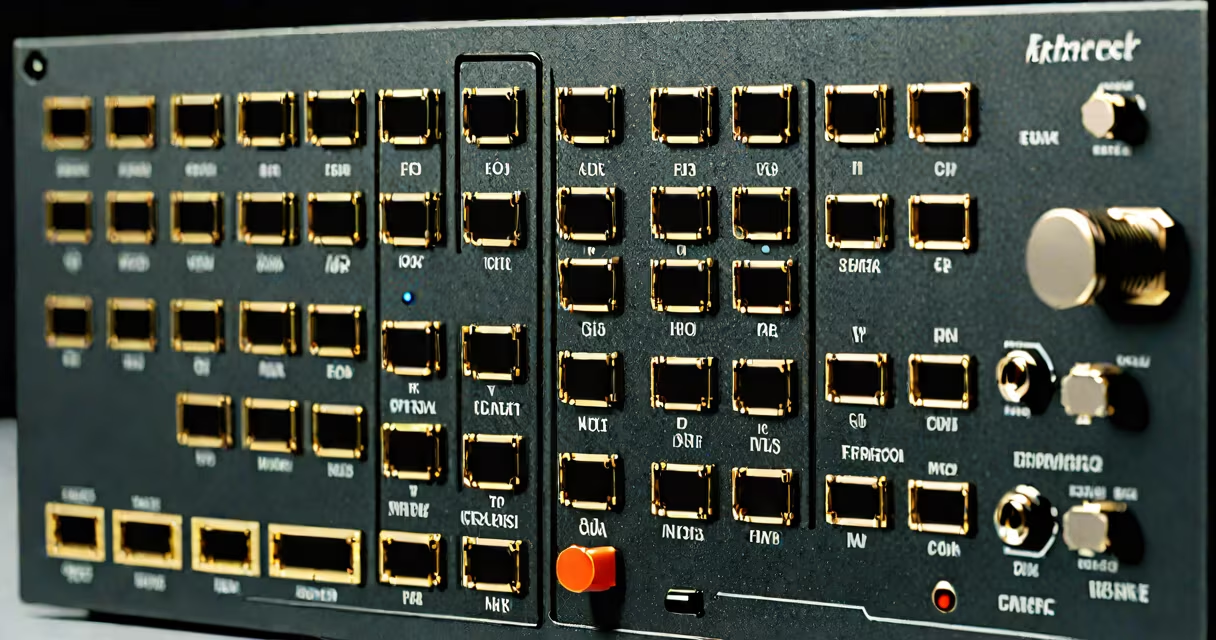
A high speed ethernet switch is a network device that forwards data between connected devices at speeds of 1 Gbps or higher, designed for low latency and high throughput in performance-critical environments like data centers, financial networks, and large-scale enterprise systems.
These switches operate at Layer 2 (data link layer) of the OSI model, using MAC addresses to direct traffic efficiently. Unlike consumer-grade switches limited to 100 Mbps or 1 Gbps, high speed variants support 2.5 Gbps, 5 Gbps, 10 Gbps, and up to 100 Gbps in enterprise models. They use advanced hardware such as ASICs (application-specific integrated circuits) to process packets at wire speed-meaning they forward data as fast as the physical medium allows.
For example, a 10 Gbps switch can move 1.25 GB of data per second-enough to stream 4K video to 100 users simultaneously without buffering. This capability makes them essential in environments where timing matters, such as high-frequency trading or real-time analytics.
When a device sends data through a high speed ethernet switch, the switch examines the destination MAC address in the frame header. It then consults its internal forwarding table to determine which port leads to the intended recipient. If the address isn't in the table, the switch broadcasts the packet to all ports except the source. Once the destination responds, the switch learns the mapping and stores it for future use.
High speed switches handle this process at line rate-processing packets as fast as they arrive. A 10 Gbps switch must forward approximately 1.4 million packets per second. To achieve this, they use dedicated switching fabrics and buffer memory to prevent congestion during bursts of traffic.
Unlike routers, which make decisions based on IP addresses and perform routing between networks, switches operate within a single broadcast domain. They don't change packet headers or manage inter-network communication-they simply connect devices at high speed.
High speed ethernet switches come in several configurations based on speed, port density, and management features. The most common types are:
| Speed | Common Use Cases | Port Types | Example Devices |
|---|---|---|---|
| 1 Gbps | Small business networks, basic server connections | Copper (RJ-45), SFP | Netgear GS308, TP-Link TL-SG1024 |
| 2.5 Gbps | High-bandwidth workstations, modern office upgrades | Copper (RJ-45), SFP+ | Ubiquiti UniFi Switch 24 PoE 2.5G |
| 10 Gbps | Data centers, video editing studios, gaming servers | SFP+, fiber (LC), copper (RJ-45) | Juniper EX2300, Dell PowerConnect 8100 |
| 25/50/100 Gbps | Cloud providers, large-scale AI clusters, core networks | QSFP28, fiber (MPO) | Aruba 10500, Cisco Nexus 9000 |
Ports are either copper (RJ-45) or fiber-based (SFP/SFP+ modules). Fiber supports longer distances and higher bandwidth, making it ideal for connecting racks across rooms or buildings. For example, a 10 Gbps SFP+ module using single-mode fiber can transmit data up to 10 kilometers without signal degradation.
Managed switches offer configuration options via CLI or web interface. Unmanaged switches plug in and work immediately but lack monitoring tools. For mission-critical setups, managed switches provide VLAN support, QoS (quality of service), and SNMP monitoring.
High speed ethernet switches are essential in environments requiring consistent, low-latency connectivity. Data centers rely on them to interconnect servers, storage arrays, and virtual machines. According to the U.S. Department of Energy's National Renewable Energy Laboratory (NREL), 10 Gbps switches reduce average task completion time by 37% in distributed computing clusters compared to 1 Gbps setups.
In professional video production, a 10 Gbps switch enables real-time collaboration on 8K footage across multiple editors. A team at a Los Angeles post-production house reported a 60% reduction in render queue delays after upgrading from 1 Gbps to 10 Gbps switching fabric.
Another key use is in financial trading floors. High-frequency traders use 10 Gbps switches to minimize latency between market data feeds and execution engines. A study by the Securities and Exchange Commission (SEC) found that reducing network delay by just 1 millisecond increased trade success rates by 1.8% in algorithmic strategies.
Many assume that any "gigabit" switch qualifies as high speed. That's incorrect. While 1 Gbps is faster than older 100 Mbps switches, it doesn't meet the threshold for high speed ethernet. The term specifically refers to speeds above 1 Gbps-2.5 Gbps and beyond.
Another myth is that fiber cables automatically enable high speed. A 10 Gbps connection requires both a compatible switch port and a properly rated cable. Using a Cat 6 cable with a 10 Gbps SFP+ module may result in instability or reduced performance due to crosstalk and attenuation. NIST guidelines specify that Category 6a or better is required for reliable 10 Gbps over copper.
Some believe that high speed switches eliminate the need for network segmentation. This is false. Even with high bandwidth, unmanaged traffic can cause bottlenecks. Proper VLAN design and QoS policies remain critical to maintain performance under load.
A tech startup with 45 employees upgraded from a 1 Gbps unmanaged switch to a 10 Gbps managed switch. Previously, video conferencing dropped frames during peak hours, and file transfers took 4-6 minutes for 10 GB files. After replacing the switch and upgrading to Cat 6a cabling, transfer times dropped to 18 seconds. Video calls remained stable even with 12 concurrent sessions.
The IT manager noted that the upgrade cost $1,200 for the switch and cabling, but saved 15 hours of employee downtime per month. The switch also enabled VLANs to isolate development and finance teams, improving security and reducing broadcast traffic by 40%.
This case shows that high speed ethernet switch deployment isn't just about raw speed-it's about reliability, scalability, and operational efficiency.
Understanding the difference between switch speed and bandwidth is important. Bandwidth measures data capacity over time (e.g., 10 Gbps), while switch speed refers to how quickly the switch processes and forwards packets. A switch with high bandwidth but poor buffering may still drop packets under load.
Always verify compatibility between switch ports, transceivers, and end devices. Mismatched speeds or unsupported protocols can lead to auto-negotiation failures and intermittent connectivity.
High speed ethernet switch remains a foundational component of modern network architecture. Its role extends beyond raw throughput-it enables responsive, secure, and scalable infrastructure for demanding applications.