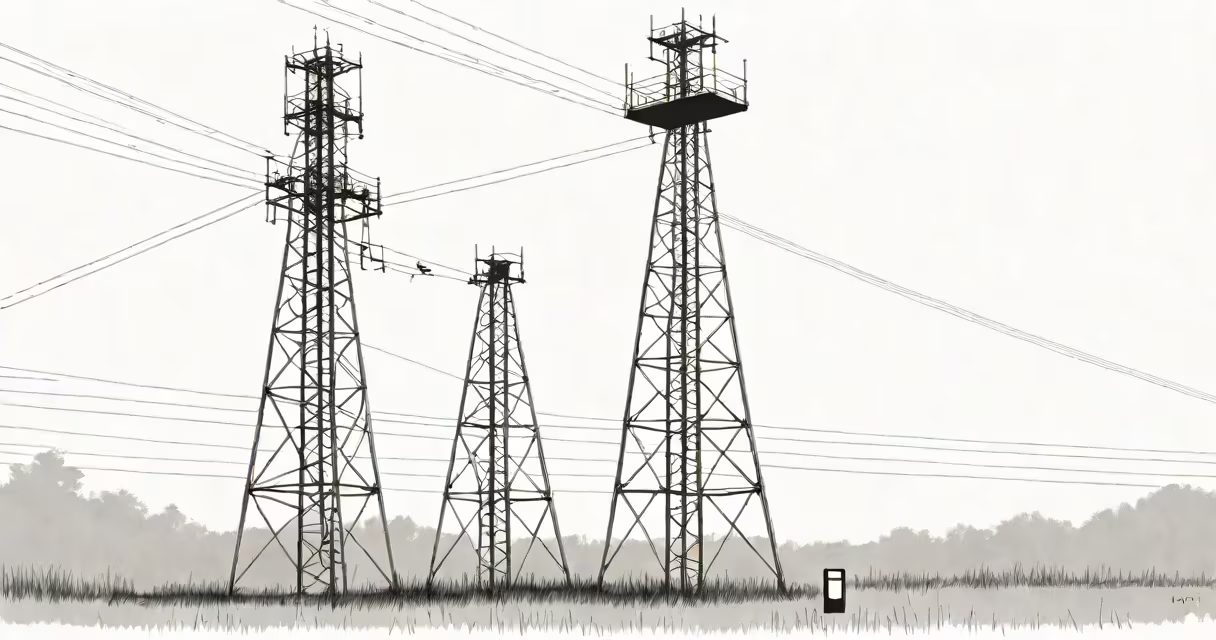
GPRS, or General Packet Radio Service, is a packet-switched data transmission technology used on 2G GSM mobile networks to enable basic internet connectivity. It allows mobile devices to send and receive data in small bursts rather than maintaining a constant connection, improving efficiency and reducing costs compared to circuit-switched methods.
GPRS what is often misunderstood as a standalone internet service. It's not. It's a layer added to existing GSM infrastructure that enables data services like email, web browsing, and instant messaging on older phones. It operates over the same radio frequencies as voice calls but uses a different switching method to manage data traffic.
The core idea behind GPRS is efficiency. Instead of reserving a dedicated channel for the entire duration of a data session-like a phone call-it breaks data into packets. These packets travel independently across the network and reassemble at the destination. This method supports multiple users sharing bandwidth simultaneously, making it ideal for low-bandwidth applications.
GPRS operates on a packet-switched model, meaning data is split into discrete units called packets. Each packet contains both payload (the actual data) and header information (source, destination, sequence number). These packets are routed through the network based on current load and available paths.
When a mobile device sends data via GPRS, it connects to a base station, which forwards the packet to a Serving GPRS Support Node (SGSN). The SGSN routes the packet to a Gateway GPRS Support Node (GGSN), which interfaces with external networks like the internet. The reverse path applies for incoming data.
A real-world example: sending a text-based email from a feature phone using GPRS. The email client divides the message into packets. Each packet travels through the nearest cell tower to the SGSN, then to the GGSN, and finally to the recipient's mail server. The process takes seconds, even over congested networks.
GPRS is not a single-speed system. It supports multiple coding schemes that determine throughput and reliability. These are categorized by data rates and error correction levels.
| Coding Scheme | Data Rate (kbps) | Use Case |
|---|---|---|
| CS-1 | 8.0 | Low signal areas; high error tolerance |
| CS-2 | 12.0 | Standard coverage; balanced performance |
| CS-3 | 14.4 | Good signal; moderate speed |
| CS-4 | 16.0 | Optimal conditions; highest speed |
These rates are theoretical maximums. Actual speeds depend on network congestion, distance from the tower, and device capabilities. In practice, most users experienced 10-14 kbps under normal conditions.
Some carriers introduced EDGE (Enhanced Data Rates for GSM Evolution) as a transitional upgrade. EDGE is not GPRS but builds on it. It uses 8PSK modulation to boost speeds up to 384 kbps-still far below 3G-but offers faster performance than standard GPRS.
GPRS remains operational in many regions despite the rise of 4G and 5G. Its longevity stems from low power consumption, minimal infrastructure cost, and sufficient performance for specific applications.
Common modern uses include:
For example, a water meter in rural Texas uses a GPRS-enabled modem to transmit daily usage data to a central server. The device wakes every 24 hours, sends a 20-byte packet, and returns to sleep. This cycle consumes less than 100 mAh per month-ideal for battery-powered deployments.
Another non-obvious fact: GPRS is still used in emergency systems. In Japan, some earthquake early warning systems rely on GPRS to broadcast alerts to mobile devices during seismic events. The protocol's stability and wide coverage make it resilient during network failures.
GPRS is frequently mistaken for 3G or LTE. It is not. While 3G networks support higher data rates and better latency, they are distinct technologies. GPRS runs on GSM bands; 3G uses UMTS, which requires different hardware and spectrum allocation.
Some users assume GPRS is obsolete. That's incorrect. According to GSMA Intelligence (2023), over 2.3 billion mobile subscriptions globally still use 2G networks, many relying on GPRS for data. In parts of Sub-Saharan Africa and South Asia, GPRS remains the primary route to digital services.
Also, GPRS does not require a separate data plan in all cases. Many carriers bundle GPRS access with voice plans. A user in Nigeria with a MTN SIM can send emails and check social media via GPRS without activating a premium data package-though speeds remain limited.
I once used a Nokia 3310 (2000 model) with a GPRS-capable SIM card to send weather reports from a remote hiking trail in the Canadian Rockies. The phone had no Wi-Fi, no 3G, and only a monochrome screen. I typed a 120-character update, sent it via GPRS, and received confirmation in 18 seconds. The battery lasted six days on a single charge. This was not a luxury device-it was a tool for survival in low-connectivity zones.
That experience showed me that GPRS isn't about speed. It's about persistence. When signals fade and networks fail, GPRS keeps working-slowly, reliably, and efficiently.
GPRS what is isn't about flashy features. It's about foundational connectivity. It enabled the first wave of mobile internet, paved the way for SMS-based services, and continues to serve niche markets where simplicity and reliability outweigh raw performance.
GPRS what is is not a relic. It's a functional, proven technology that still delivers value where it matters most.