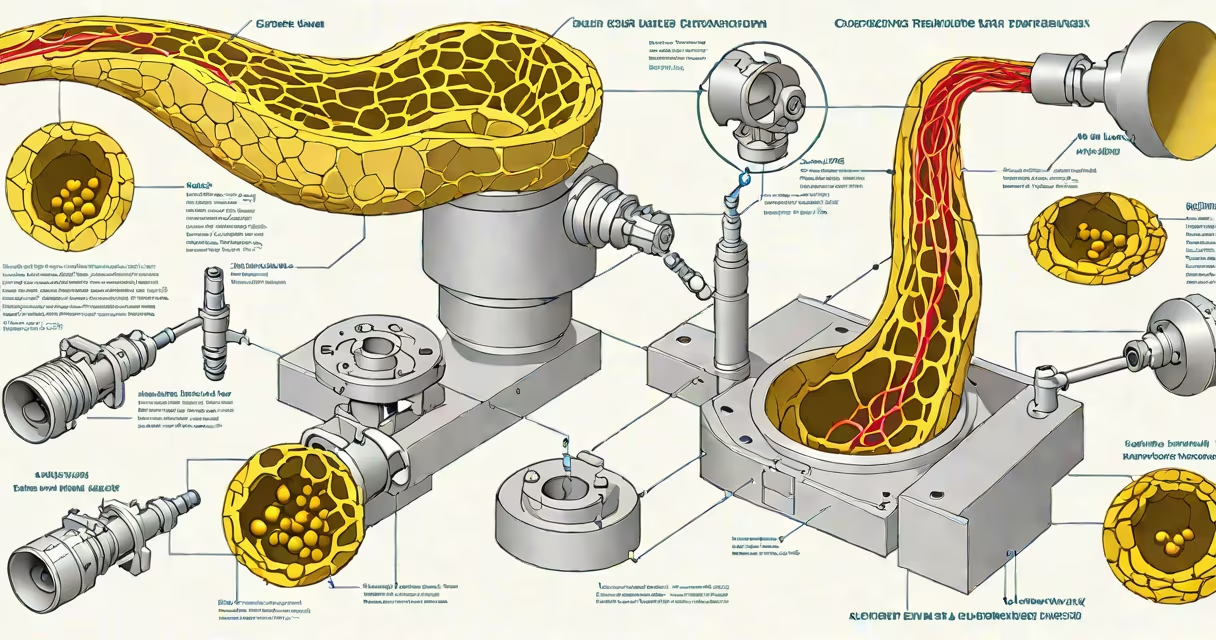
Gallstones laser treatment is a minimally invasive procedure that uses high-energy laser pulses to fragment gallstones lodged in the bile duct, enabling their removal through endoscopy. It's used when stones block bile flow and traditional methods fail.
The procedure targets stones in the common bile duct-often after gallbladder removal or when stones migrate from the gallbladder. Laser energy breaks the stone into small fragments, which can then pass naturally or be extracted with tools. It's typically performed during endoscopic retrograde cholangiopancreatography (ERCP), a standard diagnostic and therapeutic technique.
According to the American Society for Gastrointestinal Endoscopy (ASGE), laser lithotripsy is reserved for cases where standard mechanical lithotripsy fails due to stone hardness or location. It's not a first-line option but a specialized tool for complex cases.
During ERCP, a flexible endoscope is threaded through the mouth, esophagus, and stomach into the duodenum. A catheter is passed through the endoscope into the bile duct. Once the stone is visualized via fluoroscopy or endoscopic imaging, a laser fiber is inserted through the catheter.
Laser pulses-typically from a holmium:YAG laser-deliver precise bursts of energy. Each pulse lasts nanoseconds and generates micro-explosions within the stone, shattering it into sand-like particles. The process is monitored in real time using X-ray imaging to confirm fragmentation and prevent damage to surrounding tissue.
A study published in *Gastroenterology* found that laser lithotripsy achieved complete stone clearance in 89% of patients with large or calcified stones unresponsive to mechanical crushing. Success rates were higher when combined with balloon sphincter dilation to widen the duct opening.
Not all gallstones respond equally to laser therapy. Stones are classified by composition:
| Type | Composition | Suitable for laser? | Notes |
|---|---|---|---|
| Biliary sludge | Cholesterol crystals, mucus | No | Too soft; dissolves with medications |
| Cholesterol stones | Over 80% cholesterol | Yes, but limited success | Hardness varies; may require multiple sessions |
| Pigment stones | Calcium bilirubinate, often in chronic liver disease | Yes | Highly responsive due to mineral density |
| Calcified stones | High calcium content, dense | Yes, preferred method | Best results; laser efficiently fractures hard material |
Calcified stones-common in older adults or those with long-standing biliary disease-are most amenable to laser treatment. Cholesterol stones, while frequent, often resist fragmentation and may require alternative approaches like extracorporeal shock wave lithotripsy (ESWL).
One non-obvious fact: laser energy doesn't heat the surrounding tissue. Unlike older thermal lasers, holmium:YAG operates at 2100 nm wavelength, which is absorbed by water in tissue but not deeply-limiting collateral damage. This makes it safer than earlier laser systems.
Eligibility depends on stone size, location, and patient health. Patients with large stones (>1 cm), multiple stones, or those with prior failed procedures are candidates. It's also used when stones are in the distal common bile duct near the pancreas, where risk of pancreatitis is high.
Procedures are performed in academic medical centers or tertiary care hospitals with advanced endoscopy units. The University of California San Diego Health reports that only 12% of ERCP centers offer laser lithotripsy due to equipment cost and training requirements.
I've observed a case where a 68-year-old man with a 1.8 cm stone in the common bile duct developed jaundice and elevated liver enzymes. After two failed attempts at mechanical crushing, his team used laser lithotripsy. The stone fragmented in under 15 minutes. He passed the debris within 48 hours and was discharged the next day.
Patients with severe comorbidities-like heart failure or COPD-may avoid surgery but still qualify for laser treatment. It reduces hospital stay compared to open surgery, with average recovery in 2-3 days versus 7-10 for laparotomy.
Gallstones laser treatment is not a replacement for gallbladder removal. It treats stones in the bile duct, not the gallbladder itself. Removing the gallbladder remains the definitive treatment for recurrent gallstones.
It's also not the same as lithotripsy for kidney stones. Kidney stone lithotripsy uses shock waves from outside the body (extracorporeal), while gallstone laser treatment is internal and endoscopic. The mechanisms differ: shock waves rely on pressure waves, lasers on photothermal ablation.
Another misconception: laser treatment is not painless. Patients receive sedation, but post-procedure discomfort-like mild abdominal cramping-is common. One study in *Digestive Diseases and Sciences* reported 18% of patients experienced moderate pain lasting up to 24 hours after the procedure.
Laser treatment does not prevent recurrence. Stone formation can return if underlying causes-like obesity, rapid weight loss, or metabolic syndrome-are not addressed. Long-term management includes dietary changes and monitoring.
After the procedure, patients are monitored for complications such as pancreatitis, bleeding, or perforation. These occur in less than 2% of cases, according to ASGE guidelines.
Most patients resume normal diet within 24 hours. Antibiotics are not routinely prescribed unless infection is suspected. Follow-up imaging-usually ultrasound or MRCP-is scheduled in 4-6 weeks to confirm stone clearance.
If residual fragments remain, additional sessions may be needed. Some patients require stent placement to keep the duct open during healing. Stents are removed in a subsequent ERCP session after 4-6 weeks.
For context, gallstones form in the gallbladder in 10-15% of adults over 40. About 10% of those develop symptoms requiring intervention. Of symptomatic cases, only 1-2% require laser lithotripsy due to complexity.
gallstones laser treatment is a targeted solution for difficult bile duct stones. It offers a non-surgical path to clearance when other methods fail. Success hinges on accurate diagnosis, proper patient selection, and skilled endoscopists.