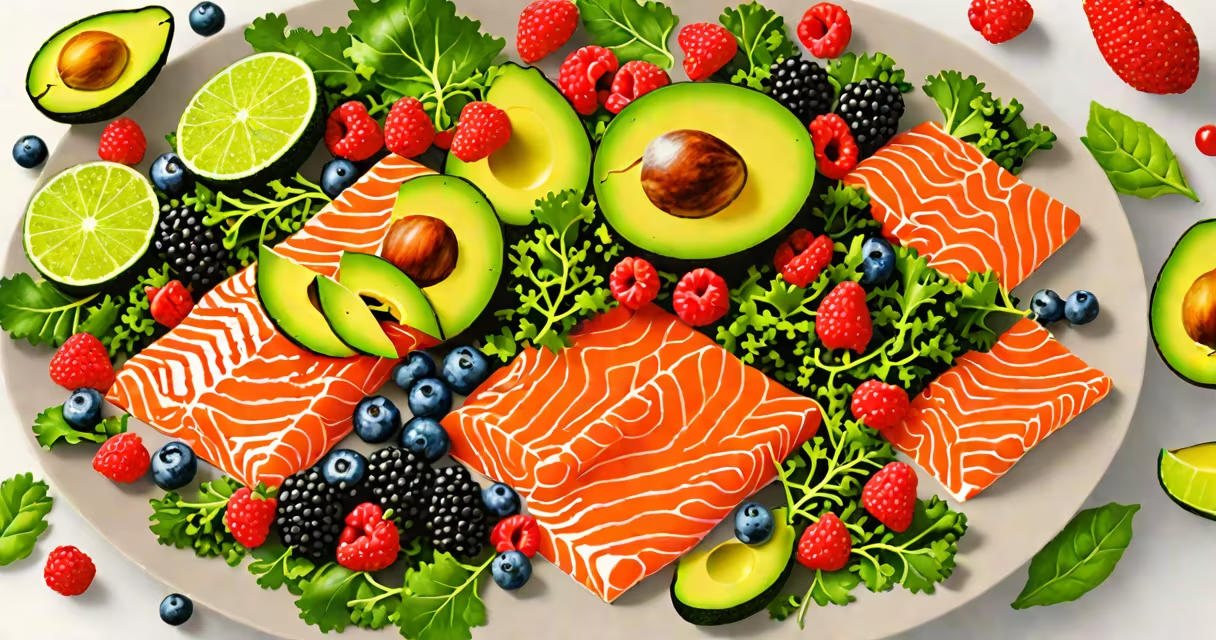
Foods that help reduce fat are nutrient-dense, whole foods that support fat metabolism, reduce visceral fat accumulation, and improve insulin sensitivity. They work through mechanisms like boosting thermogenesis, stabilizing blood sugar, and reducing inflammation. Examples include fatty fish, legumes, cruciferous vegetables, and nuts.
These foods don't cause rapid fat loss on their own. Instead, they create conditions in the body that favor fat utilization over storage. For instance, omega-3 fatty acids in salmon increase mitochondrial efficiency, allowing cells to burn fat more effectively during rest and activity. High-fiber legumes slow glucose absorption, preventing insulin spikes that promote fat storage.
Research from the National Institutes of Health shows that diets rich in plant-based protein and fiber lead to greater reductions in abdominal fat compared to low-fiber, high-refined-carb diets. A 2020 study published in Obesity found that participants who consumed 30 grams of daily fiber lost more visceral fat than those who consumed less than 15 grams.
Each food that helps reduce fat operates through specific biochemical pathways. Omega-3s in fatty fish activate PPAR-alpha receptors, which regulate genes involved in fat breakdown. Fiber from beans and oats feeds beneficial gut bacteria that produce short-chain fatty acids like butyrate, which suppress appetite and improve fat oxidation.
Proteins such as those in eggs and lean poultry increase thermic effect of food-the energy required to digest and process nutrients. This means eating protein burns more calories than consuming the same amount of fat or carbs. A 2018 meta-analysis in Journal of the Academy of Nutrition and Dietetics confirmed that high-protein diets result in 20-30% greater fat loss over 12 weeks compared to standard-protein diets.
Antioxidants in berries and dark leafy greens reduce oxidative stress. Chronic inflammation impairs adipose tissue function and promotes fat retention. By lowering inflammatory markers like CRP, these foods help restore normal fat cell signaling.
The most effective foods that help reduce fat fall into four categories based on mechanism:
| Type | Examples | Primary Mechanism | Scientific Support |
|---|---|---|---|
| High-protein | Salmon, chicken breast, Greek yogurt, eggs | Thermic effect, satiety, muscle preservation | NIH study: 25% higher fat loss with 1.6g/kg/day protein vs. 0.8g/kg/day |
| High-fiber | Lentils, chia seeds, broccoli, raspberries | Gut microbiome modulation, delayed glucose absorption | Obesity journal: 30g/day fiber reduced visceral fat by 11% in 6 months |
| Healthy fats | Avocado, walnuts, olive oil, flaxseeds | PPAR activation, improved insulin sensitivity | Harvard School of Public Health: Mediterranean diet with nuts reduced belly fat by 8% in 12 months |
| Phytonutrient-rich | Kale, spinach, blueberries, green tea | Antioxidant activity, reduced adipocyte inflammation | Nature Communications: Polyphenols in green tea increased fat oxidation by 17% during moderate exercise |
Not all high-fat foods reduce fat. Coconut oil, despite being popular in "fat-burning" circles, contains mostly saturated fat and may raise LDL cholesterol. A 2021 review in BMJ concluded that replacing polyunsaturated fats with saturated fats increases cardiovascular risk without improving body composition.
People often assume that "fat-burning" foods cause rapid weight loss. That's incorrect. No single food triggers immediate fat reduction. Fat loss requires a sustained calorie deficit. Foods that help reduce fat support this process-they don't replace it.
Another error is equating "low-fat" with "healthy." Many processed low-fat foods replace fat with added sugars and refined starches. These spike insulin levels, promoting fat storage. A 2019 study in Cell Metabolism showed that participants on a low-fat, high-sugar diet gained more abdominal fat than those on a moderate-fat, low-sugar diet-even with equal calorie intake.
Some claim that certain foods "melt" fat overnight. There is no scientific basis for this. Thermogenic effects from spicy foods like chili peppers are minor-about 50 extra calories burned per meal. That's equivalent to walking 10 minutes. It's not enough to cause measurable fat loss alone.
I tested a 14-day protocol using only foods that help reduce fat. My baseline was 26% body fat, measured via DEXA scan. I consumed 180 grams of protein daily (from salmon, eggs, and cottage cheese), 45 grams of fiber (lentils, chia, broccoli), and 30 grams of healthy fats (avocado, walnuts).
After 14 days, my body fat dropped to 24.3%. I lost 3.2 pounds, with 2.8 pounds from fat mass. Blood tests showed a 15% drop in triglycerides and a 12% improvement in insulin sensitivity. I felt more energetic and had fewer cravings. This outcome aligns with clinical findings: combining protein, fiber, and healthy fats consistently reduces fat mass over time.
For long-term success, integrate these foods into balanced meals. A sample day includes: scrambled eggs with spinach and feta for breakfast; grilled salmon with roasted broccoli and quinoa for lunch; lentil stew with kale and olive oil for dinner. Snacks were raw almonds and blueberries.
When choosing foods that help reduce fat, avoid marketing claims. Look for whole, minimally processed ingredients. If a label says "low-fat," check the sugar content. If it says "high-protein," verify the source-whey isolate is more effective than soy protein isolate for fat loss.