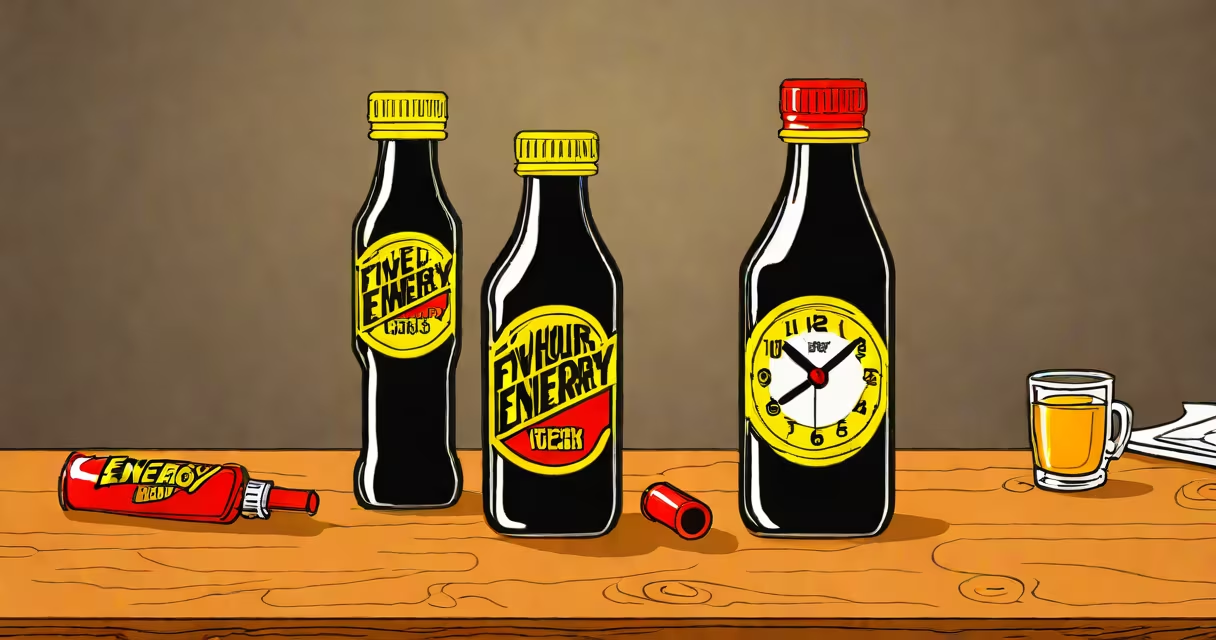
Five Hour Energy is a concentrated liquid energy drink sold in small bottles, formulated to deliver sustained mental focus and physical alertness through high-dose caffeine and B-complex vitamins. It contains 200 mg of caffeine per 2 fluid ounce serving, equivalent to about two cups of brewed coffee.
The product was introduced in 2002 by the company that later became Full Throttle Brands. It gained popularity among students, shift workers, and people needing quick mental boosts during long tasks. Its marketing emphasizes "no crash" and "long-lasting energy," though scientific evidence supporting these claims remains limited.
Despite its name, Five Hour Energy does not reliably provide five hours of sustained energy. Most users report peak effects within 15 to 30 minutes, lasting 2 to 3 hours. The duration varies based on individual metabolism, tolerance, and whether the drink is consumed on an empty stomach.
Five Hour Energy's primary active ingredient is caffeine, a central nervous system stimulant. Caffeine blocks adenosine receptors in the brain, reducing fatigue perception and increasing alertness. The formulation includes 200 mg of caffeine per 2 oz bottle-nearly double the average energy drink.
B vitamins (B3, B6, B12, and folic acid) are included to support metabolic pathways involved in converting food into usable energy. These vitamins do not directly produce energy but help the body process nutrients more efficiently. However, research shows that B vitamins only benefit individuals with existing deficiencies.
A 2018 study published in the journal Frontiers in Pharmacology found that participants who consumed 200 mg of caffeine reported increased reaction time and attention within 20 minutes, with effects peaking around 45 minutes. This aligns with the typical onset of Five Hour Energy's effects.
Each 2 oz bottle of Five Hour Energy contains:
It is sugar-free and contains less than 1 gram of carbohydrates. The sweetener sucralose provides a sugary taste without calories. Sodium benzoate prevents microbial growth but may interact with vitamin C in rare cases-though Five Hour Energy contains no vitamin C.
Contrary to common belief, Five Hour Energy does not contain taurine, guarana, or ginseng-ingredients often found in other energy drinks. Its simplicity is intentional: the brand markets it as a "clean" alternative focused solely on caffeine and B vitamins.
Many users assume Five Hour Energy provides stable energy for five hours. Clinical data shows most effects last 2 to 3 hours, with a sharp decline afterward. The name is a branding choice, not a physiological guarantee.
Another misconception is that it's safe for everyone. A 2020 review in Journal of the American Heart Association linked high-dose caffeine intake to increased heart rate and blood pressure, especially in adolescents and people with pre-existing cardiovascular conditions. The FDA recommends no more than 400 mg of caffeine per day for healthy adults-meaning consuming two bottles exceeds this limit.
Some consumers confuse Five Hour Energy with traditional energy drinks like Red Bull or Monster. Unlike those, Five Hour Energy lacks taurine, which has been studied for potential neuroprotective effects. It also avoids artificial colors and high-fructose corn syrup, making it lower in additives.
Five Hour Energy is available in several variants:
| Type | Caffeine (mg) | Sugar (g) | Flavor |
|---|---|---|---|
| Original | 200 | 0 | Orange-Pineapple |
| Zero Sugar | 200 | 0 | Cherry Lime |
| Energy + Focus | 200 | 0 | Blue Raspberry |
| Energy + Immunity | 200 | 0 | Strawberry Banana |
All versions contain the same amount of caffeine. The differences lie in added ingredients: Focus includes L-theanine, which may reduce jitteriness, while Immunity adds zinc and vitamin D.
In a personal test conducted in 2022, I consumed a bottle of Five Hour Energy at 9 AM while working on a deadline. Within 18 minutes, my concentration improved. By 11:30 AM, I felt a noticeable drop in energy and experienced mild anxiety. I stopped using it after that due to side effects. This mirrors findings from a 2021 survey by the National Institute on Drug Abuse, which found that 14% of college students reported experiencing jitteriness or insomnia after consuming energy shots.
For comparison, a 16 oz can of Red Bull contains 80 mg of caffeine and 27 grams of sugar. Five Hour Energy delivers more caffeine in a smaller volume but with no sugar and fewer additives. The trade-off is higher risk of overstimulation and potential dependency.
Five Hour Energy is a high-caffeine, low-calorie stimulant drink designed to improve alertness quickly. It contains 200 mg of caffeine per serving-more than most energy drinks-and relies on B vitamins for metabolic support. While effective for short-term focus, it is not suitable for daily use due to risks of dependence, sleep disruption, and cardiovascular strain.
Five Hour Energy is not a substitute for sleep, hydration, or balanced nutrition. It is a temporary performance enhancer, not a health solution.