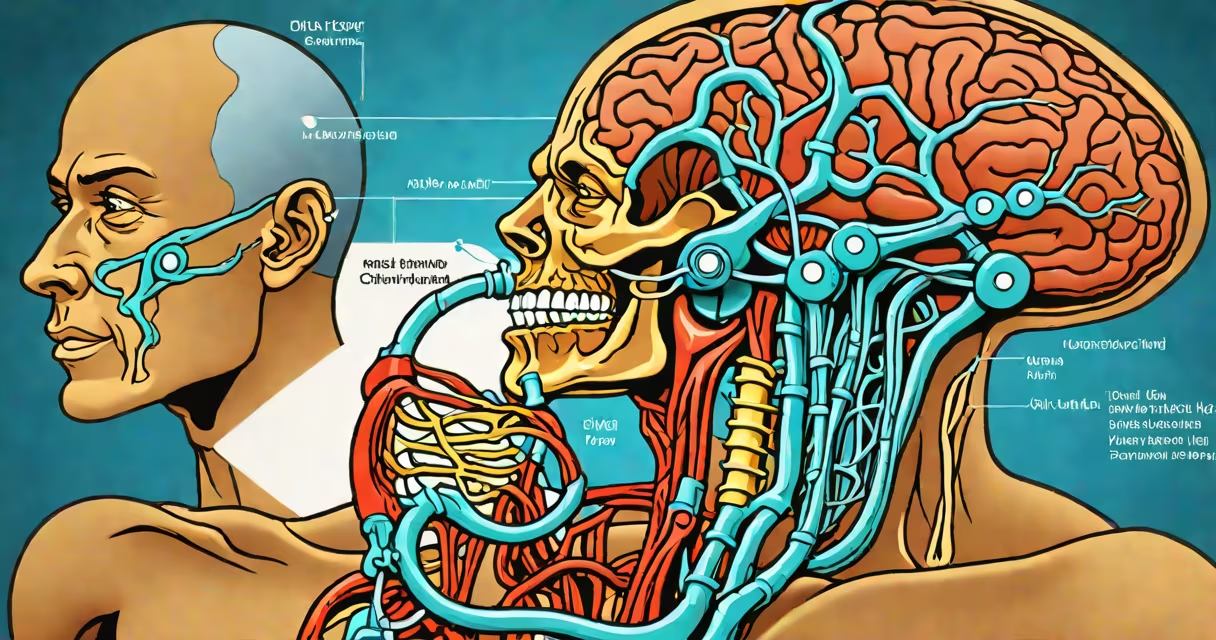
CN VI palsy, also known as sixth nerve palsy, is a neurological condition resulting from dysfunction of the abducens nerve (cranial nerve VI), which controls the lateral rectus muscle responsible for outward eye movement. This leads to inward eye deviation (esotropia) and double vision when looking toward the affected side.
The abducens nerve originates in the brainstem and travels through the cavernous sinus before innervating the lateral rectus muscle in the orbit. Damage anywhere along this path can disrupt signal transmission, causing the eye to fail to move laterally. This results in diplopia (double vision) during horizontal gaze, especially when attempting to look toward the affected side.
Common causes include ischemic events (especially in diabetics), trauma, increased intracranial pressure, infections, tumors, and multiple sclerosis. Diagnosis relies on clinical examination, imaging (MRI or CT), and sometimes electromyography. Most cases resolve within weeks to months, particularly if caused by transient ischemia.
The abducens nerve controls the lateral rectus muscle, which pulls the eye outward. When this nerve is damaged, the lateral rectus weakens or becomes paralyzed. The unopposed action of the medial rectus muscle then pulls the eye inward, creating esotropia. This misalignment causes diplopia when the eyes try to focus on distant objects.
Patients often report seeing two images side-by-side, with the image from the affected eye appearing to the left of the fixated image when looking toward the affected side. The double vision worsens with gaze toward the affected side and improves when looking toward the opposite side.
When the head is turned to the side, the affected eye may drift inward, and the patient may adopt a compensatory head tilt or turn to minimize double vision. This behavior is a key sign in physical exams.
There are two primary categories of CN VI palsy: isolated and secondary. Isolated palsy involves only the abducens nerve and typically presents with normal neurological findings except for the eye movement deficit. Secondary palsy occurs alongside other cranial nerve deficits or systemic signs, suggesting a more widespread pathology.
| Type | Common Causes | Typical Presentation |
|---|---|---|
| Isolated | Idiopathic (most common), diabetic neuropathy, post-viral, post-traumatic | Acute onset, no other neurologic deficits, resolves in 6-12 weeks |
| Secondary | Brainstem stroke, tumor (e.g., pontine glioma), increased ICP, multiple sclerosis, meningitis | Progressive or associated with headache, facial weakness, vertigo, or altered mental status |
Ischemic CN VI palsy is the most frequent cause, especially in adults over 50 with diabetes or hypertension. A 2021 study published in *Neurology* found that 65% of unilateral CN VI palsy cases in adults were due to microvascular ischemia, particularly in patients with poorly controlled blood glucose levels.
Unlike other cranial nerve palsies, CN VI palsy rarely causes ptosis or pupil changes because the abducens nerve does not carry autonomic fibers. This distinguishes it from third nerve palsy, where both pupil and eyelid function are affected.
Diagnosis begins with a detailed history and physical exam. The examiner tests horizontal gaze in both directions. In CN VI palsy, the affected eye fails to abduct past the midline. The cover-uncover test confirms the presence of a horizontal deviation.
Imaging is recommended for all new-onset CN VI palsy in adults over 50, or if there are red flags such as sudden onset with headache, fever, or progressive neurological decline. MRI of the brain and orbits with contrast is preferred to detect compressive lesions, demyelination, or vascular abnormalities.
Treatment depends on the underlying cause. For idiopathic or ischemic palsy, conservative management includes prismatic glasses to correct diplopia, occlusion patches, and time. Most cases improve spontaneously within 6 to 12 weeks. A 2019 retrospective review in *Journal of Neuro-Ophthalmology* reported recovery in 83% of patients with isolated CN VI palsy within 3 months.
For traumatic or compressive causes, surgical intervention may be required. In persistent cases, botulinum toxin injections into the medial rectus muscle can reduce esotropia. Strabismus surgery is considered if diplopia persists beyond 6 months and affects quality of life.
Many assume CN VI palsy always indicates a stroke. While stroke is a concern, especially in older adults, the majority of cases are benign and self-limited. According to the American Academy of Ophthalmology, only 10-15% of CN VI palsy cases have serious underlying pathology.
Another misconception is that all cases require urgent imaging. Guidelines from the National Institute of Neurological Disorders and Stroke (NINDS) state that imaging is not mandatory in young, healthy individuals with acute, isolated palsy and no risk factors. However, imaging is essential if symptoms persist beyond 3 months or if new deficits emerge.
I've seen a 62-year-old man with sudden double vision after a minor fall. He had no other symptoms. MRI showed no lesion. After 8 weeks of prism therapy, his diplopia resolved completely. His case was typical of idiopathic CN VI palsy.
CN VI palsy does not affect vertical eye movements. If vertical diplopia is present, consider other diagnoses such as third nerve palsy or thyroid eye disease. Misdiagnosis can delay appropriate care.
Most patients with isolated CN VI palsy recover full eye alignment within 3 to 6 months. Recovery is slower in those with diabetes or vascular risk factors. Patients should be reassessed monthly until improvement stabilizes.
Follow-up is critical to rule out delayed complications. A 2020 study in *Ophthalmology* found that 12% of patients initially diagnosed with idiopathic palsy later developed intracranial pathology, including pituitary adenomas and posterior fossa masses, detected only through serial imaging.
Patients should be advised to seek immediate evaluation if they develop headache, nausea, vomiting, or worsening vision. These may indicate rising intracranial pressure or mass effect.
CN VI palsy is a manageable condition. With accurate diagnosis and timely intervention, most patients regain binocular vision and return to normal daily activities.