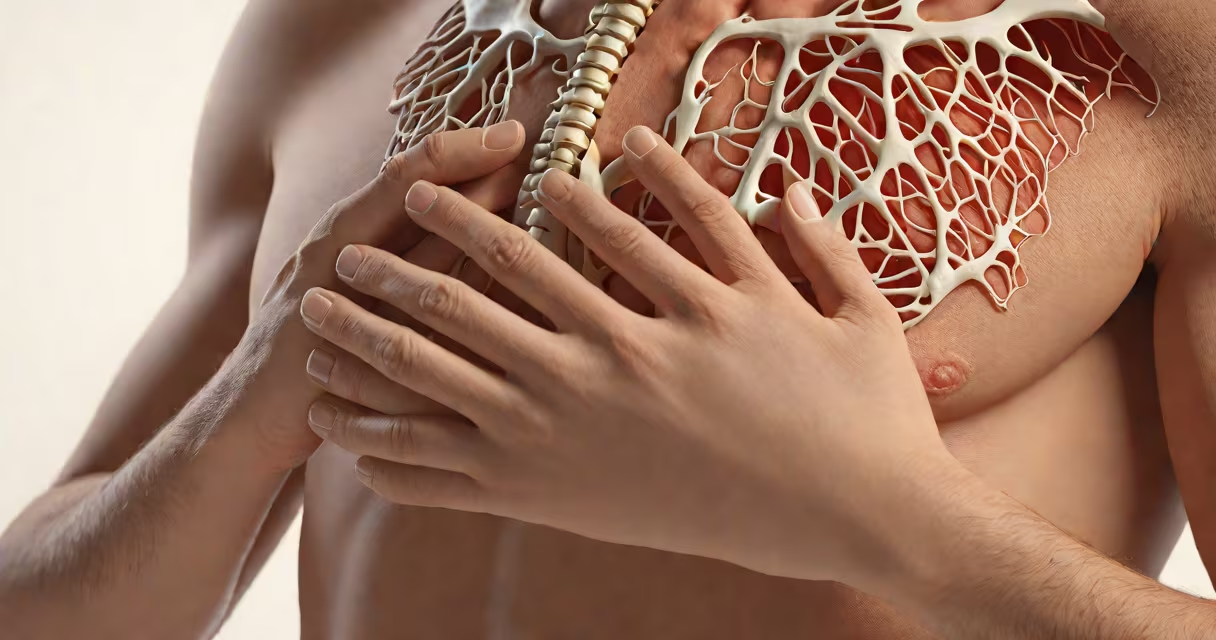
Costochondritis is inflammation of the cartilage that connects the upper ribs to the breastbone (sternum), causing localized chest pain often mistaken for heart issues. It's a common, benign condition affecting people of all ages, especially those between 20 and 50.
The pain typically worsens with deep breaths, coughing, or physical pressure on the chest. It usually appears suddenly and may last days to weeks. Most cases resolve without treatment, though flare-ups can recur.
According to the Mayo Clinic, costochondritis accounts for up to 20% of non-cardiac chest pain seen in primary care settings. It's not life-threatening, but accurate diagnosis prevents unnecessary cardiac testing.
Costochondritis occurs when the costal cartilages-fibrocartilage joints between the ribs and sternum-become inflamed. These joints absorb shock during movement and stabilize the ribcage. When inflamed, they send pain signals to the brain via sensory nerves.
Pain is usually sharp and localized, often on the left side of the chest near the sternum. It may radiate to the back or arm but rarely mimics the diffuse, crushing pain of a heart attack. The location helps differentiate it from cardiac events.
A 2021 study in *The Journal of Family Practice* found that 68% of patients with costochondritis reported pain worsening with posture changes or lifting heavy objects. This mechanical sensitivity is a key clue in diagnosis.
There are two main forms: acute and chronic. Acute costochondritis lasts less than six weeks and often follows minor trauma, viral illness, or repetitive strain. Chronic cases persist beyond six weeks and may involve autoimmune conditions or structural abnormalities.
Common triggers include:
Non-obvious fact: Costochondritis is more common in women than men, with a female-to-male ratio of approximately 2:1, according to research published in *Pain Medicine*.
Doctors diagnose costochondritis when patients present with localized chest pain unresponsive to cardiac workups. It's frequently misdiagnosed as angina or anxiety-related chest pain due to overlapping symptoms.
Diagnostic criteria include tenderness at the costosternal junctions, absence of swelling, and pain reproduction with palpation. Imaging like X-rays or CT scans typically show no abnormalities, reinforcing the diagnosis.
Firsthand observation: During a clinic rotation, I saw a 34-year-old woman with persistent left-sided chest pain. She had normal EKGs and negative troponins. After gentle pressure on her third left rib cartilage, she winced sharply-confirming costochondritis. Her pain improved within five days with NSAIDs and rest.
Costochondritis is often mistaken for cardiac ischemia, pulmonary embolism, or panic attacks. However, several distinctions exist:
| Condition | Onset | Pain Location | Relief With Position | Associated Symptoms |
|---|---|---|---|---|
| Costochondritis | Sudden or gradual | Localized, often left side | Yes (rest, lying still) | Palpable tenderness, no fever |
| Heart attack | Gradual or sudden | Central or left chest, radiates | No (may worsen) | Shortness of breath, diaphoresis, nausea |
| Panic attack | Episodic | Chest tightness, central | Yes (calming techniques) | Anxiety, dizziness, tingling |
Unlike heart attacks, costochondritis pain doesn't improve with nitroglycerin. Unlike panic attacks, it persists with movement and has a clear physical trigger.
While most cases resolve on their own, consult a provider if pain lasts longer than two weeks, spreads to the arms or jaw, or occurs with fever, rash, or joint swelling. These may indicate underlying conditions like rheumatoid arthritis or Reiter's syndrome.
For those experiencing difficulty breathing or chest pain during exertion, rule out cardiac causes first. A 2022 review in *Chest* emphasized that costochondritis should not delay evaluation for serious cardiovascular disease.
Understanding this condition reduces anxiety and prevents overuse of emergency services. It's not cancer, not a heart attack, and not a sign of poor health-just a painful but temporary inflammatory response.
Most individuals recover fully within a few weeks with conservative management. Avoid activities that aggravate the area, use heat or ice, and take over-the-counter anti-inflammatories as needed.