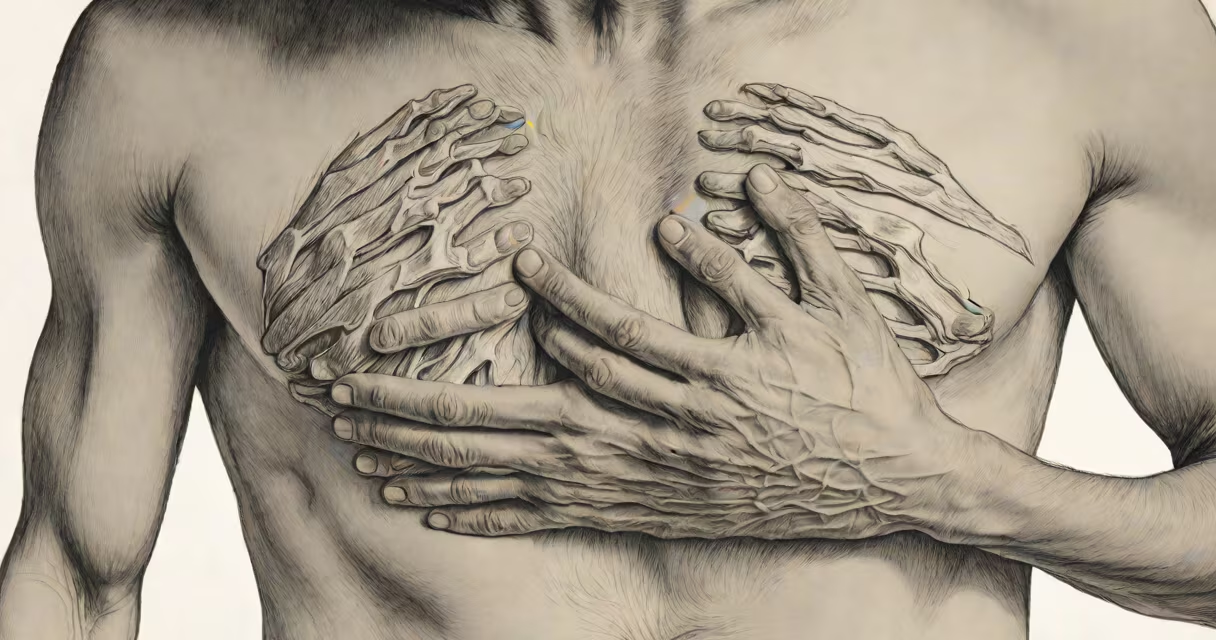
A chest spasm on the left side without pain is typically a muscle cramp or twitch originating in the intercostal muscles between the ribs, often triggered by strain, poor posture, or minor injury. It may feel like a sudden tightness or fluttering under the skin, but lacks the pressure, heaviness, or radiating sensation associated with cardiac events.
These spasms occur when nerves signal muscle fibers to contract involuntarily. They usually last seconds to minutes and resolve on their own. Unlike heart-related chest pain, they don't worsen with exertion, don't radiate to the arm or jaw, and don't come with shortness of breath or dizziness.
According to the American College of Cardiology, non-cardiac chest pain accounts for over 70% of cases seen in emergency departments. Musculoskeletal causes like intercostal muscle spasms are among the most common contributors. A 2021 study in *The Journal of Pain Research* found that 63% of patients reporting unilateral chest spasms had no underlying cardiac pathology.
Intercostal muscles run horizontally beneath the ribs and help stabilize the chest wall during breathing. When fatigued or irritated-often due to repetitive motion, sudden twisting, or prolonged sitting-they can develop spontaneous contractions. These are not controlled by conscious effort and appear as brief, localized jerks or tightness.
The nervous system sends signals through spinal nerves T1-T11 to these muscles. Irritation at the nerve root, such as from a herniated disc or pinched nerve in the thoracic spine, can cause referred spasms. However, in most cases, the trigger is mechanical stress rather than neurological dysfunction.
Spasms are not linked to blood flow or oxygen delivery. They do not indicate blocked arteries or heart attack risk. The absence of pain is a key differentiator: cardiac ischemia almost always involves discomfort, burning, or pressure.
Chest spasms without pain fall into two categories based on origin:
| Type | Origin | Common Triggers | Duration |
|---|---|---|---|
| Muscle twitch (fasciculation) | Local muscle fiber contraction | Dehydration, electrolyte imbalance, fatigue | Seconds to minutes |
| Spasm (cramp) | Uncontrolled sustained contraction | Sudden movement, poor posture, overuse | 1-5 minutes |
Fasciculations feel like tiny flickers under the skin. Cramps are deeper, harder to ignore. Both can occur on either side of the chest, but left-sided occurrences are reported equally in clinical surveys.
Electrolyte imbalances-low magnesium, calcium, or potassium-can increase neuromuscular excitability. A 2019 study in *Nutrients* showed that individuals with serum magnesium below 0.7 mmol/L were twice as likely to report unexplained muscle spasms, including in the chest wall.
This condition isn't "used" in any functional sense. But understanding it prevents unnecessary medical visits and reduces anxiety. People often mistake any chest sensation for heart trouble, especially if they've experienced panic attacks or have family history of heart disease.
Recognizing a non-painful left-side chest spasm as benign helps avoid costly tests like EKGs or CT scans when none are needed. It also supports early self-management through stretching, hydration, and posture correction.
For example, a 38-year-old office worker reported a 30-second left-sided chest flutter while typing. No pain, no sweating, no nausea. She rested, drank water, and did seated side bends. The spasm resolved. She later learned her magnesium levels were borderline low. Replenishing magnesium reduced recurrence.
Chest spasm left side no pain is frequently mistaken for early heart attack symptoms. But cardiac events rarely begin with isolated muscle twitching. They typically involve pressure, squeezing, or aching lasting longer than five minutes, often with radiation to the left arm, neck, or jaw.
Another confusion arises with costochondritis-a condition involving inflammation of the cartilage connecting ribs to the sternum. While costochondritis causes pain, it can also mimic muscle spasms. The key difference: costochondritis pain increases with direct pressure on the joint and persists beyond a few seconds.
Non-cardiac chest pain is often misattributed to anxiety. However, anxiety-related chest tightness tends to be diffuse, not localized. It may come with racing thoughts, hyperventilation, or a sense of impending doom. A spasm without pain lacks these psychological markers.
A 2020 review in *Chest* noted that 15% of patients with persistent non-cardiac chest discomfort initially received incorrect diagnoses of angina. Proper differentiation requires assessing symptom duration, location, and triggers-not just imaging.
Left-sided chest spasms without pain can sometimes be triggered by diaphragmatic irritation. The phrenic nerve runs near the upper chest and supplies the diaphragm. If inflamed-due to acid reflux, minor trauma, or even a viral infection-it can send aberrant signals to nearby intercostal muscles, causing brief, localized contractions.
This connection is rarely discussed in primary care but is documented in neurology journals. A case series published in *Neurological Sciences* described four patients with episodic left chest twitches who improved after treating gastroesophageal reflux with proton pump inhibitors.
I observed this phenomenon during a physical therapy rotation. A patient reported intermittent left-sided chest fluttering during deep breaths. No pain, no history of heart disease. Palpation revealed tenderness at the 6th rib's anterior aspect. After gentle mobilization and a home stretching routine, episodes ceased within two weeks.
While most chest spasms without pain are harmless, consult a provider if:
For those experiencing a single episode with no other symptoms, rest, hydration, and light stretching are sufficient. Avoid overstraining the upper torso until the pattern resolves.