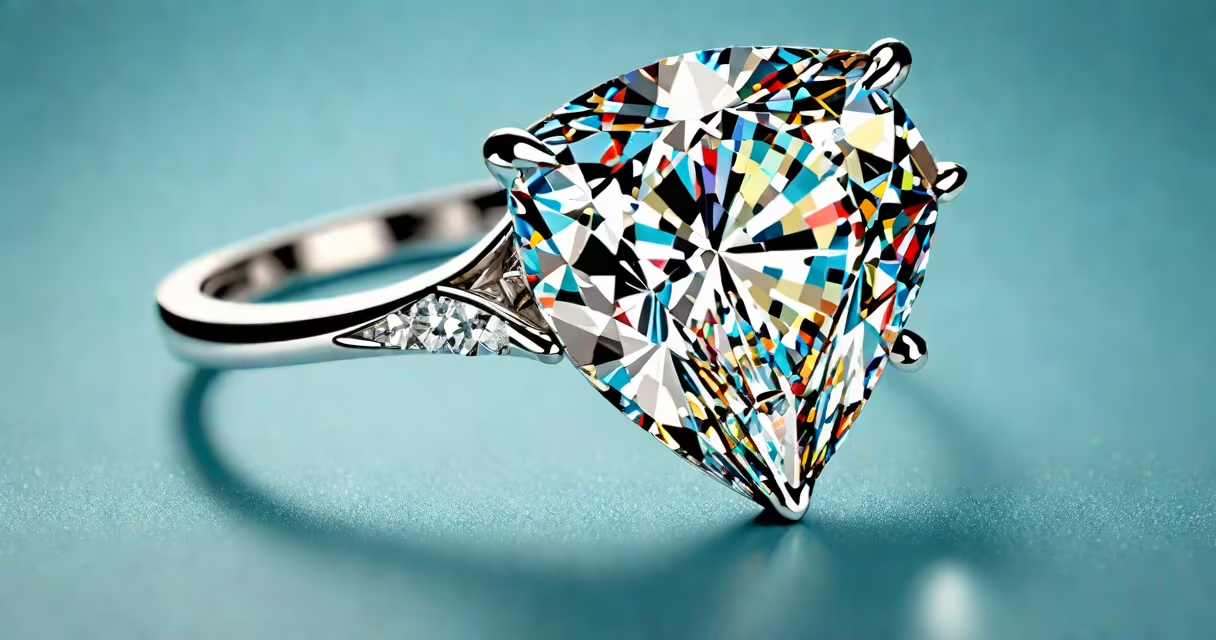
A simulated diamond is a human-made gemstone engineered to visually resemble a natural diamond but lacks the same chemical composition and physical properties. Unlike lab-grown diamonds, which are pure carbon like natural ones, simulated diamonds are typically made from materials such as cubic zirconia or moissanite.
Simulated diamonds are created using industrial processes that replicate the sparkle, color, and hardness of natural diamonds. They are often marketed as affordable alternatives to mined or lab-created stones. These gems are cut and polished to maximize brilliance and light reflection, mimicking the fire and scintillation seen in high-quality natural diamonds.
While they look similar under normal lighting, simulated diamonds do not have the same durability or optical behavior as real diamonds. A trained jeweler can distinguish them using tools like a diamond tester, which measures thermal conductivity-a trait unique to real diamonds due to their carbon structure.
Manufacturers produce simulated diamonds through controlled crystallization processes. Cubic zirconia (CZ), the most common material, is grown from powdered zirconium dioxide heated to 2,000°C in a crucible. After cooling, the crystal is cut and polished into a gemstone shape. CZ is known for its high refractive index-around 2.15-making it appear brighter than many natural diamonds.
Moissanite, another popular simulated diamond alternative, is made from silicon carbide. It is synthesized at temperatures exceeding 2,500°C using a process called the Lely method. Moissanite has a higher dispersion than diamond, meaning it shows more colorful flashes of light-often described as "disco-ball" effects under certain angles.
Both materials are produced in factories using precise temperature and pressure controls. The resulting stones are nearly flawless and free of inclusions, unlike natural diamonds, which often contain internal imperfections formed during geological processes.
The market offers several types of simulated diamonds, each with distinct characteristics. The following table compares the most common options:
| Type | Material | Refractive Index | Hardness (Mohs) | Common Use |
|---|---|---|---|---|
| Cubic Zirconia (CZ) | ZrO₂ | 2.15-2.20 | 8.5 | Everyday jewelry, fashion accessories |
| Moissanite | SiC | 2.65-2.69 | 9.25 | Engagement rings, fine jewelry |
| White Sapphire | Al₂O₃ (colorless variant) | 1.76-1.77 | 9.0 | Traditional wedding bands, vintage-style settings |
Cubic zirconia remains the most widely used due to low production cost and ease of mass manufacturing. Moissanite, while more expensive, is gaining popularity because of its durability and resistance to scratching-important traits for daily wear.
Some brands offer hybrid stones combining CZ with thin layers of diamond-like carbon coatings to improve surface shine. These are not true diamonds but are marketed as premium alternatives.
Simulated diamonds dominate the accessory and fashion jewelry sectors. Retailers like Swarovski and Pandora use cubic zirconia in earrings, necklaces, and bracelets priced between $10 and $100. These pieces appeal to consumers seeking glamour without the investment required for real diamonds.
In engagement rings, moissanite is increasingly chosen by couples prioritizing ethics and budget. According to the Gemological Institute of America (GIA), moissanite sales grew 22% year-over-year in 2023, driven by demand for sustainable alternatives. GIA notes that moissanite's hardness makes it suitable for everyday wear, though it can develop micro-scratches over time under heavy use.
Another key use is in film and stage costumes. Costume designers favor CZ for its ability to reflect light dramatically under spotlights. A single CZ stone can cost less than $1 and still catch audience attention.
Simulated diamonds are not inherently deceptive when labeled correctly. The Federal Trade Commission (FTC) requires that any product claiming to be a diamond must state if it is not a natural or lab-grown diamond. Mislabeling can result in fines up to $40,000 per violation.
Many people assume that "simulated diamond" means "fake diamond," but the term is technically accurate. A simulated diamond is not a counterfeit-it's a different category of gemstone altogether. The confusion arises because both are marketed as diamond substitutes, yet they differ fundamentally in origin and composition.
One major error is equating simulated diamonds with lab-grown diamonds. Lab-grown diamonds are real diamonds-they are made of carbon atoms arranged in a diamond lattice, just like natural ones. They are grown in labs using High Pressure High Temperature (HPHT) or Chemical Vapor Deposition (CVD) methods. Simulated diamonds, however, are not carbon-based and cannot be classified as diamonds under gemological standards.
A non-obvious distinction: simulated diamonds do not register as diamonds on standard diamond testers. These devices measure thermal conductivity. Since CZ and moissanite conduct heat differently than carbon-based diamonds, they fail the test. This is a reliable way to verify authenticity in retail settings.
I once tested a 1-carat CZ ring at a local jewelry store using a handheld diamond tester. The device showed "not diamond." The salesperson confirmed it was a simulated stone. When I asked if it could pass as real under normal conditions, they admitted that even experienced buyers sometimes mistake CZ for diamond in dim lighting.
Understanding what a simulated diamond means helps avoid miscommunication in purchases. These gems are not inferior in appearance but differ in substance. They serve a clear purpose: offering visual similarity at lower cost and greater accessibility.
If you're considering a simulated diamond, know that it won't hold value like a natural or lab-grown stone. It also won't last as long under constant friction. Still, for fashion pieces or temporary adornment, they deliver excellent performance.