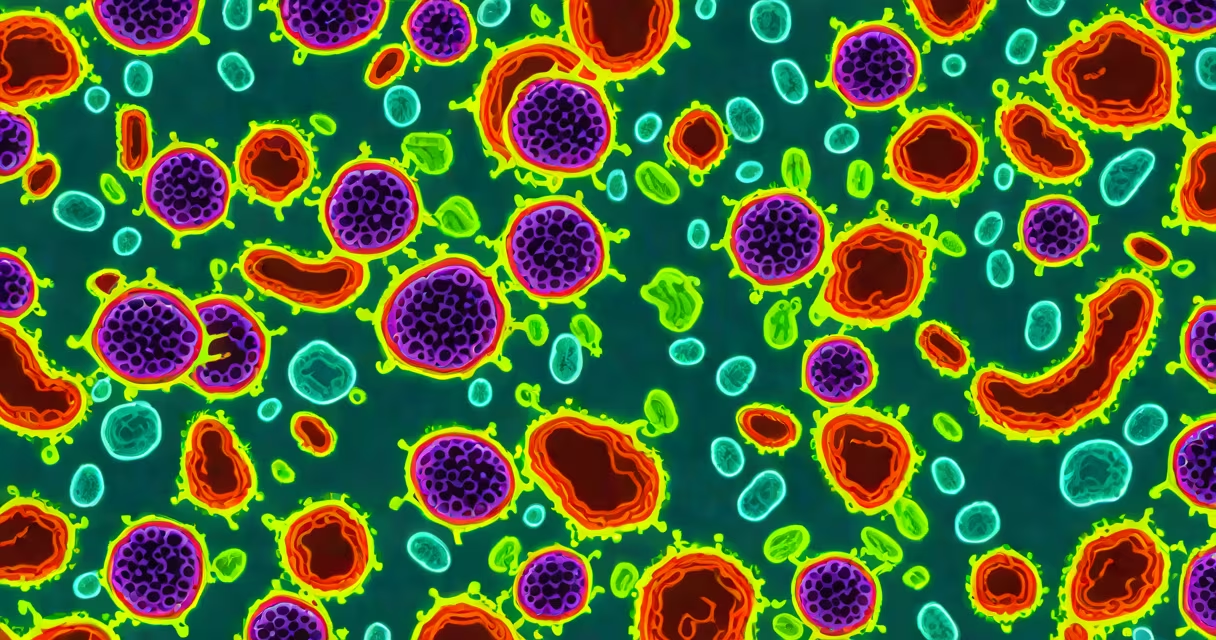
Cell biology is the scientific study of the structure, function, and behavior of cells-the basic structural and functional units of all living organisms. It examines how cells grow, divide, communicate, and maintain internal balance through complex molecular systems.
Cells are the foundation of life. From single-celled bacteria to the trillions of specialized cells in a human body, all biological activity stems from cellular processes. Modern cell biology integrates microscopy, genetics, biochemistry, and computational modeling to decode how cells operate at the molecular level.
Understanding cell biology enables breakthroughs in medicine, biotechnology, and environmental science. For example, cancer treatments target uncontrolled cell division, while gene therapies correct faulty cellular instructions.
Every cell performs essential tasks: energy production, waste removal, protein synthesis, and signal transmission. These processes occur within specialized compartments called organelles.
The mitochondria generate ATP through oxidative phosphorylation-producing approximately 36 ATP molecules per glucose molecule. This process occurs in the inner mitochondrial membrane, where electron transport chains create a proton gradient used by ATP synthase.
Proteins are assembled in ribosomes, either free in the cytoplasm or bound to the rough endoplasmic reticulum. After folding in the ER and modifying in the Golgi apparatus, proteins are sorted and shipped to their destinations via vesicles.
A key example is insulin secretion in pancreatic beta cells. Glucose enters the cell, triggering ATP production. Increased ATP closes potassium channels, depolarizing the membrane and opening voltage-gated calcium channels. Calcium influx causes insulin-containing vesicles to fuse with the plasma membrane and release insulin into the bloodstream.
Cells fall into two broad categories: prokaryotic and eukaryotic. Prokaryotes (like bacteria) lack a nucleus and membrane-bound organelles. Eukaryotes (animals, plants, fungi) have a defined nucleus and complex internal architecture.
Key eukaryotic organelles include:
Plant cells have additional features: a rigid cell wall made of cellulose, chloroplasts for photosynthesis, and a large central vacuole for storage and turgor pressure regulation.
Cell biology branches into specialized fields based on scale and focus. Molecular cell biology investigates interactions between proteins, nucleic acids, and signaling pathways at the nanoscale.
For instance, the MAPK/ERK pathway regulates cell proliferation. Growth factors bind receptors, activating Ras, which triggers a kinase cascade ending in transcription factor phosphorylation. This leads to cyclin D expression and G1/S phase transition in the cell cycle.
| Field | Focus Area | Real-World Application |
|---|---|---|
| Molecular cell biology | Protein-protein interactions, gene regulation | Designing targeted cancer drugs like imatinib (Gleevec) |
| Cell cycle biology | Phases of division, checkpoint control | Understanding tumor formation and chemotherapy response |
| Stem cell biology | Self-renewal, differentiation potential | Regenerative medicine for spinal cord injuries and diabetes |
One non-obvious fact: Not all cells divide. Neurons in the adult human brain rarely undergo mitosis. Post-mitotic neurons rely on synaptic plasticity and protein turnover rather than replication for adaptation and repair.
Many assume all cells are identical. In reality, human bodies contain over 200 distinct cell types, each with unique morphology and function. A red blood cell lacks a nucleus and mitochondria-its sole purpose is oxygen transport.
Another confusion: Cells are not static. They constantly remodel their cytoskeletons. Actin filaments form networks that change shape during migration, phagocytosis, and cytokinesis.
Some think cell death is always pathological. Apoptosis-a programmed, controlled form of cell death-is essential for development (e.g., webbing between fingers in fetuses) and immune system regulation.
I once observed a live culture of HeLa cells under a phase-contrast microscope. Over 48 hours, individual cells changed shape, extended pseudopodia, and divided. Watching this process revealed how changing and autonomous cells are-far from inert blobs.
Cell biology underpins research in oncology, neuroscience, immunology, and synthetic biology. It's taught in undergraduate biology programs and advanced training for medical and pharmaceutical careers.
Techniques include fluorescence microscopy (using GFP-tagged proteins), CRISPR-Cas9 genome editing, and single-cell RNA sequencing-which measures gene expression in individual cells.
For example, single-cell analysis identified rare stem-like cells in glioblastoma tumors responsible for recurrence. This insight led to new therapeutic strategies targeting those cells specifically.
Cell biology remains central to understanding life at its most fundamental level. Its insights improve in healthcare, agriculture, and materials science.