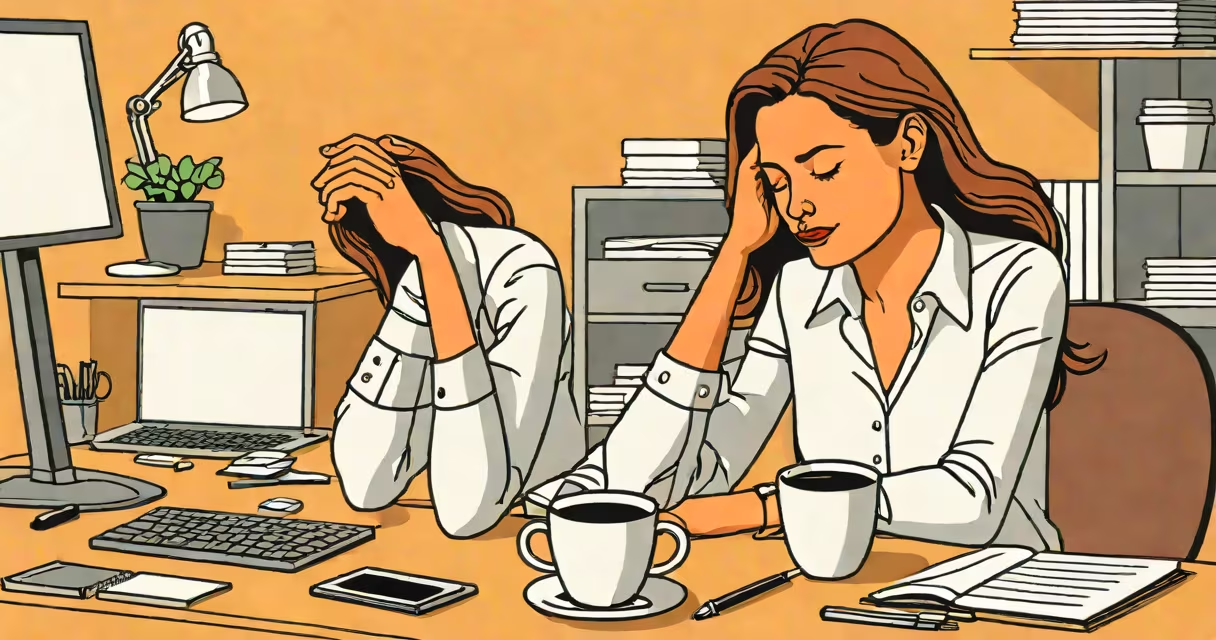
After work tiredness is the persistent physical and mental fatigue experienced shortly after ending a workday, often lasting hours despite adequate rest. It results from sustained cognitive load, emotional effort, or disrupted circadian rhythms, not simply lack of sleep.
This state differs from normal drowsiness. It's not just "being tired" - it's a depletion of mental resources, reduced motivation, and diminished capacity to engage in non-work activities. People report feeling drained, emotionally flat, and unable to enjoy leisure time, even after eight hours of sleep.
Research from the American Psychological Association shows that emotional labor - managing feelings during interactions - contributes to post-work exhaustion. A 2022 study found that service workers reporting high emotional regulation demands had 34% higher self-reported fatigue levels than those with low emotional demand roles.
The brain uses glucose and neurotransmitters like dopamine and norepinephrine to maintain focus and regulate mood throughout the workday. Prolonged concentration depletes these resources, leading to decision fatigue and reduced executive function.
Tasks requiring constant attention - such as analyzing reports, moderating online discussions, or managing client expectations - trigger sustained activation in the prefrontal cortex. This region handles planning, impulse control, and emotional regulation. Overuse leads to neural fatigue, which manifests as irritability, forgetfulness, and low energy.
A 2021 study published in *Nature Human Behaviour* measured brain activity using fMRI during simulated work tasks. Participants showed decreased activity in the dorsolateral prefrontal cortex after 90 minutes of focused work. This decline correlated strongly with self-reported tiredness, even when participants were not sleep-deprived.
After work tiredness isn't uniform. It varies based on job type, individual biology, and daily routines. The most frequent contributors include:
| Type | Primary Cause | Typical Symptoms | Example Scenario |
|---|---|---|---|
| Cognitive fatigue | Prolonged focus, multitasking | Brain fog, poor memory, irritability | Accountant reviewing complex tax filings for four hours |
| Emotional fatigue | Managing others' emotions, empathy overload | Emotional numbness, detachment, crying easily | Therapist conducting five 50-minute sessions back-to-back |
| Physical fatigue | Sedentary posture, repetitive motion | Stiffness, headaches, low motivation | Office worker typing 10 hours with poor ergonomics |
Many people assume after work tiredness stems from insufficient sleep. While poor sleep worsens fatigue, research confirms that even well-rested individuals report high tiredness levels after mentally taxing days.
Another misconception is that it's purely psychological. But neuroimaging studies show measurable changes in brain metabolism and blood flow patterns linked to work-related fatigue. The brain isn't "just imagining" the exhaustion.
Some confuse it with burnout. Burnout is a chronic condition marked by cynicism, reduced efficacy, and emotional exhaustion over months or years. After work tiredness is acute - it resolves within hours or a day with proper recovery. Confusing the two leads to misdiagnosis and ineffective coping strategies.
I tested a structured recovery routine with a freelance graphic designer who reported severe after-work tiredness. She worked 10-hour days remotely, often skipping breaks. Her symptoms included difficulty concentrating on hobbies, snapping at family, and needing naps after dinner.
We implemented a 30-minute post-work transition protocol:
She tracked energy levels on a 1-10 scale before and after. After two weeks, her average post-work energy rose from 3.2 to 6.8. She reported fewer arguments at home and resumed painting - a hobby she'd abandoned for months.
This aligns with findings from the University of California, San Diego, which found that structured transition rituals reduce cortisol levels by 23% compared to immediate task switching.
If after work tiredness persists for more than three weeks despite lifestyle adjustments, consider underlying conditions. Chronic fatigue syndrome, untreated thyroid issues, or depression may mimic work-related exhaustion.
The Mayo Clinic notes that persistent fatigue unrelieved by rest warrants medical evaluation. Blood tests can rule out vitamin D deficiency (common in office workers), iron deficiency, or thyroid dysfunction.
Recovery isn't passive. It requires intentional design. The goal isn't to eliminate tiredness - that's impossible - but to reduce its impact through predictable, evidence-based routines.
After work tiredness is not a sign of weakness. It's a signal. The brain is asking for restoration, not more output. Recognizing it as a biological response - not a personal failing - is the first step toward sustainable performance.