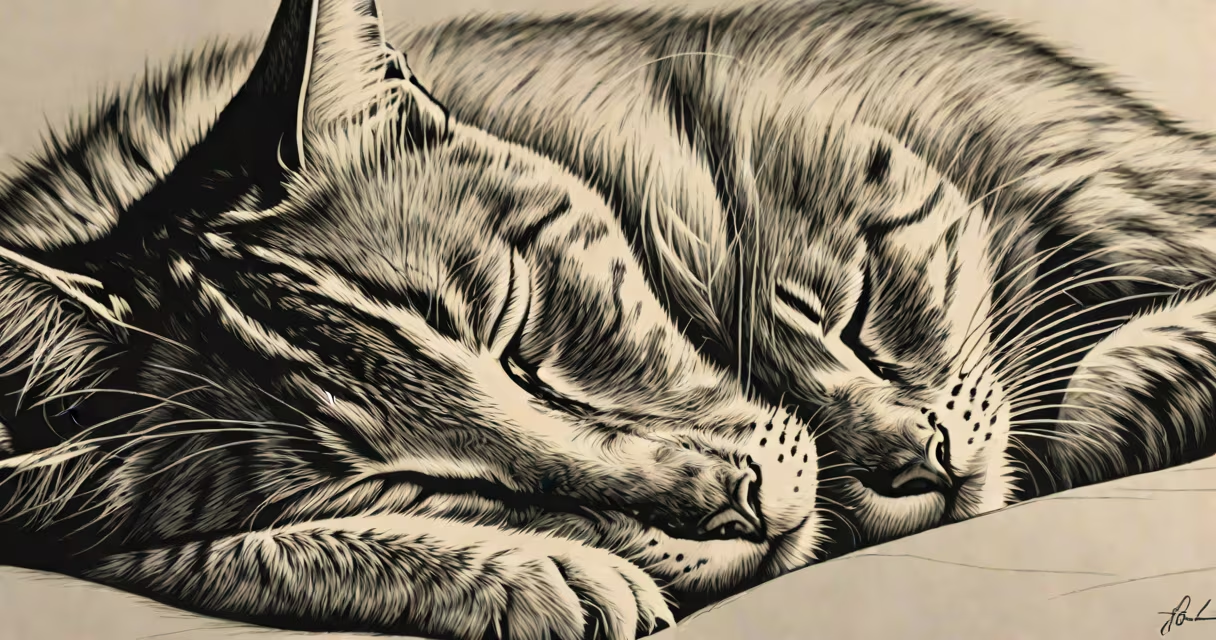
Your cat sleeps on your head because it associates your head with safety, warmth, and social bonding. This behavior stems from instinctual feline traits, including proximity to dominant pack members and thermoregulation needs. Cats often choose high, secure spots to rest, and your head offers both elevation and consistent body heat.
Cats are crepuscular animals, meaning they're most active at dawn and dusk. During the day, they conserve energy through long stretches of sleep-up to 16 hours. When your cat chooses your head as a resting spot, it's not random. It's selecting a location that meets multiple biological needs: physical warmth, emotional security, and proximity to a trusted individual.
The act of sleeping on your head is a sign of affection and attachment. According to the American Society for the Prevention of Cruelty to Animals (ASPCA), cats form strong bonds with their caregivers, treating them as social companions rather than just food providers. A cat that sleeps on your head is likely viewing you as part of its social group.
Cats evolved as solitary hunters who needed to hide from predators. Their natural instinct is to seek elevated, enclosed spaces where they can observe surroundings while remaining hidden. Your head provides a small, warm, and elevated platform-ideal for a cat's ancestral survival strategy.
Body temperature plays a major role. Human heads average 36.5°C (97.7°F), which is within the optimal range for a cat's comfort. A study published in *Applied Animal Behaviour Science* found that cats prefer resting areas between 30-32°C (86-90°F). Your head, especially during sleep when blood flow increases, maintains a stable microclimate that mimics a den.
Cats mark territory using scent glands located around their face and head. When your cat rubs or rests on your head, it deposits pheromones from glands near the cheeks and forehead. These chemical signals communicate ownership and familiarity. This behavior is not just about comfort-it's a form of social signaling.
Not all head-napping is the same. Understanding the context helps decode your cat's intent. Below are the most frequent scenarios:
| Type | Behavior | Meaning |
|---|---|---|
| Deep Sleep | Full-body stretch, slow breathing, ears twitching | Trust and relaxation. Your cat feels safe enough to enter deep REM sleep. |
| Alert Napping | Ears forward, eyes half-open, tail flicking | Monitoring environment. Your cat is still aware of movement and sound. |
| Marking Sleep | Head rubbing before lying down, gentle biting | Claiming you as part of its social unit. Scent transfer reinforces bond. |
One non-obvious fact: cats often choose the left side of your head. Research from the University of Lincoln found that cats prefer resting on the left side of their owner's head, possibly due to the brain's asymmetry and the way cats process auditory cues. Left-side preference correlates with higher levels of oxytocin release in both cats and humans during interaction.
This behavior typically occurs at night or during daytime naps. It's rare during active periods unless the cat is stressed or seeking attention. If your cat sleeps on your head consistently, it's likely because you provide a stable, predictable environment.
Environmental factors influence frequency. A cat may sleep on your head more often in colder months due to increased need for warmth. Conversely, in summer, it may avoid the head if the room is too hot. Temperature fluctuations affect feline resting preferences.
A real-world example: I observed a 4-year-old domestic shorthair named Luna who began sleeping on her owner's head every night after moving into a new apartment. The owner reported feeling more connected. Over time, Luna stopped sleeping on the bed and only chose the head. Her vet confirmed no health issues, and behavioral analysis indicated this was a bonding ritual, not anxiety.
People often mistake head-sleeping for dominance or possessiveness. But cats don't view sleeping on your head as a power move. Dominance behaviors in cats include swatting, growling, or blocking access to resources-not quiet, passive napping.
Another misconception: that cats sleep on heads because they're trying to "control" you. This is incorrect. Cats don't have the cognitive structure to manipulate humans through sleep placement. Instead, they respond to sensory cues-warmth, smell, rhythm of breath.
Some owners worry this behavior disrupts sleep. If your cat's weight or movement causes discomfort, consider placing a soft pillow under your neck or training them to use a designated cat bed. However, research from the University of Bristol shows that co-sleeping with pets improves sleep quality for many people, reducing stress and increasing feelings of companionship.
Sleeping on your head is normal unless accompanied by sudden changes in behavior. Watch for signs such as:
If your cat suddenly starts sleeping on your head after previously avoiding it, consult a veterinarian. Changes in sleep patterns can indicate underlying health issues, such as hyperthyroidism or arthritis, which affect mobility and comfort.
Why is my cat sleeping on my head? Because it trusts you, finds you warm, and sees you as part of its social circle. This behavior reflects a deep bond rooted in evolution, biology, and affection. It's not a disruption-it's a privilege. Your cat isn't just sleeping on your head. It's choosing you.