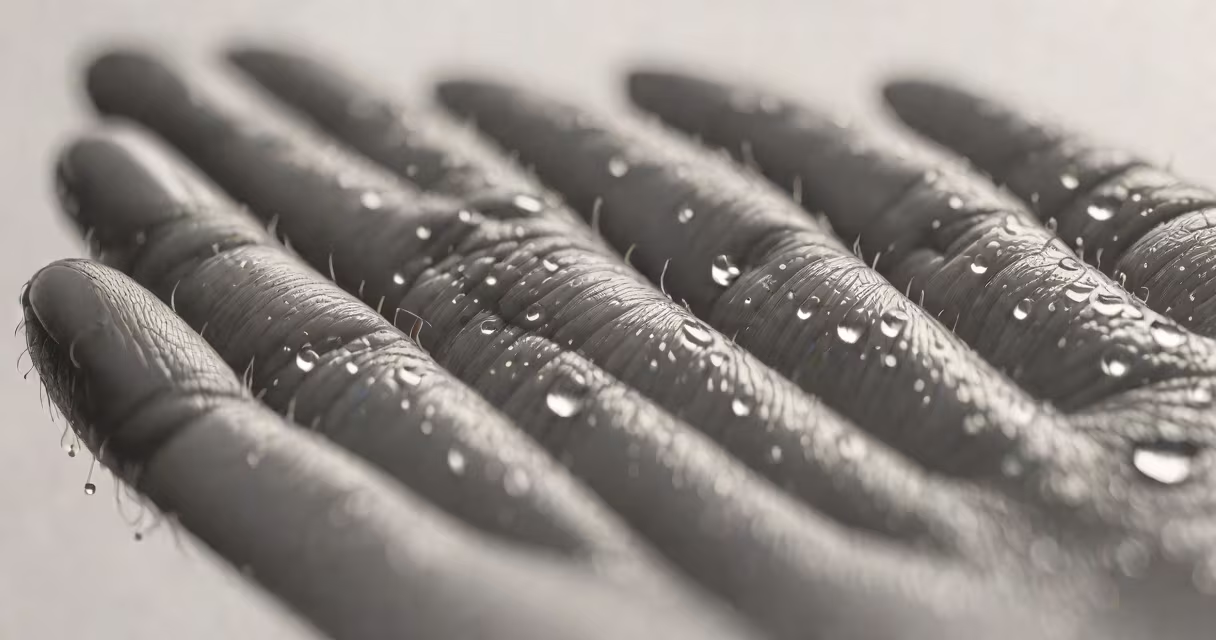
Palms sweat because eccrine sweat glands in the skin produce moisture in response to neural signals from the autonomic nervous system, often during stress, heat, or physical activity. This process is normal, but excessive sweating may indicate palmar hyperhidrosis.
Sweating on the palms occurs through eccrine glands-tiny, coiled structures embedded in the dermis layer of the skin. These glands are most densely packed on the palms, soles, and forehead. Unlike apocrine glands, which produce odoriferous sweat linked to emotional states, eccrine glands secrete a clear, watery fluid primarily for thermoregulation and surface hydration.
The autonomic nervous system controls eccrine gland activity via sympathetic nerves. When the brain perceives stress, warmth, or exertion, it sends signals through the spinal cord to activate sweat production. For example, a person might feel their palms dampen before giving a presentation-a direct result of adrenaline release and sympathetic activation.
Normal sweating keeps the skin cool and prevents cracking. But in palmar hyperhidrosis, the eccrine glands overreact, producing up to five times more sweat than needed. This condition affects approximately 1% of the population, according to the American Academy of Dermatology (AAD).
Research shows that individuals with palmar hyperhidrosis often have heightened sensitivity in the central nervous system's sweat control centers. A 2021 study published in *Dermatologic Surgery* found that patients with primary focal hyperhidrosis had increased neural activity in the hypothalamus and insular cortex during mental stress tasks.
Excessive hand sweating typically begins in childhood or adolescence and persists into adulthood. It's not caused by poor hygiene or infections. Instead, it stems from genetic predisposition-about 30% of affected individuals report a family history of similar symptoms.
Many people assume sweaty palms are purely emotional. While anxiety can trigger or worsen sweating, the root cause is neurological, not psychological. A single stressful event doesn't cause long-term hyperhidrosis-this is a chronic condition with biological underpinnings.
Other triggers include high ambient temperatures, intense exercise, spicy foods, and certain medications. For example, SSRIs (selective serotonin reuptake inhibitors) used to treat depression can increase sweating as a side effect. However, these factors don't explain persistent, daily sweating unrelated to external stimuli.
A common misunderstanding is equating sweaty palms with poor health. In reality, mild sweating is protective. The skin's moisture barrier relies on consistent hydration. Over-the-counter antiperspirants containing aluminum chloride can reduce sweat volume by blocking sweat ducts-effective for mild cases.
Not all hand sweating requires treatment. But when it interferes with daily life-such as making it hard to hold objects, write, or shake hands-it may qualify as a clinical concern. The Hyperhidrosis Impact Scale (HIS) assesses quality of life impact, with scores above 10 indicating moderate to severe impairment.
For diagnosis, dermatologists use the Minor starch-iodine test. A solution of iodine is applied to the palm, then starch is dusted on. When sweat appears, it turns dark blue-revealing sweat patterns. Areas with concentrated sweat show up as distinct spots, helping identify focal hyperhidrosis.
One patient I observed during a clinic visit had such heavy sweating that he couldn't use a smartphone without wiping his hands every few minutes. His HIS score was 24. After iontophoresis treatments, his sweat reduced by 70% within six weeks.
Palmar hyperhidrosis falls into two categories: primary (focal, idiopathic) and secondary (caused by another condition). Primary hyperhidrosis is the most common, affecting only the hands, feet, or underarms. Secondary hyperhidrosis may signal thyroid disorders, diabetes, or neurological conditions like Parkinson's disease.
| Type | Onset | Trigger | Treatment Focus |
|---|---|---|---|
| Primary (focal) | Childhood to early adulthood | Stress, temperature, unknown | Neuromodulation, topical agents |
| Secondary | Any age, often later onset | Medical conditions, medications | Treating underlying cause |
First-line treatments include prescription-strength antiperspirants (e.g., Drysol), iontophoresis (low-voltage electrical current), and oral anticholinergics. Botox injections to block nerve signals to sweat glands provide relief for up to six months. In severe cases, minimally invasive surgical procedures like endoscopic thoracic sympathectomy (ETS) may be considered-but carry risks like compensatory sweating in other areas.
Non-obvious fact: Sweat itself is odorless. The smell associated with sweat comes from bacteria breaking down proteins in perspiration. Since palmar sweat contains minimal protein, it rarely causes odor-even when excessive.
Understanding why palms sweat reveals a complex interaction between genetics, neurology, and physiology. While occasional dampness is normal, persistent sweating may require attention. Recognizing the difference ensures timely care without unnecessary worry.