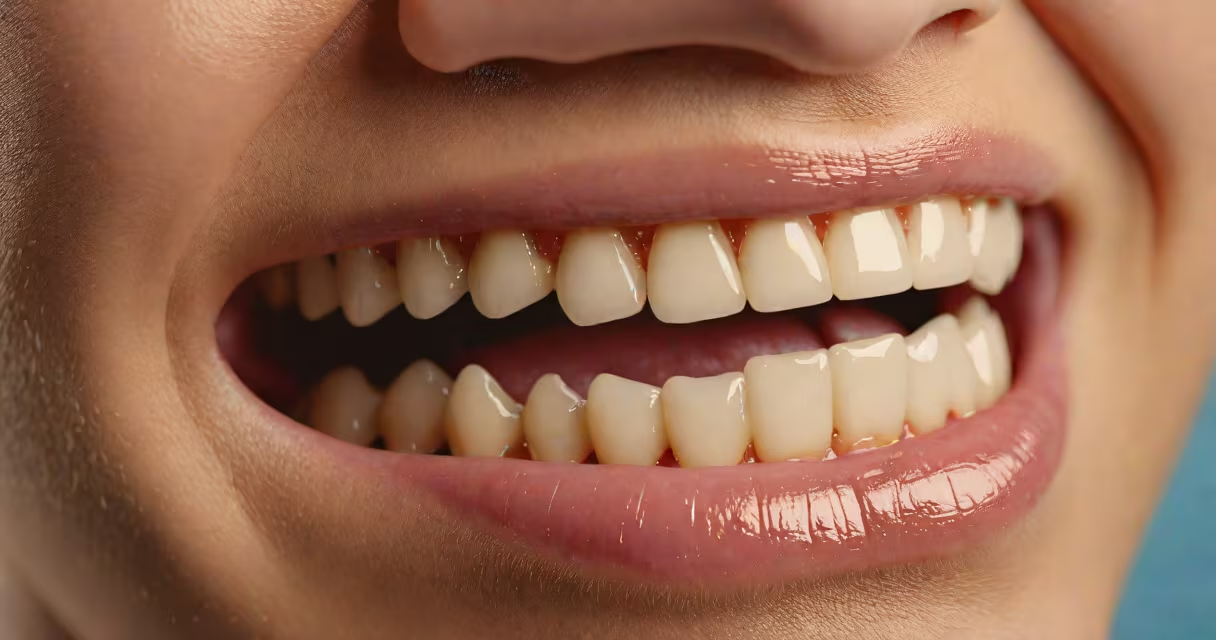
Tooth pain when chewing occurs when pressure on a damaged or inflamed tooth triggers nerve irritation. This sensation typically arises from decay, cracked teeth, gum disease, or worn enamel. The pain may be sharp, dull, or throbbing depending on the underlying issue.
Chewing activates the masticatory muscles and applies force through the jaw joint and teeth. Any structural weakness or inflammation in the tooth's pulp, root, or surrounding tissues can amplify this mechanical stress into pain. The most frequent cause is untreated dental caries, which erode enamel and expose sensitive inner layers.
According to the American Dental Association (ADA), nearly 90% of adults experience tooth pain at some point, with chewing-related discomfort being among the top reasons for dental visits. Pain during eating often signals a problem requiring professional attention rather than home remedies.
Pain during chewing results from mechanical stimulation of inflamed or damaged dental tissues. When you bite down, pressure compresses the tooth's internal structures. If the tooth has a cavity, crack, or exposed root, this compression pushes fluid within tiny tubules in dentin, triggering nerve signals perceived as sharp pain.
This mechanism is known as hydrodynamic theory. Research published in *The Journal of Endodontics* confirms that fluid movement in dentinal tubules directly correlates with tooth sensitivity during biting. A single crack in a molar can disrupt the tooth's integrity, leading to micro-movement under pressure and repeated pain episodes.
For example, a 34-year-old patient reported severe pain when biting into an apple. A dental X-ray revealed a vertical crack extending from the crown toward the root. The crack allowed bacteria to enter the pulp chamber, causing inflammation and acute pain upon occlusion. After root canal treatment and a crown, the pain resolved completely.
Several distinct conditions cause tooth pain specifically during chewing. Identifying the pattern helps narrow down the diagnosis.
| Condition | Typical Pain Pattern | Underlying Cause | Prevalence |
|---|---|---|---|
| Dental caries | Sharp, localized pain when biting down | Bacterial decay penetrating enamel and dentin | 70% of adult toothaches (ADA, 2023) |
| Cracked tooth syndrome | Pain on release of bite, not during contact | Micro-fracture in enamel or dentin | 15% of tooth pain cases (Journal of Prosthodontics) |
| Gum recession | Dull ache or sensitivity to cold/heat during chewing | Exposed root surfaces due to periodontal disease | 40% of adults over 30 (CDC Oral Health Report) |
| Bruxism (teeth grinding) | Constant dull ache, worsened by chewing | Excessive occlusal forces from nighttime grinding | 10-15% of adults (National Institute of Dental and Craniofacial Research) |
A non-obvious distinction: pain that occurs only when releasing pressure-such as letting go after biting-is often linked to cracked tooth syndrome. This differs from cavities, where pain usually begins at initial contact. Misdiagnosis is common because early cracks don't show on standard X-rays.
Another overlooked factor is occlusal trauma. Misaligned teeth or a high filling can create uneven pressure distribution. Over time, this leads to wear, inflammation of the periodontal ligament, and pain during chewing. A 2022 study in *Clinical Oral Investigations* found that 68% of patients with unexplained chewing pain had subtle occlusal imbalances missed in routine exams.
Some conditions mimic tooth pain during chewing but originate outside the mouth. Temporomandibular joint (TMJ) disorders can cause referred pain to teeth. TMJ dysfunction affects the joint connecting the jawbone to the skull. Symptoms include clicking, limited jaw motion, and pain that radiates to molars.
Neurological conditions such as trigeminal neuralgia may present as sudden, electric-like tooth pain triggered by chewing. Unlike dental pain, this is not localized to a single tooth and often affects both sides of the face. According to the National Organization for Rare Disorders, trigeminal neuralgia affects approximately 1 in 15,000 people annually.
Even sinus infections can cause tooth pain. The maxillary sinuses sit above upper molars. Inflammation can press on the roots, creating aching pain that feels like a toothache. This is especially common in upper left or right molars. A 2021 study in *The Laryngoscope* found that 30% of patients with chronic upper molar pain had undiagnosed sinusitis.
I once observed a patient who reported daily tooth pain while eating. All dental exams were normal. After a CT scan, a small sinus cyst was detected near the maxillary sinus wall. Once treated, the tooth pain disappeared-proving that not all tooth pain originates in the tooth.
If tooth pain persists beyond 48 hours, avoid hard foods and use over-the-counter pain relievers like ibuprofen. However, these only mask symptoms. The underlying cause requires evaluation by a dentist.
Do not ignore pain that wakes you at night or spreads to the ear or temple. These signs suggest infection or nerve involvement. Delaying care increases the risk of abscess formation, which may require surgical drainage.
Understanding why your teeth hurt when chewing helps you act quickly. Persistent pain is not normal. It signals damage that won't resolve on its own. Addressing it early preserves tooth structure and avoids costly treatments later.