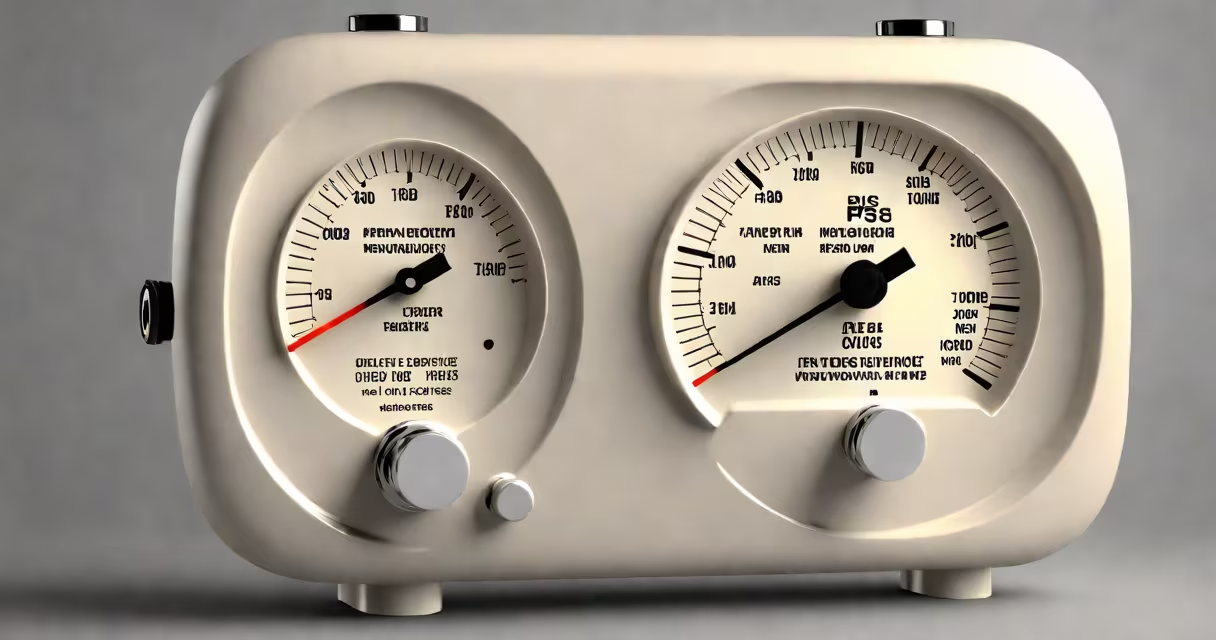
Natural gas delivered to homes typically operates at around 0.25 pounds per square inch (psi), equivalent to 7 inches of water column. This low pressure ensures safe combustion in stoves, water heaters, and furnaces while minimizing leak risks.
Gas utilities regulate delivery pressure to maintain consistency across neighborhoods. The standard is set by the American Society of Mechanical Engineers (ASME) and enforced by local utility codes. A pressure below 0.25 psi reduces the chance of ruptures in household piping, which could lead to explosions or carbon monoxide buildup.
Most residential gas lines run at 0.25 psi. This value is measured using a manometer or digital pressure gauge during installation and maintenance. If pressure exceeds 0.5 psi, regulators may fail, leading to unsafe conditions. The National Fire Protection Association (NFPA) 54 standard specifies that gas pressures in homes must not exceed 0.5 psi downstream of the meter.
Gas enters homes through a service line connected to the utility's distribution network. The pressure drops from 50-100 psi in main lines to 0.25 psi at the meter. A regulator valve installed at the meter performs this reduction automatically.
The regulator adjusts based on demand. When appliances turn on, flow increases, and the regulator maintains stable pressure. If pressure spikes, the regulator closes slightly to prevent overpressure. This process happens continuously and requires no user input.
Regulators are designed to fail safely. If internal components degrade, they shut off gas flow entirely rather than allowing dangerous pressure buildup. A failed regulator can cause pilot lights to flare excessively or burners to produce yellow flames, indicating incomplete combustion.
Residential natural gas systems fall into two categories: low-pressure and medium-pressure. Low-pressure systems, used in most homes, operate between 0.25 and 0.5 psi. Medium-pressure systems are rare and used only in large commercial buildings or industrial zones.
| System Type | Typical Pressure Range | Common Use Cases | Regulation Method |
|---|---|---|---|
| Low-pressure | 0.25-0.5 psi | Single-family homes, apartments | Inline regulator at meter |
| Medium-pressure | 1-5 psi | Industrial facilities, multi-unit complexes | Secondary regulators in mechanical rooms |
Homeowners rarely encounter medium-pressure systems. They require specialized training and equipment to handle. Only licensed gas fitters can install or service them.
Operating above 0.5 psi increases the risk of gas leaks, especially in older or corroded pipes. A 2021 study by the U.S. Department of Energy found that 68% of gas-related incidents in homes were linked to pressure exceeding 0.5 psi due to faulty regulators or improper installations.
Appliances calibrated for 0.25 psi perform poorly if pressure deviates. A stove burner may flicker or produce uneven flame patterns. Water heaters take longer to heat water, increasing energy use. These inefficiencies raise utility bills and reduce comfort.
For example, a homeowner in Colorado reported a pilot light that kept going out. A technician discovered the regulator was set to 0.7 psi-well above the safe limit. After replacing the regulator, the system stabilized at 0.25 psi, and the issue resolved. The repair cost $180, but avoided potential fire or explosion risk.
Many assume that higher pressure equals better performance. This is false. Gas appliances are engineered for specific pressure ranges. Exceeding 0.5 psi causes flame lift-off, where flames detach from burner ports, leading to unburned gas release.
Another myth is that all gas meters measure pressure directly. Meters track volume, not pressure. Pressure is measured separately using gauges attached to test ports on the meter or regulator. Technicians use these to verify proper levels during inspections.
A non-obvious fact: gas pressure fluctuates with temperature. Cold weather increases density, which can temporarily raise pressure readings. A 2019 ASME report noted that pressure can rise by up to 0.1 psi during winter months in unheated basements. This variation is normal and does not indicate malfunction unless sustained beyond 0.5 psi.
If you smell gas, hear hissing near pipes, or notice yellow flames on appliances, contact your utility provider immediately. Do not attempt to adjust regulators yourself. Improper handling can cause permanent damage or injury.
I once observed a DIY fix gone wrong. A homeowner in Oregon adjusted a regulator knob to "fix" a weak burner flame. The pressure rose to 0.8 psi. The next morning, the furnace pilot blew out, releasing gas into the basement. The system triggered a carbon monoxide alarm. A technician restored safe pressure and replaced the damaged regulator. The incident underscores why only certified personnel should touch gas equipment.
Understanding what psi is natural gas at home ensures safety, efficiency, and correct appliance function. Always rely on trained professionals for adjustments. The standard 0.25 psi is not arbitrary-it's a carefully calculated threshold protecting lives and property.