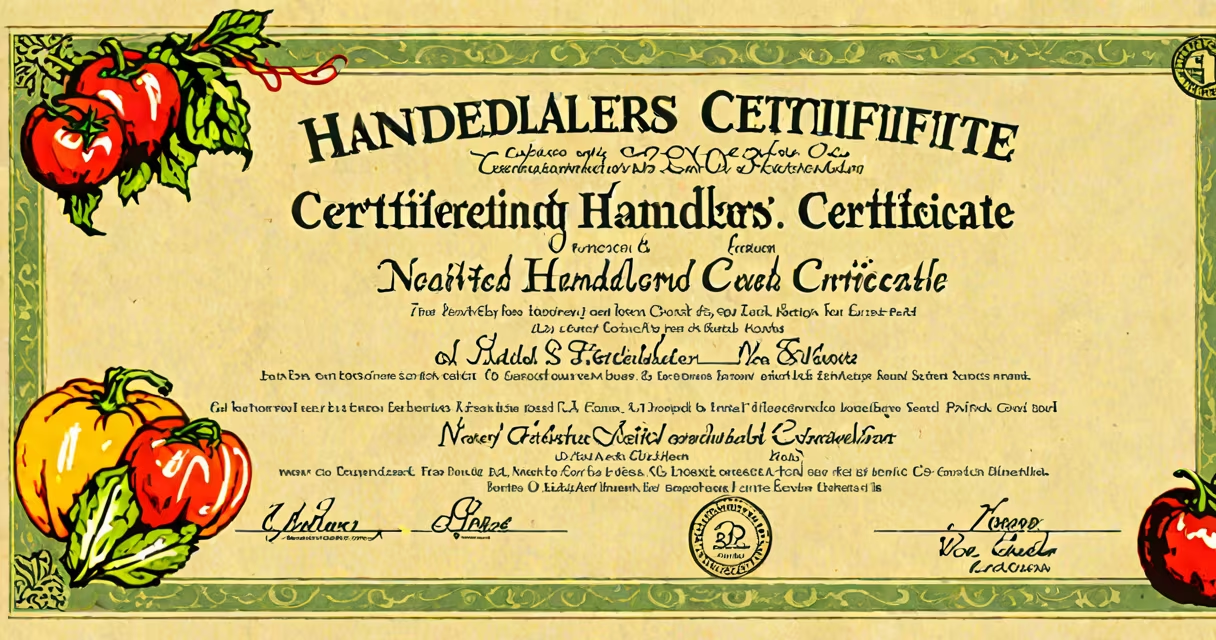
A food handlers certificate is a credential issued after completing a state-approved food safety course. It confirms the holder understands basic principles of preventing foodborne illness through proper handling, storage, and sanitation. The certificate is not a license but a record of training completion.
Most U.S. states require food handlers in restaurants, grocery stores, and food service operations to obtain this certificate within 30 days of hire. The training covers topics like cross-contamination prevention, temperature control, personal hygiene, and allergen awareness. Completion is verified by passing a standardized exam.
The certificate is valid for 1 to 3 years depending on state rules. Renewal requires retaking the course or a refresher module. Some employers require renewal every 2 years regardless of state mandates.
Food handlers certificate programs are typically online, self-paced courses lasting 1 to 2 hours. They include instructional videos, quizzes, and a final exam. Upon scoring 75% or higher, the participant receives a certificate. The process is automated and usually takes less than 24 hours.
Each state sets its own rules. For example, California requires all food workers to complete a state-specific course approved by the Department of Public Health. New York mandates training through the New York State Department of Health's approved provider list. Texas allows multiple providers but requires documentation to be kept on file.
Employers must maintain records of employee certification. Failure to do so can result in fines or suspension of the business's operating license. In 2022, a restaurant chain in Florida was fined $12,000 for employing 14 staff without valid certificates during a health inspection.
The certificate itself is a printed or digital document with the following elements:
There are two main types of food handlers certification:
| Type | Scope | State Examples | Validity |
|---|---|---|---|
| State-specific | Meets local regulations, includes regional food risks (e.g., seafood in coastal areas) | California, New York, Florida | 1-3 years |
| Nationally recognized | Approved by FDA Food Code, accepted across states | Available in all 50 states | 2 years (renewal required) |
Some providers offer both. The National Restaurant Association's ServSafe Food Protection Manager Certification is widely accepted, though it's designed for managers, not entry-level staff. For frontline workers, the ServSafe Food Handler course is the most common nationally recognized option.
Non-compliance often stems from confusion between certification and licensing. A food handlers certificate is not a permit to operate a business. It does not grant legal authority to prepare food. It only verifies training. You cannot run a kitchen without a business license, even with a certificate.
Restaurants, cafeterias, food trucks, grocery stores, and catering companies all require employees to hold a valid food handlers certificate. The requirement applies to all roles involving direct contact with food - servers, cooks, dishwashers, and cashiers who handle prepared foods.
For example, a new server at a chain restaurant in Chicago must complete the Illinois Department of Public Health's approved course before working. The employer logs the certificate in their HR system. During a surprise inspection, health officials verify the server's credentials via the state database. If missing, the establishment faces a warning or closure.
During a 2023 outbreak of Salmonella linked to a sandwich shop in Ohio, investigators traced the contamination to a worker who had not completed training. The shop was shut down for 48 hours while all staff were retrained. This case shows how the certificate acts as a preventive measure, not just a formality.
Many people assume the food handlers certificate is a government-issued ID card. It is not. It is issued by private providers under contract with state health departments. The state may audit providers but does not issue the physical document.
Another misconception is that the certificate guarantees food safety. It doesn't. It only confirms understanding of procedures. A trained person can still make mistakes. Proper supervision and regular audits are still required.
One non-obvious fact: the certificate does not cover advanced topics like HACCP (Hazard Analysis Critical Control Points). That's reserved for food safety managers. A food handler certificate focuses on daily practices - handwashing, surface cleaning, safe thawing, and reporting symptoms.
I once observed a food truck in Austin fail a health inspection because the driver held a certificate from a provider not listed on the city's approved vendor page. The certificate looked legitimate, but the provider lacked state authorization. The truck was closed until the correct training was completed. This case highlights that validity depends on provider accreditation, not just appearance.
Consider Maria, a cashier at a convenience store in Seattle. She started work on January 5. Her employer required her to complete the Washington State Department of Health's online food handler course by January 15. She finished the 90-minute course on January 12, scored 82%, and received her certificate instantly.
The store manager uploaded the certificate to the company's internal tracking system. On February 3, a health inspector visited. Using the state's public verification portal, the inspector confirmed Maria's certification was active and valid. The store passed with no violations.
If Maria had delayed training past January 15, the store would have been flagged for non-compliance. The inspector could have ordered her to stop handling food until certification was obtained. This illustrates how the timeline matters, not just the existence of the certificate.
For those needing to access local food safety resources, find nearby training providers and inspection records.
Understanding what the food handlers certificate is - and what it isn't - prevents missteps in compliance. It's a foundational step in food safety culture, not a standalone solution.