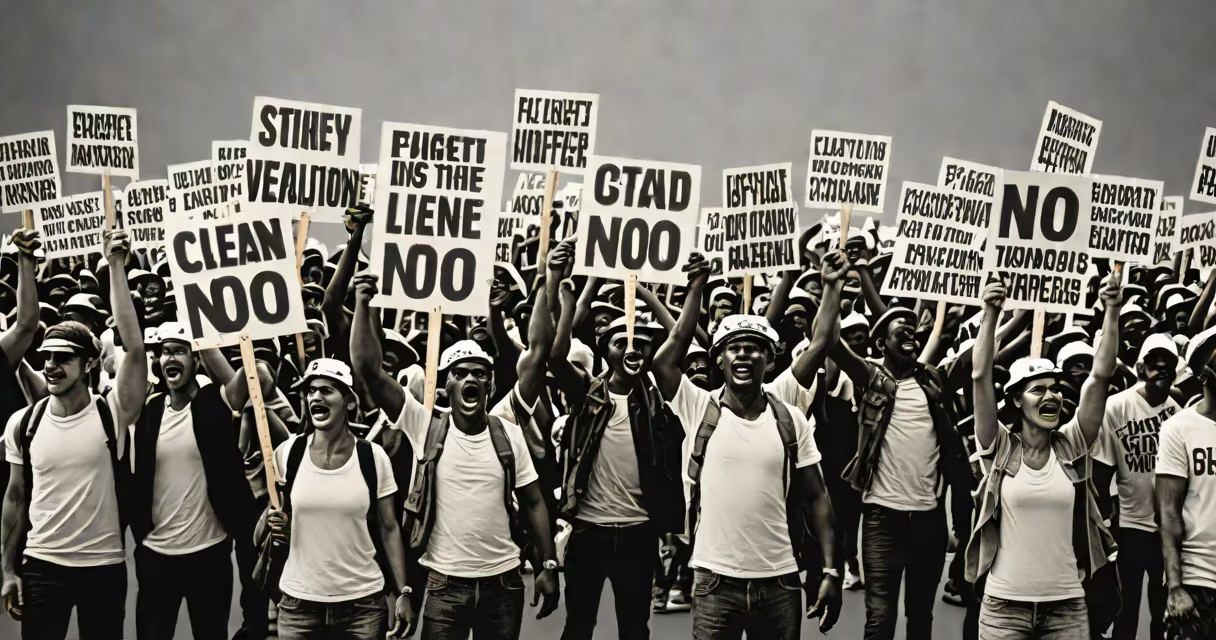
A revolution is a fundamental and often abrupt transformation in political power, social structure, or economic systems, typically achieved through mass mobilization, protest, or armed conflict. It differs from reform by its speed, scale, and rejection of existing institutions.
The term originates from the Latin *revolutio*, meaning "a turning around," reflecting the idea of a complete reversal of direction. In modern usage, it describes systemic shifts such as the French Revolution (1789-1799), which dismantled absolute monarchy and established republican governance, or the Russian Revolution (1917), which replaced imperial rule with a socialist state.
Revolutions are not limited to politics. Technological revolutions-like the Industrial Revolution-also reshape societies by altering production methods, labor roles, and urban development. These changes occur over decades but still meet the core criteria: a departure from established norms and widespread societal impact.
Revolutionary change begins with widespread dissatisfaction. Grievances accumulate due to inequality, corruption, war, or economic collapse. When institutional channels fail to address these issues, organized groups emerge to demand change. They may use protests, strikes, propaganda, or violence to pressure authorities.
Once momentum builds, revolutionary movements seize control of key institutions-government buildings, media outlets, military units. This phase often involves symbolic acts, such as the storming of the Bastille in Paris or the fall of the Berlin Wall in 1989. Control is consolidated through new leadership, constitutions, or policies.
Afterward, the revolution enters a consolidation phase. New governments attempt to stabilize society, implement reforms, and eliminate opposition. This stage can last years or decades. For example, after the 1917 Bolshevik seizure of power, Lenin's government nationalized industry, redistributed land, and established the Soviet Union in 1922.
Revolutions vary by cause, method, and outcome. The following table outlines major categories:
| Type | Focus | Example | Outcome |
|---|---|---|---|
| Political | Overthrow of government | French Revolution (1789) | End of monarchy; rise of republic |
| Social | Change in class or cultural norms | Meiji Restoration (1868 Japan) | Abolition of feudalism; modernization |
| Technological | Shift in production or communication | Industrial Revolution (1760-1840) | Factory system replaces agrarian economy |
| Scientific | Model shift in knowledge | Scientific Revolution (1500-1700) | Move from Aristotelian to empirical science |
Not all upheavals qualify as revolutions. A coup d'état-such as the 1973 Chilean coup led by Augusto Pinochet-alters leadership but preserves the state structure. A revolution, by contrast, seeks to replace the entire system.
Many confuse revolution with protest, rebellion, or reform. Protest is a public expression of dissent; rebellion is armed resistance against authority; reform is gradual change within existing frameworks. Revolution combines all three but aims for structural replacement.
Another misconception is that revolutions require violence. While many do, nonviolent revolutions exist. The 1989 Velvet Revolution in Czechoslovakia involved mass peaceful demonstrations, strikes, and civil disobedience. Within weeks, the Communist regime collapsed without bloodshed. Historian Timothy Garton Ash documented this process in his book *The Magic Lantern: The Revolution of '89 Witnessed in Warsaw, Budapest, Berlin, and Prague*.
People assume revolutions always succeed. In reality, most fail or are co-opted. The 1848 Revolutions across Europe saw uprisings in France, Germany, Italy, and Austria. Though they initially gained ground, conservative forces suppressed them by 1849. The failure was due to lack of coordination, internal divisions, and military repression.
The American Revolution began as a colonial protest against British taxation without representation. By 1775, tensions escalated into armed conflict. The Declaration of Independence, adopted July 4, 1776, formally severed ties with Britain.
Key elements of this revolution:
Unlike the French Revolution, which executed the king and led to a dictatorship, the American Revolution preserved democratic ideals and avoided prolonged violence after independence. The U.S. Constitution, ratified in 1788, created a federal system with checks and balances-a model for future democracies.
Historians emphasize that the American Revolution was not a sudden overthrow but a long-term ideological shift. As historian Gordon S. Wood wrote in *The Radicalism of the American Revolution* (1991), "The revolution was not just about breaking away from England-it was about creating a new kind of society based on liberty, equality, and popular sovereignty."
Understanding the definition of revolution helps interpret history, analyze current events, and assess policy outcomes. For example, the Arab Spring uprisings in 2010-2012 were labeled as revolutions. However, only Tunisia achieved lasting democratic reform. Egypt, Libya, and Syria descended into civil war or authoritarian reassertion. This shows that the label "revolution" doesn't guarantee success.
Also, the term is sometimes misused in marketing or media. A product launch called a "revolution" may simply be an incremental update. True revolution requires systemic change, not just novelty.
One non-obvious fact: revolutions often begin with small, localized actions. The Boston Tea Party in 1773-where colonists dumped tea into Boston Harbor-was a minor act of defiance. Yet it became a catalyst for larger unrest. Small acts can trigger cascading effects when conditions are ripe.
I once observed a community-led effort in rural Ohio to replace outdated water infrastructure. Residents formed a cooperative, lobbied local officials, and secured grants. What began as a single meeting grew into a county-wide initiative. It wasn't a political revolution, but it mirrored the grassroots energy seen in historical uprisings. Change often starts quietly.
For those exploring financial planning, understanding long-term societal shifts can inform investment choices. If you're offloading Microsoft shares, consider how macroeconomic trends-like technological disruption or demographic shifts-may affect retirement portfolios.
The definition of revolution remains anchored in systemic transformation. Whether through violence or negotiation, it marks a turning point in human affairs. Recognizing it requires attention to scale, intent, and outcome-not just headlines or slogans.