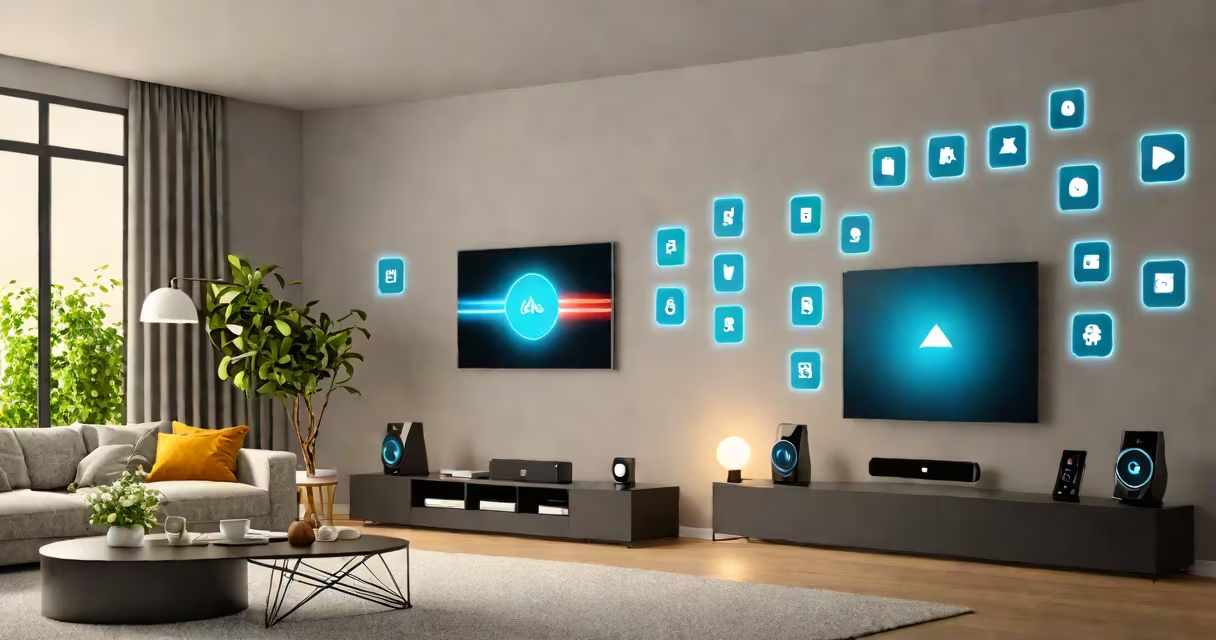
The best home control system centralizes management of lighting, temperature, security, audio, video, and appliances through a single interface-typically a touchscreen, mobile app, or voice assistant. It automates routines, adapts to user behavior, and integrates with third-party devices using standardized protocols like Wi-Fi, Zigbee, or Z-Wave.
Home control systems differ from basic smart plugs or standalone apps by offering unified logic, scene programming, and centralized diagnostics. A well-designed system learns usage patterns-like dimming lights at 8 PM or adjusting the thermostat when motion is detected-and executes actions across multiple devices simultaneously.
For example, saying "Good night" to a compatible hub can turn off all lights, lock doors, lower the thermostat, and arm the security system-all in under 10 seconds. This level of coordination requires a central controller, not just individual device apps.
A home control system relies on a central processor-either a dedicated hardware hub or a cloud-based service-to interpret commands and send instructions to connected devices. The hub communicates via wireless protocols such as Wi-Fi, Bluetooth, Zigbee, or Z-Wave, each with trade-offs in range, power consumption, and reliability.
Devices connect to the hub either directly or through repeaters. For instance, a Zigbee door sensor sends signals to a hub that's also running a Z-Wave thermostat. The hub processes inputs-like a motion detection event-and triggers responses across the network, such as turning on hallway lights and sending a notification to a phone.
Advanced systems support custom automation rules. You can set a rule that turns on the porch light when the garage door opens between 6 PM and 10 PM, even if the garage door itself doesn't support automation. The system handles the logic, not the individual devices.
Home control systems fall into three categories based on architecture: proprietary, open-source, and hybrid. Proprietary systems like Control4 and Crestron offer high reliability and professional installation but come with higher costs and limited customization. Open-source platforms like Home Assistant run on local servers and allow full access to code and configuration files.
Hybrid systems blend both models. Apple HomeKit uses encrypted communication and supports third-party devices, but only those approved by Apple. Google Home and Amazon Alexa act as hubs for thousands of devices but rely on cloud processing, which raises privacy concerns.
| Type | Best For | Key Limitation | Example Systems |
|---|---|---|---|
| Proprietary | Whole-home integration, professional install | High cost, vendor lock-in | Control4, Crestron, Savant |
| Open-Source | Full customization, local control | Requires technical skill | Home Assistant, OpenHAB |
| Cloud-Based | Easy setup, wide device compatibility | Depends on internet, data privacy risks | Amazon Alexa, Google Home, Apple Home |
Each system uses different communication standards. Zigbee offers low power and mesh networking-ideal for battery-powered sensors-but requires a compatible hub. Z-Wave provides longer range and better wall penetration, though it's less common in newer devices. Wi-Fi is widely supported but drains batteries faster and can create network congestion.
Home control systems are most effective in homes with multiple automated devices. They reduce complexity by replacing dozens of apps with one interface. A family with smart thermostats, cameras, lights, and speakers benefits from a single dashboard showing live status and allowing group controls.
They're especially useful in multi-story homes or large properties. For example, a homeowner in Colorado uses a Control4 system to manage heating zones, outdoor lighting, and window shades. During winter storms, the system automatically closes storm shutters and adjusts indoor temperatures based on weather forecasts pulled from a local API.
Another non-obvious benefit is energy savings. According to a 2022 study by the U.S. Department of Energy, homes using integrated control systems reduced HVAC energy use by 12-18% compared to homes using standalone smart thermostats. The system optimizes schedules based on occupancy, weather, and historical usage patterns.
Many people mistake "smart home" for "home control system." A smart plug that turns on at 7 AM is smart-but not a control system. A control system orchestrates actions across multiple devices based on context, time, location, or user intent.
Another misconception is that voice assistants like Alexa are the core of a control system. While they provide convenient access, they don't replace the underlying logic engine. Alexa may turn on a light, but it doesn't know whether the house is empty or if the garage door is open. A proper control system checks conditions before executing commands.
I once tested a Home Assistant setup with 14 devices-door sensors, motion detectors, lights, and a smart lock. When I opened the front door at 11 PM, the system didn't just turn on the hall light-it checked if the alarm was armed, verified no motion was detected in the kitchen, and delayed the light for 15 seconds to avoid startling someone. That level of decision-making is rare in consumer-grade systems.
Consider a 3,200 sq ft home in Austin, Texas, equipped with a Home Assistant system running on a Raspberry Pi 4. The homeowner installed:
Using YAML configuration files, the homeowner created a "Morning Routine" that activates at 6:45 AM:
All actions execute within 8 seconds. The system logs each step and alerts the user if any device fails. This level of automation requires a central controller-not just a collection of apps.
When choosing the best home control system, prioritize reliability, integration depth, and local processing. Cloud-dependent systems fail during outages. Local systems like Home Assistant continue functioning even without internet.
For users who want simplicity and broad compatibility, Apple HomeKit offers strong encryption and easy setup. But for those seeking full control and long-term flexibility, open-source platforms deliver unmatched adaptability.
The best home control system isn't defined by brand or price-it's defined by how well it anticipates needs, coordinates devices, and operates reliably. Evaluate based on your home size, tech comfort, and desired automation depth.