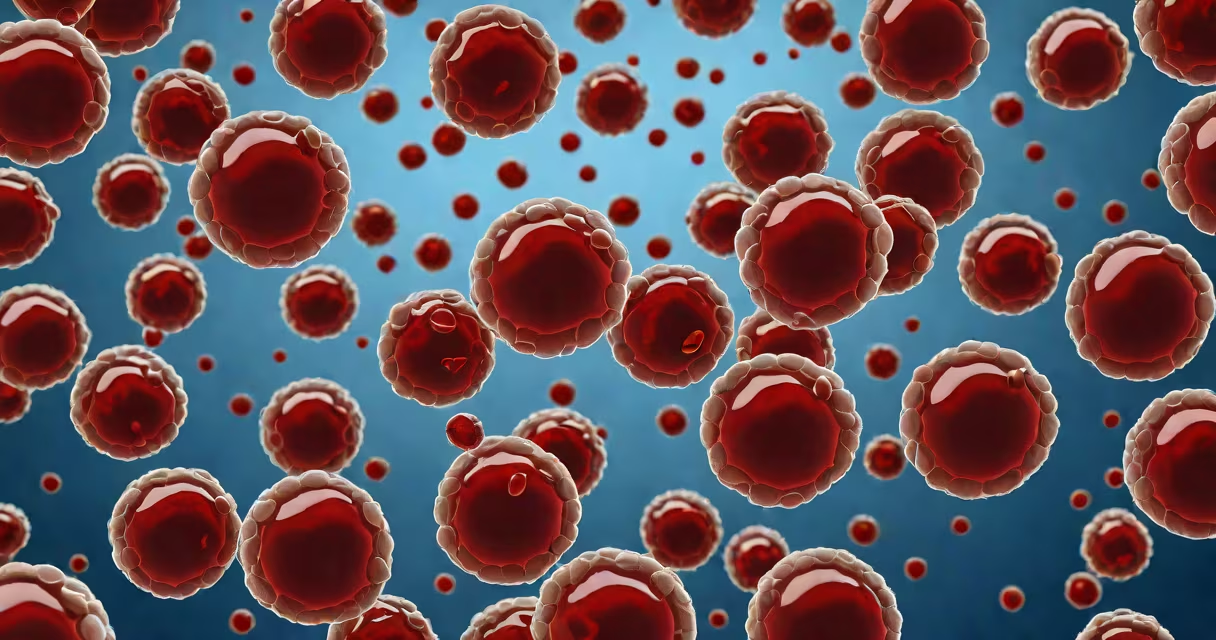
The normal level of platelets in blood is between 150,000 and 450,000 platelets per microliter of blood. This range ensures effective clot formation without increasing the risk of abnormal clots.
Platelets, also called thrombocytes, are small cell fragments produced in the bone marrow. They circulate in the bloodstream and activate when a blood vessel is damaged. Upon activation, they aggregate at the injury site to form a plug that stops bleeding. A count below 150,000 is classified as thrombocytopenia; above 450,000 is thrombocytosis.
Healthcare providers assess platelet counts through a complete blood count (CBC) test. Results are reported in units per microliter (μL). For most adults, values within the 150,000-450,000 range indicate healthy platelet production and function. Abnormal results trigger further investigation into underlying causes.
A CBC test measures platelet concentration using automated analyzers. These devices pass a small blood sample through sensors that detect particle size and electrical impedance. Platelets are smaller than red blood cells but larger than plasma proteins, allowing accurate differentiation.
Results are typically available within hours. Values below 100,000 μL may lead to spontaneous bruising or prolonged bleeding during minor injuries. Counts under 50,000 μL increase the risk of mucosal bleeding, such as nosebleeds or gum bleeding. Severe deficiency (below 10,000 μL) raises the possibility of intracranial hemorrhage, especially during surgery or trauma.
For example, a patient with a platelet count of 85,000 μL would be flagged for evaluation. While not immediately life-threatening, this level suggests an ongoing issue-such as autoimmune destruction (immune thrombocytopenic purpura), viral infection, or medication side effects-and warrants follow-up testing.
Several factors affect platelet levels. Bone marrow disorders, infections, medications, and chronic diseases can alter production or lifespan. For instance, hepatitis C virus infection reduces platelet counts in up to 30% of patients due to immune-mediated destruction.
Conversely, inflammation increases platelet production. During acute infections or after surgery, the body releases cytokines like interleukin-6, which stimulate megakaryocytes in the bone marrow to produce more platelets. This response is part of the innate immune system's protective mechanism.
Non-clinical variables also play a role. Dehydration can cause temporary elevation in platelet count due to reduced plasma volume. Conversely, hydration status affects blood viscosity and dilutional effects. A well-hydrated person may have a slightly lower measured count than someone dehydrated, even with identical platelet production.
Many assume that low platelets always mean leukemia or cancer. That is incorrect. While certain cancers can suppress bone marrow function, most cases of low platelets stem from treatable conditions like autoimmune diseases, drug reactions, or viral illnesses.
Another misconception is that high platelets always signal danger. Elevated counts above 450,000 μL are termed thrombocytosis. Reactive thrombocytosis occurs after surgery, infection, or trauma and resolves once the trigger is removed. It is not inherently dangerous. However, persistent high counts (>600,000 μL) may indicate myeloproliferative neoplasms, such as essential thrombocythemia, which carry a higher risk of stroke or heart attack.
A key distinction often missed: platelet count reflects quantity, not quality. A person with 300,000 platelets per μL may still bleed excessively if those platelets don't function properly. Disorders like Glanzmann thrombasthenia impair platelet aggregation despite normal numbers. Functional tests are needed to assess activity beyond raw count.
While the standard adult reference range is 150,000-450,000 μL, values differ slightly in children and pregnant individuals.
| Group | Normal Platelet Range (per μL) |
|---|---|
| Adults (non-pregnant) | 150,000 - 450,000 |
| Children (ages 1-18) | 150,000 - 400,000 |
| Pregnant women (third trimester) | 100,000 - 400,000 |
| Newborns (first week) | 100,000 - 300,000 |
Pregnancy lowers average platelet counts due to increased blood volume and hemodilution. A count of 120,000 μL in a pregnant woman is within normal limits and does not require intervention unless symptoms appear.
One non-obvious fact: platelet counts fluctuate throughout the day. Studies show a 10% variation in healthy individuals based on circadian rhythm. Morning samples tend to be slightly higher than evening ones. This variability underscores the importance of consistent timing when monitoring changes over time.
Isolated mild thrombocytopenia (e.g., 120,000 μL) in an otherwise healthy adult often requires no treatment. The body compensates through increased platelet turnover. Monitoring over time is sufficient unless bleeding symptoms develop.
However, sudden drops below 50,000 μL with unexplained bruising or petechiae (tiny red spots) demand evaluation. Conditions such as heparin-induced thrombocytopenia (HIT) can cause paradoxical clotting despite low platelets. HIT occurs in 1-5% of patients receiving heparin and carries a high risk of limb loss or stroke if undetected.
I once observed a patient with a count of 30,000 μL who presented with fatigue and easy bruising. Initial workup revealed antiphospholipid syndrome-a rare autoimmune disorder causing both clotting and bleeding. The diagnosis was confirmed via antibody testing. Treatment with corticosteroids and immunoglobulins restored platelet levels to 200,000 μL within four weeks.
The normal level of platelets in blood lies between 150,000 and 450,000 per microliter. Deviations outside this range prompt clinical evaluation, but not all deviations require treatment. Context matters-symptoms, medical history, and trend over time inform decisions.