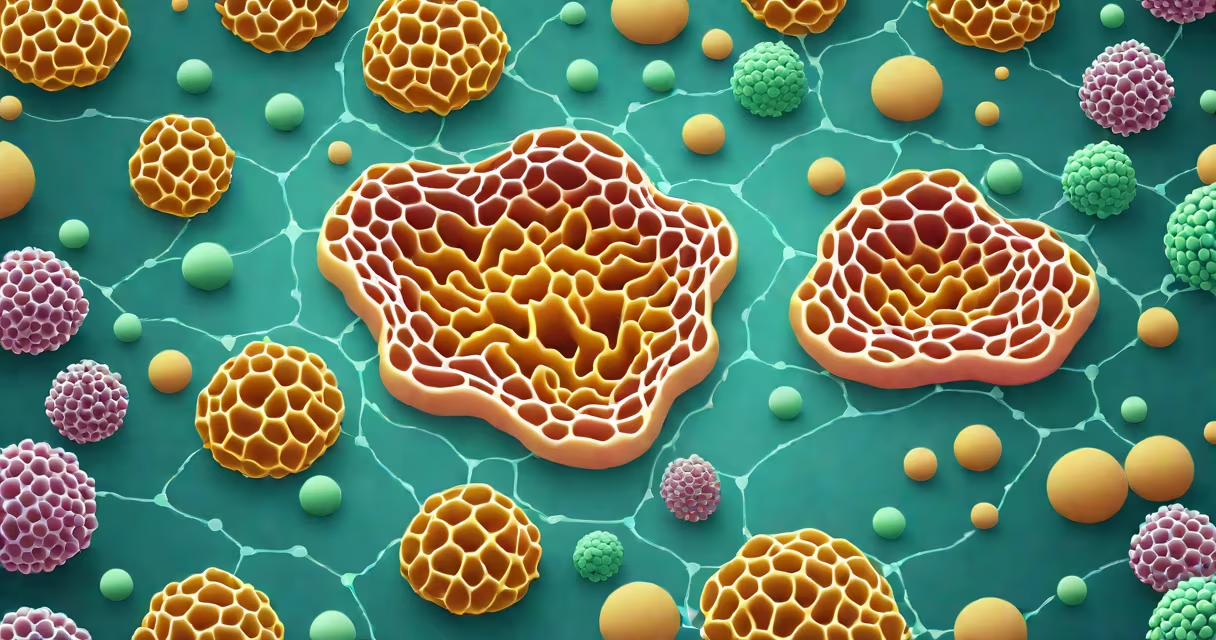
The endoplasmic reticulum (ER) is a network of membrane-bound sacs and tubules in eukaryotic cells that synthesizes proteins and lipids, modifies them, and transports them to other organelles or the cell surface. It exists in two forms: rough ER, studded with ribosomes, and smooth ER, lacking ribosomes.
Found in nearly all eukaryotic cells-from human liver cells to plant root cells-the ER is essential for maintaining cellular homeostasis. It spans the cytoplasm, connecting to the nuclear envelope and extending toward the plasma membrane. Its structure allows it to serve as both a factory and a delivery system for important molecules.
Two distinct regions perform specialized tasks. Rough ER produces transmembrane and secretory proteins, while smooth ER synthesizes lipids, detoxifies drugs, and stores calcium ions. These functions are critical in tissues with high metabolic demands, such as liver hepatocytes and muscle cells.
Rough ER begins when ribosomes bind to specific signal sequences on newly translated polypeptide chains. These sequences direct the ribosome to the ER membrane via the signal recognition particle (SRP). Once docked, the growing protein thread is threaded into the ER lumen through a protein-conducting channel called the Sec61 complex.
Inside the ER lumen, proteins fold into their correct three-dimensional shapes with the help of chaperone proteins like BiP and calnexin. Disulfide bonds form in oxidizing conditions maintained by enzymes such as PDI. Misfolded proteins are detected by the unfolded protein response (UPR), which triggers repair mechanisms or apoptosis if damage persists.
After folding, proteins are tagged with mannose-6-phosphate for lysosomal targeting or packaged into vesicles coated with COPII proteins. These vesicles bud off and travel to the Golgi apparatus for further modification and sorting. This process ensures precise delivery of functional proteins to their destinations.
The ER is divided into two structural and functional subtypes: rough ER and smooth ER. They differ in morphology, enzyme composition, and primary roles.
| Type | Structure | Key Functions | Cell Types Where Prominent |
|---|---|---|---|
| Rough ER | Stacked flattened sacs with ribosomes bound to the outer surface | Protein synthesis, glycosylation, quality control | Plasma cells, pancreatic beta cells, hepatocytes |
| Smooth ER | Tubular network without ribosomes | Lipid synthesis, steroid hormone production, calcium storage, drug detoxification | Hepatocytes, adrenal cortex cells, muscle fibers |
In liver cells, smooth ER increases in volume during exposure to barbiturates or alcohol, enhancing detoxification capacity. In contrast, pancreatic beta cells have extensive rough ER to support insulin production-up to 10 million insulin molecules per cell per day.
A non-obvious distinction: rough ER is not simply "ribosome-covered" ER. The ribosomes are transiently associated. When translation ends, ribosomes detach and return to the cytosol. This changing behavior prevents permanent structural changes and allows rapid adaptation to cellular demand.
Many assume the ER is a single continuous structure. In reality, it consists of discrete domains connected by membrane bridges. Electron microscopy shows that rough ER sheets are often separated from smooth ER tubules by narrow junctions, limiting free diffusion between compartments.
Another misconception is that all protein secretion goes through the ER. While most secretory and membrane proteins pass through the ER, some unconventional pathways exist. For example, certain cytokines like IL-1β bypass the classical ER-Golgi route and are released directly from the cytosol via exosome-like vesicles.
Some students confuse the ER with the Golgi apparatus. Both modify proteins, but the ER focuses on initial folding and glycosylation, while the Golgi performs complex carbohydrate modifications and sorts cargo. A key difference: the ER maintains a constant pH around 7.2, whereas the Golgi becomes progressively more acidic from cis to trans faces.
Consider cystic fibrosis. The disease results from mutations in the CFTR gene, leading to misfolded CFTR protein. This mutant protein fails quality control in the ER and is degraded by the proteasome before reaching the plasma membrane. As a result, chloride transport is impaired, causing thick mucus buildup in lungs and pancreas.
Pharmacological chaperones-small molecules that stabilize misfolded proteins-are being developed to rescue CFTR from ER degradation. Drugs like lumacaftor bind to the mutant protein, improving its stability and allowing partial trafficking to the cell surface. Clinical trials show improved lung function in patients treated with combination therapies.
Another example: in neurons, smooth ER plays a central role in calcium signaling. During synaptic transmission, voltage-gated calcium channels open, releasing Ca²⁺ into the cytosol. Smooth ER rapidly sequesters excess calcium via SERCA pumps, preventing excitotoxicity. Dysfunction in this system contributes to neurodegenerative diseases like Alzheimer's, where disrupted calcium homeostasis leads to neuronal death.
I observed this firsthand during a lab experiment using fluorescent dyes in cultured hippocampal neurons. When we blocked SERCA activity with thapsigargin, intracellular calcium levels spiked within seconds, triggering mitochondrial swelling and cell death. This confirmed the ER's role as a changing calcium buffer.
Defects in ER function are linked to over 60 genetic disorders, including Wolfram syndrome, congenital disorders of glycosylation, and some forms of hereditary neuropathy. These conditions arise from mutations in ER-resident enzymes or chaperones, disrupting protein folding or lipid metabolism.
Recent advances in cryo-electron tomography have revealed the three-dimensional architecture of the ER at near-atomic resolution. Researchers at the Max Planck Institute visualized the Sec61 translocon embedded in the ER membrane, showing how it opens and closes during protein translocation. This work, published in Nature in 2022, clarified long-standing questions about the mechanics of membrane protein insertion.
Understanding the ER is important for biotechnology. Recombinant protein production in mammalian cell lines relies heavily on optimizing ER capacity. High-yield antibody manufacturing in CHO cells requires engineering of ER chaperones and expansion of ER volume to prevent stress-induced apoptosis.
The endoplasmic reticulum is not a passive storage space. It is a changing, responsive organelle that integrates signals from the nucleus, cytosol, and extracellular environment. Its dual nature-rough for protein synthesis, smooth for lipid and ion regulation-makes it indispensable to eukaryotic life.
What is ER in biology? It is a central hub for biosynthesis, quality control, and communication within the cell. Without it, multicellular organisms could not maintain protein integrity, regulate calcium, or produce hormones. Its dysfunction underlies major diseases, making it a key focus in molecular medicine and synthetic biology.