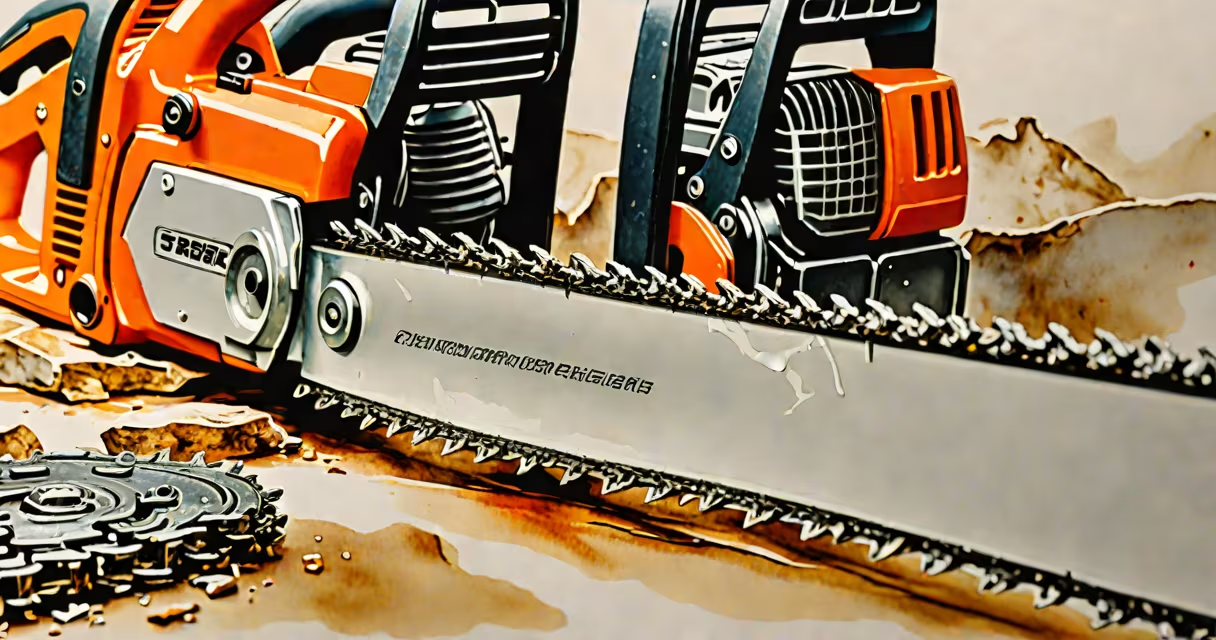
A chainsaw is a handheld power tool that uses a motor-driven chain with cutting teeth to slice through wood. It operates by spinning a continuous chain around a guide bar, which directs the cut and supports the chain during use. Chainsaws are designed for felling trees, limbing, bucking logs, and clearing brush.
The chain moves at high speed-typically 60 to 100 feet per second-driven by either gasoline or electricity. The chain's teeth engage the wood, removing small chips with each rotation. This process allows rapid cutting through dense hardwoods like oak or softwoods like pine. Modern chainsaws include safety features such as chain brakes and kickback protection to reduce injury risk.
Chainsaws are essential in forestry, logging, landscaping, and emergency response. They are used by professionals and homeowners alike. For example, a homeowner trimming a fallen tree after a storm may rely on a gas-powered chainsaw to remove branches safely. A professional logger uses a high-output chainsaw to fell large timber efficiently.
At the core of a chainsaw is a drive sprocket connected to a motor. As the motor spins, it turns the sprocket, which pulls the chain along the guide bar. The chain is made of hardened steel links with sharp, angled teeth spaced evenly around the loop. Each tooth bites into the wood, shearing off material as the chain rotates.
The guide bar holds the chain in place and guides it during cutting. It's typically made of steel and ranges from 10 to 20 inches in length. Longer bars allow deeper cuts but increase weight and handling difficulty. The bar also contains oil ports that deliver lubricant to the chain and bar interface, reducing friction and preventing overheating.
When the trigger is pulled, fuel (in gas models) or electricity (in electric models) powers the engine or motor. The engine drives the sprocket via a clutch system that engages only when the throttle is activated. This prevents the chain from moving unless the operator actively triggers the cut.
Chainsaws fall into three main categories based on power source: gas-powered, electric, and battery-operated. Each type suits different tasks and environments.
| Type | Power Source | Best For | Weight Range | Common Use Cases |
|---|---|---|---|---|
| Gas-Powered | Two-stroke internal combustion engine | Heavy-duty logging, long-duration work | 10-15 lbs | Felling large trees, remote area cutting |
| Electric | 110V AC or DC power supply | Light pruning, yard cleanup | 6-10 lbs | Homeowners, urban landscaping |
| Battery-Operated | Lithium-ion rechargeable battery | Portability, indoor or sensitive environments | 7-12 lbs | Tree trimming, emergency response, rooftop work |
Gas-powered chainsaws offer the most power and longest runtime. They're ideal for cutting thick logs or working in areas without electrical access. However, they require regular fuel mixing (gasoline and two-stroke oil), produce emissions, and are louder than electric models.
Electric chainsaws run on standard household outlets or extension cords. They're quieter, lighter, and emit no exhaust. But their range is limited by cord length. Cordless models eliminate the cord but depend on battery life. A 40-volt lithium-ion battery typically lasts 30 to 45 minutes under moderate use.
For example, a landscaper maintaining a suburban park might choose a 16-inch electric chainsaw for trimming shrubs and small branches. A firefighter responding to a storm-damaged tree near a power line would use a lightweight battery-powered chainsaw to avoid sparks and noise in a sensitive area.
Chainsaws are dangerous tools. According to the U.S. Consumer Product Safety Commission (CPSC), approximately 30,000 chainsaw injuries occur annually in the United States, with 70% involving hands or fingers. Many result from improper technique or lack of protective gear.
A common misconception is that chainsaws are only for professionals. While industrial-grade models exist, consumer-grade chainsaws are safe for experienced homeowners when used correctly. The key is training and adherence to safety protocols.
Another misunderstanding is that chain tension doesn't matter. Incorrect chain tension causes excessive wear, poor cutting performance, and increased risk of chain derailment. A properly tensioned chain should have about 1/8 inch of play at the center of the bar. Too loose, and the chain can jump off; too tight, and it wears out faster.
One non-obvious fact: chainsaws are designed to cut toward the operator, not away. This means the chain moves from the rear of the bar toward the front, pulling the saw into the cut. If the chain jams or kicks back, it can snap forward violently-especially near the tip of the bar. This is known as kickback, and it's responsible for many serious injuries.
I once witnessed a novice user attempt to cut a fallen branch with a gas chainsaw while standing directly behind the bar. The chain caught on a knot, causing violent kickback. The blade struck his forearm, requiring stitches. He had not worn gloves or chaps. This incident underscores why personal protective equipment (PPE) is mandatory.
Regular maintenance extends a chainsaw's lifespan and ensures safe operation. Most manufacturers recommend checking the chain, bar, and air filter after every 5 hours of use.
Chain sharpening is critical. A dull chain increases cutting time, burns more fuel, and raises the risk of binding. Use a round file and a depth gauge to restore the teeth. File each tooth at a consistent angle-typically 30 degrees-matching the manufacturer's specifications. After sharpening, adjust the chain tension to prevent slack.
Bar oil must be replenished regularly. Without lubrication, the chain and bar heat up rapidly, leading to warping or melting. Most chainsaws have automatic oilers that dispense oil as the chain rotates. Check the reservoir before each use. Use SAE 30 or ISO-L-HM 32 hydraulic oil-never engine oil or grease.
For example, a homeowner using a 14-inch electric chainsaw for seasonal tree trimming should clean the bar and chain after each session. Wipe away sawdust and debris with a rag. Inspect the chain for bent or missing teeth. Replenish the oil reservoir if low. These steps take less than five minutes but prevent costly repairs and accidents.
Proper storage matters too. Store chainsaws in a dry, cool place. Cover the bar and chain with a protective sleeve to prevent rust. Drain the fuel tank before long-term storage to avoid varnish buildup in the carburetor.
Understanding what is chainsaw involves knowing its mechanics, power options, safety risks, and upkeep. It's not just a cutting tool-it's a precision instrument that demands respect and preparation. felling a dead tree, the right chainsaw and proper care make all the difference.