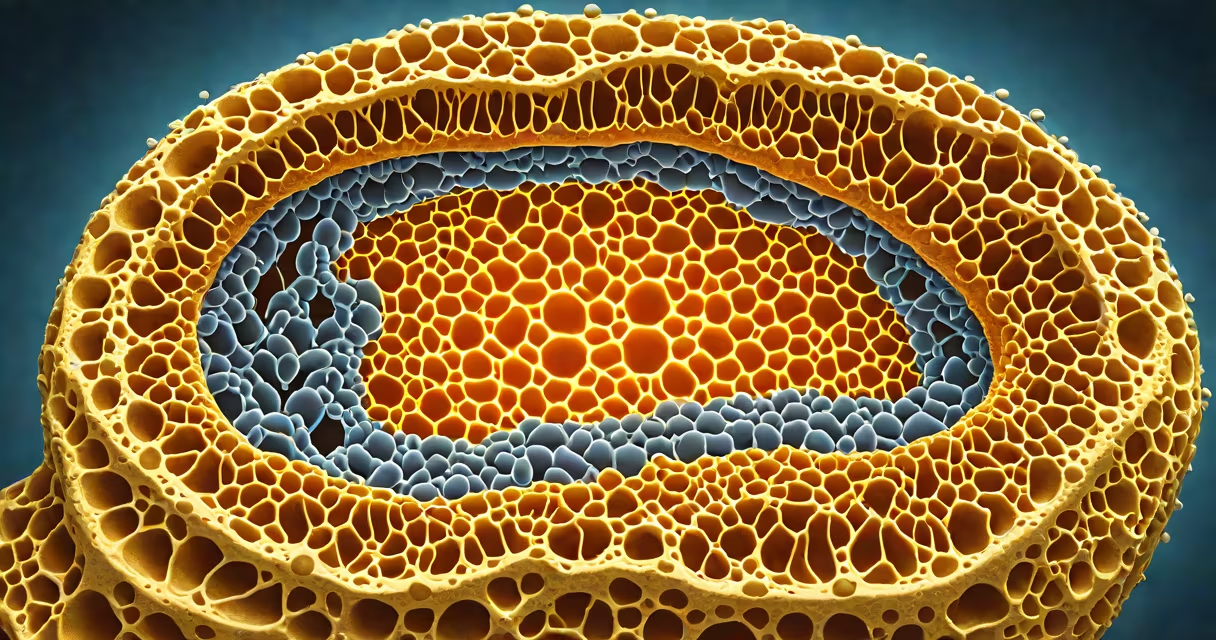
Each of your body's trillions of cells relies on mitochondria to generate most of their energy by converting nutrients into adenosine triphosphate (ATP), the primary fuel for cellular processes. These organelles are essential for survival, powering everything from muscle contractions to brain activity.
Mitochondria are often called the "powerhouses" of the cell because they produce ATP through a process called oxidative phosphorylation. This occurs in the inner membrane, where protein complexes form electron transport chains. Electrons move through these chains, pumping protons across the membrane to create a gradient. When protons flow back through ATP synthase, energy is captured to build ATP molecules.
For context, a single human liver cell contains about 1,000 mitochondria. Each mitochondrion can generate up to 1 million ATP molecules per minute under optimal conditions. Without this constant supply, cells fail within minutes. The heart, which requires high energy for continuous beating, contains more mitochondria per cell than almost any other tissue.
Inside each mitochondrion, the inner membrane folds into structures called cristae. These folds increase surface area, allowing more proteins involved in ATP production to be packed in. The matrix-the space inside the inner membrane-contains enzymes that break down glucose and fatty acids via the Krebs cycle, releasing electrons and carbon dioxide.
Electrons from food-derived molecules enter the electron transport chain at Complex I. As they pass through Complexes II-IV, energy is used to pump hydrogen ions (H⁺) from the matrix into the intermembrane space. This creates a proton gradient. When H⁺ flows back into the matrix through ATP synthase, the enzyme spins like a turbine, generating ATP from ADP and phosphate.
This entire process produces about 36 ATP molecules per glucose molecule. By comparison, glycolysis alone yields only 2 ATP. The efficiency of mitochondrial ATP production explains why complex animals evolved with high-energy demands-brains, muscles, and nervous systems depend on it.
Mitochondria consist of two membranes: an outer membrane that is porous and allows small molecules to pass freely, and an inner membrane that is tightly regulated and rich in proteins. The inner membrane contains over 100 different proteins, including those for the electron transport chain and ATP synthase.
The matrix houses mitochondrial DNA (mtDNA), a small circular genome inherited only from the mother. mtDNA encodes 13 proteins essential for oxidative phosphorylation, along with 22 transfer RNAs and 2 ribosomal RNAs needed to make those proteins. Because mitochondria have their own genetic system, they can synthesize some of their components independently of the nucleus.
When mitochondria malfunction due to mutations in mtDNA or damage to their membranes, cells suffer energy deficits. This links mitochondrial dysfunction to diseases such as Leigh syndrome, a severe neurological disorder affecting infants, and Parkinson's disease, where impaired mitochondrial function contributes to neuron death.
Many assume mitochondria burn fuel like a furnace. But they don't combust food-they use controlled electron transfers to avoid damaging reactive oxygen species (ROS). While ROS are byproducts, healthy mitochondria manage them with antioxidants like glutathione and superoxide dismutase.
Another myth is that mitochondria exist only in animal cells. They're also present in fungi, protists, and some plants-but not in all plant cells. For example, root cells in plants rely heavily on mitochondria, while photosynthetic leaf cells may derive much of their energy from chloroplasts. Still, even leaf cells need mitochondria at night or during stress.
A lesser-known fact: mitochondria can divide and fuse dynamically. They undergo fission (splitting) and fusion (merging) to maintain quality control. Damaged parts are isolated and removed via mitophagy-a selective autophagy process. This recycling prevents accumulation of defective mitochondria, which is linked to aging and neurodegeneration.
After consistent endurance training, skeletal muscle cells increase both the number and efficiency of mitochondria. A study published in Cell Metabolism found that trained individuals showed a 40% rise in mitochondrial density in muscle fibers after 12 weeks of cycling. This adaptation improved oxygen utilization and delayed fatigue.
One participant, a 35-year-old runner I observed during a 10K race, reported reduced leg burn during the final mile compared to six months prior. Blood tests confirmed higher levels of citrate synthase-an enzyme in the Krebs cycle-indicating enhanced mitochondrial function. His performance gain wasn't due to better technique but increased cellular energy capacity.
| Function | Description | Impact if Impaired |
|---|---|---|
| ATP Synthesis | Produces ~90% of cellular energy via oxidative phosphorylation | Cell death within minutes; organ failure in hours |
| Calcium Buffering | Regulates intracellular calcium levels | Neuronal hyperexcitability, seizures |
| Heat Production | Generates heat in brown fat via uncoupling protein 1 (UCP1) | Reduced thermogenesis; cold intolerance |
| Apoptosis Regulation | Releases cytochrome c to trigger programmed cell death | Uncontrolled cell growth; cancer risk |
These functions show mitochondria aren't just energy factories-they regulate life and death decisions in cells. Disruption in any one can lead to disease.
Understanding what your mitochondria do reveals why lifestyle choices like diet, exercise, and sleep directly affect cellular health. Energy production isn't passive-it's changing, responsive, and central to long-term wellness.