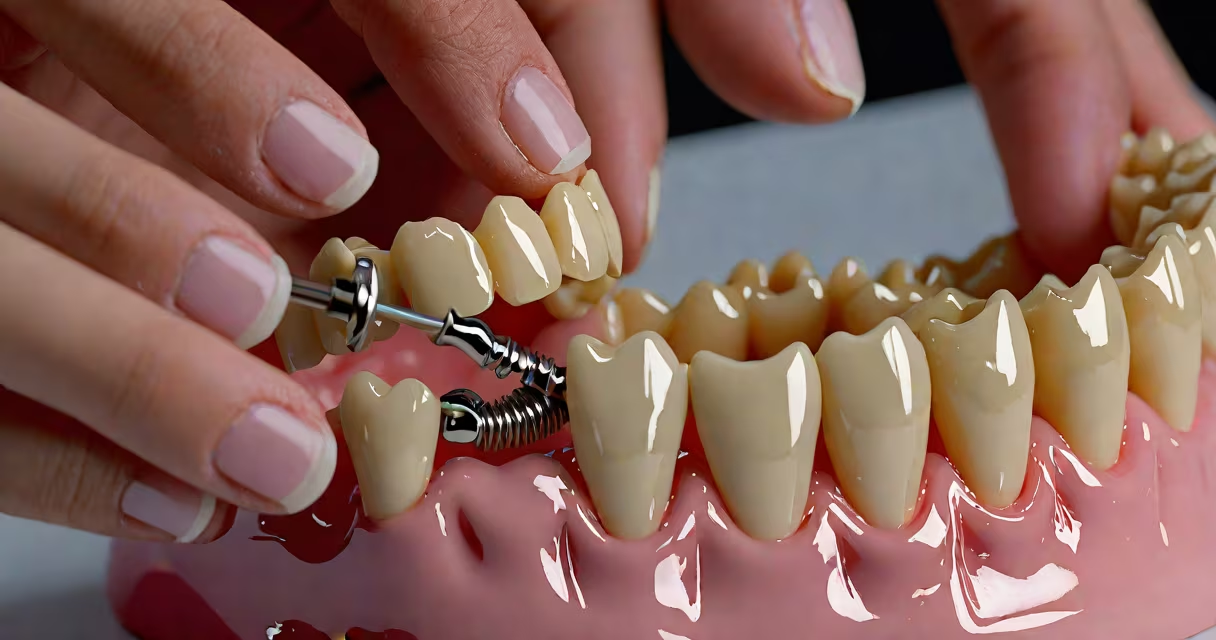
"Per arch" in dentures means the number of teeth or prosthetic units designed and fabricated for one side of the upper or lower jaw. This term is used in pricing, treatment planning, and prosthetic design to specify how many teeth are included in a single dental arch.
Dentures are typically made in two parts: one for the upper jaw (maxillary arch) and one for the lower jaw (mandibular arch). When a dentist or lab says "per arch," they're referring to the cost, materials, or tooth count associated with either the upper or lower set individually-not both together. For example, a quote of $1,200 per arch means $1,200 for the upper denture and another $1,200 for the lower, totaling $2,400 for a full set.
This term is essential in billing and communication between patients, dentists, and dental laboratories. Misunderstanding "per arch" can lead to unexpected costs. A patient assuming "$1,500" covers both jaws may be surprised to learn the fee applies to each side separately.
Dental prosthetics are custom-made using impressions of the patient's mouth. The maxillary and mandibular arches are treated independently because their shapes, bone structure, and muscle dynamics differ. The upper arch is typically larger and more curved than the lower, affecting how dentures fit and function.
When a lab technician creates a denture, they work on one arch at a time. Each arch receives its own set of artificial teeth, base material, and adjustments. The process includes wax try-ins, bite registration, and final polishing-all done separately for each arch. This ensures proper alignment, chewing efficiency, and comfort.
For example, a patient needing full dentures on both arches would receive two separate prostheses: one upper and one lower. If the lab charges $850 per arch, the total cost is $1,700. The patient must confirm whether the quoted price is per arch or for both. Some providers list "full dentures: $1,700" without clarifying the breakdown, leading to confusion.
There are several types of dentures, and "per arch" applies differently depending on the type:
| Type | Per Arch Application | Typical Tooth Count |
|---|---|---|
| Complete Dentures | Each arch is priced separately. Upper and lower sets are distinct. | 14-16 teeth per arch |
| Partial Dentures | Only the affected arch is replaced. Cost is based on missing teeth per arch. | 3-8 teeth per arch |
| Implant-Supported Dentures | Costs often listed per arch. May include 4-6 implants per arch. | 14-16 teeth per arch |
For partial dentures, the term "per arch" refers to the number of teeth being replaced on one side of the jaw. If a patient is missing five teeth on the lower left side, the repair is calculated per arch. The dentist may recommend a removable partial denture with a metal structure and clasps, priced per arch.
A common mistake is assuming that "per arch" means the entire set. In reality, it's a unit of measurement. A patient with only upper teeth missing would pay for one arch. If both arches are involved, the cost multiplies.
Many patients assume "per arch" means the full set of teeth. This is incorrect. "Per arch" is a standard industry term that divides treatment into manageable units. It's not a discount or a bundled offer-it's a pricing convention.
Another misconception is that "per arch" implies equal tooth counts. That's false. The number of teeth per arch varies by individual anatomy. A person with a narrow jaw may have fewer teeth in their denture than someone with a wider arch. The lab adjusts the tooth arrangement to match the patient's oral structure.
For example, during a consultation, a patient with a small lower jaw had only 12 teeth placed in their lower denture. The lab used smaller artificial teeth and adjusted spacing to avoid overcrowding. The charge was still $900 per arch, even though the tooth count was below average. This shows that "per arch" refers to the jaw segment, not the number of teeth.
I once observed a patient who scheduled a full denture appointment. The provider quoted $1,300 per arch. The patient assumed this covered both upper and lower. After signing the form, they were charged $2,600 total. They were shocked until we reviewed the contract and clarified the term.
The patient had a history of gum recession and bone loss, requiring custom-fit dentures. The lab created two separate models-one for the upper arch, one for the lower. Each required 14 teeth, custom-shaped to mimic natural wear patterns. The final dentures were tested for stability and speech clarity before delivery.
After the fitting, the patient reported improved chewing ability and confidence. But the initial misunderstanding highlighted how critical it is to define "per arch" in written agreements.
Prosthodontists use "per arch" to plan treatment precisely. It allows them to assess bone volume, tissue health, and occlusion (bite) for each jaw independently. This ensures better long-term function and reduces the risk of sore spots or denture failure.
According to the American College of Prosthodontists, proper denture design requires individualized assessment of each arch. A 2022 clinical guideline emphasized that treating both arches simultaneously increases success rates when each is evaluated separately.
Insurance and Medicare often reimburse based on per-arch services. For example, Medicare Part B covers one complete denture per year, with reimbursement split per arch. A patient receiving a denture for the upper arch gets a separate payment from the lower, even if both are completed in one visit.
"Per arch" in dentures means the cost, design, or tooth count applies to one side of the jaw-either upper or lower-individually. It is not a combined rate. Always confirm whether a quoted price includes both arches or applies per side. Understanding this term prevents financial surprises and supports informed decisions.