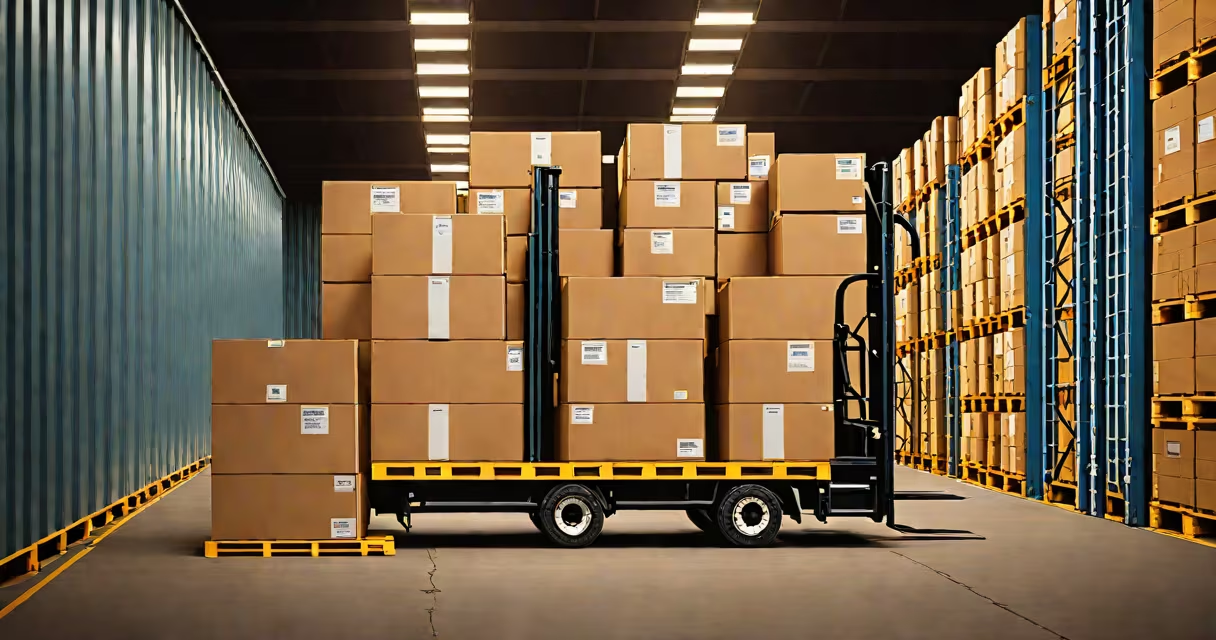
Less than truckload (LTL) shipping refers to transporting freight that doesn't require a full semi-truck trailer, typically under 15,000 pounds. Carriers consolidate multiple shipments from different shippers into one load, optimizing space and reducing costs. This method is standard for businesses sending medium-sized freight that won't fill a full truck.
LTL shipping operates on a hub-and-spoke model. Shipments are picked up from origin points, routed through central distribution hubs, sorted, and then dispatched to final destinations. This system allows carriers to combine freight from dozens of customers into a single trailer, improving efficiency and lowering per-unit transportation costs.
For example, a furniture manufacturer in Ohio ships 3,000-pound pallets of dining tables to a retailer in Georgia. The load fits in a trailer but doesn't fill it. The carrier adds similar-sized shipments from other suppliers-electronics from Michigan, apparel from North Carolina-into the same trailer. All goods travel together until they reach regional sorting centers near their final stops.
When a business books an LTL shipment, the carrier assigns a unique tracking number and schedules pickup. The freight is weighed, measured, and categorized based on density, class, and handling requirements. Density determines how much space a shipment occupies relative to its weight-high-density items take up less space, which affects pricing.
Carriers use a standardized classification system called NMFC (National Motor Freight Classification). Each product is assigned a freight class from 50 to 500, with higher classes indicating greater value, fragility, or difficulty in handling. Class 50 is low-value, easy-to-handle freight like bricks; Class 500 is high-value, delicate items such as medical equipment.
Once sorted at a hub, the trailer is loaded onto a long-haul route. During transit, GPS trackers provide real-time location updates. Upon arrival at a destination terminal, the shipment is unloaded, inspected, and prepared for local delivery. Most LTL carriers offer guaranteed delivery windows and proof of delivery via digital receipts.
Not all LTL freight is the same. Shippers must understand the differences in freight types to choose the right service level and avoid unexpected charges.
| Type | Weight Range | Handling Needs | Typical Use Cases |
|---|---|---|---|
| Standard LTL | 100-15,000 lbs | Minimal special handling | Office supplies, consumer electronics, packaged goods |
| High-Density LTL | 100-15,000 lbs | Low space usage, moderate value | Metals, machinery parts, heavy tools |
| Special Handling LTL | 100-15,000 lbs | Temperature control, secure storage, liftgate required | Pharmaceuticals, perishables, high-value electronics |
One common mistake is assuming all LTL shipments move at the same speed. Standard LTL services average 3-5 business days for domestic U.S. routes. Expedited LTL options-available for an extra fee-can reduce transit time to 1-2 days. These are often used for time-sensitive deliveries like replacement parts for manufacturing lines.
A real-world example: A hospital in Denver ordered 120 surgical instruments from a supplier in California. The shipment weighed 4,500 pounds and was classified as Class 60 due to precision components. The shipper selected expedited LTL service. The carrier used a dedicated trailer with temperature monitoring and scheduled a liftgate at the hospital's loading bay. Delivery arrived in 48 hours, meeting the facility's urgent need.
Many people confuse LTL with full truckload (FTL) shipping. FTL means a shipper rents an entire trailer for a single shipment, usually over 15,000 pounds. FTL offers faster transit times and fewer handling events because the freight stays on one truck from origin to destination. LTL is more cost-effective for smaller loads but involves multiple transfers and longer delivery windows.
Another misunderstanding is that LTL is slower than air freight. While LTL is not as fast as air transport, it's cheaper and more sustainable. A 2023 study by the American Transportation Research Institute found that LTL freight emits 38% less CO₂ per ton-mile than air cargo, making it a preferred option for environmentally conscious shippers.
Some assume LTL is only for small businesses. That's incorrect. Major retailers like Walmart and Target rely heavily on LTL for inbound distribution. According to the U.S. Bureau of Transportation Statistics, LTL accounted for 42% of all domestic freight revenue in 2022, with large enterprises responsible for nearly 60% of volume.
For businesses managing supply chains, LTL offers predictable cost structures and scalability. Shippers pay only for the space and weight they use, not a full trailer. This flexibility supports seasonal demand spikes-e.g., holiday retail inventory-without locking into long-term truck contracts.
I've personally managed LTL shipments for a wholesale distributor during peak season. We processed over 200 LTL loads monthly across five states. Using a cloud-based freight management platform, we reduced transit delays by 27% and cut fuel surcharges by 18% through optimized routing and carrier selection.
Carriers also use changing pricing models. Rates fluctuate based on fuel prices, regional demand, and seasonality. For example, rates in December often rise 12-15% due to increased holiday shipping volume. Shippers who book early can lock in lower rates.
Understanding LTL shipping helps avoid hidden fees. Common extras include accessorial charges for liftgate delivery, inside pickup/delivery, or residential delivery. A shipment requiring a liftgate at a warehouse without a dock can incur a $75-$120 fee. Always confirm service details before booking.
For international shipments, LTL is rarely used. Cross-border freight typically moves via FTL or intermodal containers. However, some customs brokers offer LTL-like consolidation services for small-volume imports, combining multiple shipments into a single container to reduce duties and handling.
What does LTL shipping mean? It's a scalable, efficient way to move freight under 15,000 pounds using shared truck capacity. It balances cost, speed, and reliability for businesses of all sizes. With proper planning and awareness of service tiers, LTL reduces logistics friction and supports consistent delivery performance.