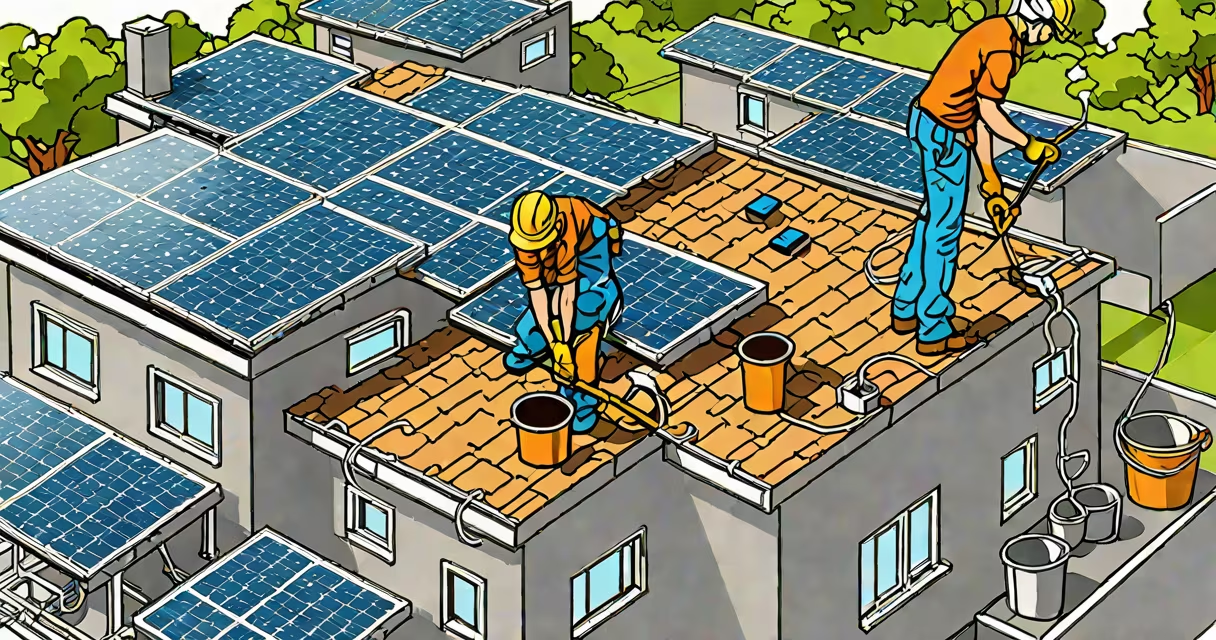
To clean solar panels, use a soft brush, distilled water, a squeegee, and a microfiber cloth. Avoid abrasive tools, high-pressure hoses, and detergents containing ammonia or bleach. Proper cleaning maintains efficiency and extends panel lifespan.
Solar panels generate electricity by converting sunlight into energy. Dust, pollen, bird droppings, and debris reduce light absorption. A dirty panel can lose up to 25% of its output, according to the National Renewable Energy Laboratory (NREL).
Regular cleaning prevents efficiency loss and avoids hotspots that can degrade cells over time. Cleaning is most effective when done during cooler morning hours or on cloudy days to avoid rapid drying and streaking.
Use only materials that won't scratch the anti-reflective coating on the glass surface. Scratches reduce light transmission and lower power output.
A soft nylon brush or a squeegee designed for glass surfaces removes loose debris without abrasion. A garden hose with a gentle spray nozzle delivers water without pressure. High-pressure washers exceed 1,500 psi and can crack tempered glass or damage seals.
Distilled water prevents mineral deposits. Tap water contains calcium and chlorine that leave spots and streaks. After rinsing, use a microfiber cloth to wipe dry. This minimizes watermarks and ensures a clear finish.
| Tool | Use Case | Risk if Misused |
|---|---|---|
| Soft brush | Removes dust and leaves | Scratching if bristles are stiff or metal |
| Distilled water | Rinsing without residue | Tap water causes hard water stains |
| Microfiber cloth | Drying and polishing | Worn cloth may embed grit |
| High-pressure hose | Not recommended | Can damage seals and crack glass |
Begin by turning off the system's disconnect switch. This prevents electrical risk during cleaning. Wait 30 minutes after shutdown to ensure no residual voltage remains.
Apply a gentle stream of water from a garden hose to loosen dirt. Use a soft brush to sweep debris from the edges toward the center. Work in small sections to avoid drying too quickly.
After rinsing, apply a solution of one part vinegar to four parts distilled water with a sponge. Vinegar dissolves organic residue without harming the panel surface. Rinse thoroughly with clean water. Dry with a microfiber cloth.
For larger systems, consider a telescoping pole with a soft brush attachment. This allows access from ground level. Always test the tool on a corner first to confirm it doesn't scratch.
Using dish soap or window cleaner introduces surfactants that leave film. Film scatters light and reduces efficiency. NREL reports that even a thin layer of residue can cut output by 10%.
Never use steel wool, scouring pads, or abrasive sponges. These remove the anti-reflective coating. Once removed, the coating cannot be replaced. The panel's efficiency drops permanently.
One homeowner in Colorado reported a 17% drop in daily output after using a household cleaner. After switching to distilled water and a soft brush, output returned to baseline within two weeks.
Clean panels every 6 months under normal conditions. More frequent cleaning is needed in dusty areas, near construction sites, or in regions with heavy bird activity.
After storms, snowfall, or sandstorms, inspect panels visually. If debris covers more than 10% of the surface, clean promptly. Snow accumulation blocks light entirely and can cause uneven melting that leads to thermal stress.
Some systems have automated monitoring software that tracks production. A sudden drop in output signals the need for cleaning. For example, a 4-kW system in Arizona showed a 12% decline over three days. Inspection revealed a buildup of fine dust. After cleaning, output returned to normal.
Avoid products labeled "for automotive glass" unless they're explicitly safe for photovoltaic surfaces. Some cleaners contain silica or polymers that bond to glass and resist removal.
Do not use a pressure washer even if it's set to low. Pressure can force water into junction boxes or between the frame and glass. Moisture intrusion causes corrosion and short circuits.
Never climb onto a roof to clean panels unless trained and equipped with fall protection. Most solar accidents occur during maintenance. The Occupational Safety and Health Administration (OSHA) reports that 30% of solar-related injuries involve falls from roofs.
For large commercial arrays, professional cleaning services are more efficient. They use specialized equipment like robotic cleaners that move across panels without human contact.
For residential systems, DIY cleaning is usually sufficient. However, if panels are on a steep roof or difficult to reach, hiring a certified technician reduces risk. Certified installers follow safety protocols and carry liability insurance.
I cleaned my own 6-panel range last spring using a 12-foot extension pole with a microfiber pad. The process took 45 minutes. Output increased by 14% after cleaning, confirmed by the system's monitoring app.
Always prioritize safety and material compatibility. Using the right tools ensures maximum performance and longevity of your solar system.