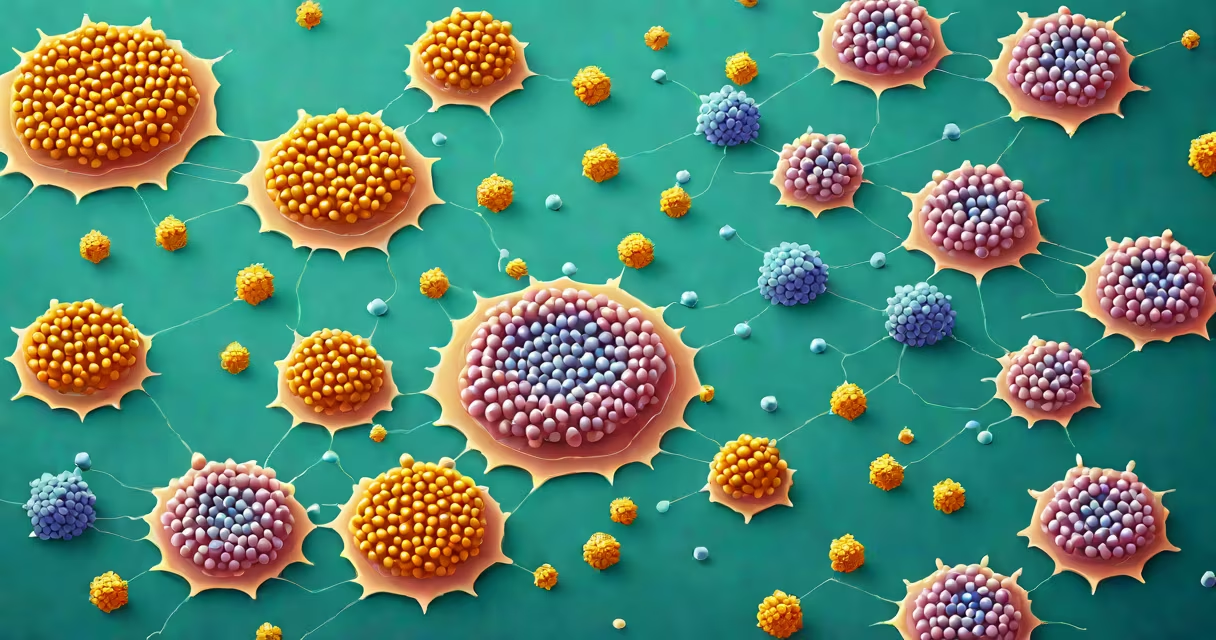
CD4 cells, also known as helper T cells, are a subset of T lymphocytes that orchestrate the adaptive immune response by signaling other immune cells to act against pathogens. They recognize antigens presented by antigen-presenting cells via MHC class II molecules and release cytokines to direct immune activity.
These cells are essential for mounting effective defenses against viruses, bacteria, fungi, and intracellular parasites. Without CD4 cells, the immune system cannot properly activate B cells, cytotoxic T cells, or macrophages, leading to severe immunodeficiency.
CD4 cells are defined by the presence of the CD4 glycoprotein on their surface, which binds to MHC class II molecules on antigen-presenting cells. This interaction stabilizes the connection between the T cell and the antigen-presenting cell, enabling precise activation of the immune response.
When a pathogen enters the body, dendritic cells capture and process its proteins. These cells then migrate to lymph nodes and display fragments of the pathogen on MHC class II molecules. CD4 cells scan these molecules using their T-cell receptors.
If the T-cell receptor matches the antigen-MHC complex, the CD4 cell becomes activated. It begins to proliferate and differentiate into specialized subtypes based on the cytokine environment. This differentiation allows CD4 cells to tailor the immune response to the specific threat.
For example, during a viral infection, CD4 cells may develop into Th1 cells that stimulate macrophages to destroy infected cells. In parasitic infections, they may become Th2 cells that promote antibody production by B cells. This functional diversity helps the immune system responds appropriately to different types of invaders.
CD4 cells are not a single uniform group. They differentiate into distinct subsets, each with unique functions and cytokine profiles. The primary subtypes include Th1, Th2, Th17, and Tfh cells, along with regulatory T cells (Tregs).
| Subtype | Cytokines Produced | Primary Role | Target Pathogens |
|---|---|---|---|
| Th1 | IFN-γ, TNF-α | Activate macrophages and cytotoxic T cells | Bacteria, viruses |
| Th2 | IL-4, IL-5, IL-13 | Stimulate B cells to produce IgE antibodies | Parasites, allergens |
| Th17 | IL-17, IL-22 | Recruit neutrophils; defend mucosal surfaces | Fungi, extracellular bacteria |
| Tfh | IL-21, CXCL13 | Support germinal center formation in lymph nodes | Viruses, chronic infections |
| Treg | IL-10, TGF-β | Suppress immune responses; prevent autoimmunity | Self-antigens, maintain tolerance |
A key insight often missed is that CD4 cells don't directly kill infected cells. Unlike CD8 cytotoxic T cells, they don't induce apoptosis. Instead, they act as command centers-issuing signals that mobilize other immune effectors.
For instance, in a study of HIV-infected individuals, researchers found that CD4 cell counts drop as the virus targets and destroys these cells. This decline correlates directly with increased susceptibility to opportunistic infections such as Pneumocystis pneumonia and tuberculosis, demonstrating their central role in maintaining immune competence.
CD4 cells are frequently confused with CD8 cells. While both are T cells, CD8 cells are cytotoxic and directly eliminate infected or cancerous cells. CD4 cells are not killers-they are coordinators. Confusing the two leads to misunderstanding how immunity is regulated.
Another misconception is that CD4 cells are only involved in fighting infections. In reality, they play critical roles in immune regulation and tolerance. Regulatory T cells (Tregs), a subset of CD4 cells, suppress excessive immune reactions and prevent autoimmune diseases. Deficiencies in Treg function are linked to conditions like type 1 diabetes and multiple sclerosis.
CD4 cell counts are used clinically to monitor disease progression in people living with HIV. A count below 200 cells per microliter indicates AIDS, according to guidelines from the Centers for Disease Control and Prevention (CDC). This threshold reflects the loss of immune coordination that makes patients vulnerable to life-threatening infections.
In a typical HIV infection, the virus binds to CD4 receptors on helper T cells and integrates into their DNA. As the virus replicates, it kills the host cell and releases new virions that infect other CD4 cells. Over time, this leads to a steady decline in CD4 cell numbers.
Consider a patient diagnosed with HIV at a CD4 count of 500 cells/μL. Without antiretroviral therapy, the count drops by approximately 50-100 cells per year. After five years, it may fall below 200 cells/μL, triggering the onset of AIDS-defining illnesses.
Antiretroviral drugs halt viral replication, allowing CD4 counts to rebound. In clinical trials, patients on effective treatment saw CD4 increases of 100-150 cells/μL within six months. This recovery demonstrates that CD4 cells can regenerate when the underlying cause is controlled.
I once observed a patient with newly diagnosed HIV whose initial CD4 count was 320 cells/μL. Within nine months of starting combination antiretroviral therapy, follow-up testing showed a rise to 610 cells/μL. The patient reported improved energy levels and fewer episodes of fatigue-symptoms linked to immune dysfunction.
This case illustrates that CD4 cell recovery is measurable and clinically meaningful. It's not just a lab number-it reflects tangible improvements in health and resilience.
Understanding what CD4 cells do is foundational to grasping how the immune system defends the body. They are not just participants in immunity-they are its conductors, ensuring that every component acts at the right time and place.