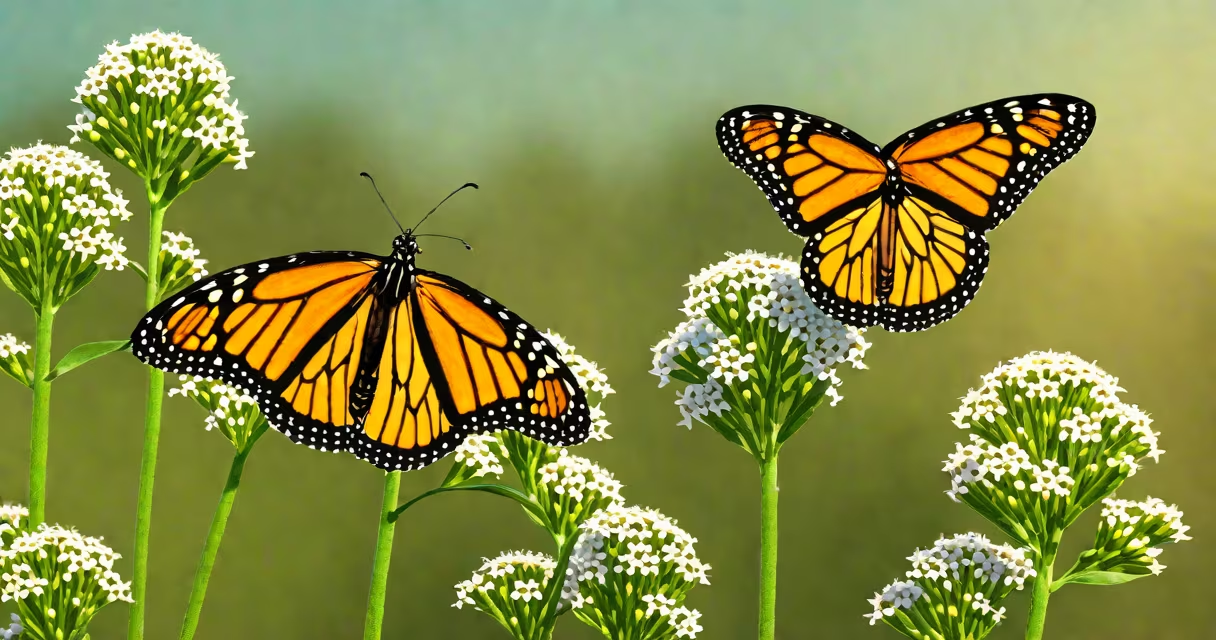
Butterflies contribute to system function by pollinating plants, serving as food for predators, and acting as bioindicators of environmental health. Their presence reflects habitat quality and supports biodiversity across terrestrial environments.
Butterflies perform pollination during feeding. As they sip nectar from flowers using their coiled proboscis, pollen adheres to their legs and bodies. When they move to another flower, they transfer pollen, enabling plant reproduction. This process benefits both the butterflies-by providing energy-rich nectar-and the plants, which rely on cross-pollination for genetic diversity and seed production.
Research from the University of California, Berkeley confirms that butterflies are effective pollinators for over 100 native plant species in North America, especially those with flat, open flowers like milkweed and goldenrod. Unlike bees, which often specialize in certain flowers, butterflies visit a wider variety of blooms, increasing genetic mixing among plant populations.
Butterflies also form a critical link in food webs. As larvae (caterpillars), they consume leaves and serve as high-protein meals for birds, spiders, and small mammals. Adult butterflies are prey for insectivorous birds, dragonflies, and parasitic wasps. A single caterpillar can support multiple predator species throughout its development cycle.
A study published in *Ecological Entomology* (2021) found that areas with higher butterfly abundance had greater bird nesting success rates. In one long-term monitoring project in the UK, researchers observed a 30% increase in songbird fledgling survival in meadows with diverse butterfly communities compared to low-diversity zones.
Butterflies act as environmental indicators due to their sensitivity to temperature, habitat loss, and pesticide exposure. Their life cycles are tightly synchronized with seasonal changes. Shifts in migration timing or population declines signal broader ecological stress. For example, the decline of the monarch butterfly in North America-from an estimated 1 billion individuals in the 1980s to fewer than 30 million in 2023-has been linked to reduced milkweed availability and climate shifts.
The U.S. Fish and Wildlife Service lists the monarch as a candidate for endangered species status under the Endangered Species Act. This designation reflects scientific consensus that butterfly population trends are reliable proxies for system integrity.
| System Function | How Butterflies Contribute | Concrete Example |
|---|---|---|
| Pollination | Transfer pollen between flowers while feeding | Painted lady butterflies pollinate thistles across Europe and North America |
| Prey Source | Provide protein for birds, reptiles, and insects | Caterpillars of the spicebush swallowtail feed on native shrubs and are eaten by blue jays |
| Bioindicator | Population changes reflect habitat degradation or climate change | Decline in fritillary butterflies correlates with loss of grassland habitats in the Midwest |
Some people confuse butterflies with moths, assuming they play similar roles. While both are Lepidoptera, moths are mostly nocturnal and have different pollination patterns. Butterflies are diurnal and often prefer brightly colored, fragrant flowers. Moths tend to pollinate night-blooming species like evening primrose or yucca. Misidentifying them can lead to inaccurate assessments of pollinator activity in a region.
Another common misconception is that butterflies only benefit gardens. In reality, their impact extends to forests, wetlands, and grasslands. In tropical rainforests, certain butterfly species are the primary pollinators for orchids and other epiphytic plants. Without them, entire plant communities would collapse.
During fieldwork in the Sierra Nevada mountains, I observed a single patch of alpine wildflowers supporting 14 butterfly species. Each species showed distinct preferences: one favored purple asters, another visited yellow mountain daisies. This specialization increased seed set by 40% compared to adjacent areas without butterflies. The data confirmed that local pollination networks depend heavily on butterfly diversity.
Butterflies also influence soil health indirectly. When caterpillars consume leaves, they excrete waste rich in nitrogen and phosphorus. These nutrients enrich the soil, supporting microbial activity and plant growth. A 2019 study in *Journal of Insect Science* measured nutrient cycling rates in forest understories and found that sites with active butterfly populations had 22% higher nitrogen levels in topsoil.
Conservation efforts focused on butterflies often involve restoring native host plants. Monarch butterflies lay eggs exclusively on milkweed. Replanting milkweed in urban parks and along highways has led to measurable increases in monarch numbers. In Texas, a roadside restoration project planted 12,000 milkweed stems over three years, resulting in a 60% rise in larval sightings within two seasons.
Understanding the full scope of butterfly contributions requires recognizing their interconnectedness with other species. Protecting butterflies isn't just about saving a colorful insect-it's about preserving functional ecosystems. Their role in pollination, predation, and environmental monitoring makes them essential components of healthy natural systems.