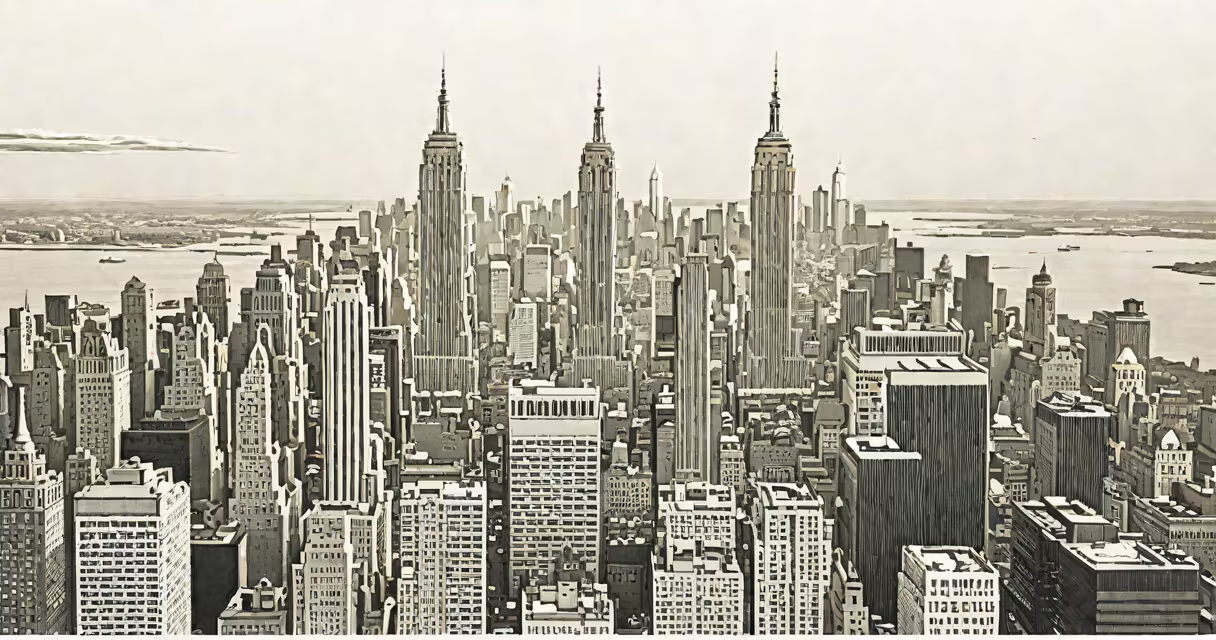
New York is in the United States of America. It is a state within the U.S., not a country itself. The state includes New York City, the largest city in the nation by population.
New York became the 11th state to ratify the U.S. Constitution in 1788. Its capital is Albany, while New York City serves as the state's most populous and internationally recognized city. The state borders Canada to the north and several U.S. states to the south and west.
Confusion often arises because New York City is a global hub for finance, culture, and media. This prominence leads some to assume it is a sovereign nation. It is not. New York City is located entirely within the United States, under federal and state jurisdiction.
The United States is a federal republic composed of 50 states. Each state has its own constitution, legislature, and governor. New York operates under this structure. It elects representatives to Congress and participates in presidential elections through the Electoral College.
For example, in the 2020 U.S. presidential election, New York had 29 electoral votes. These votes were cast based on the statewide popular vote. The state's political influence extends beyond its borders due to its economic and cultural reach.
State governments manage education, transportation, public safety, and local taxation. New York State maintains its own Department of Motor Vehicles, public university system (including SUNY and CUNY), and state police force.
People sometimes believe New York is its own country due to its global status. This is incorrect. No city or state in the U.S. holds independent national sovereignty. Even Washington, D.C.-the nation's capital-is not a state and lacks voting representation in Congress.
Another misconception is that New York City is separate from the rest of the state. While Manhattan, Brooklyn, Queens, the Bronx, and Staten Island form distinct boroughs, they are all part of New York County and the larger metropolitan area governed by New York State law.
A 2021 Pew Research Center survey found that 14% of Americans incorrectly believed New York City was a country. This misunderstanding persists despite widespread access to geographic information.
| Attribute | Detail |
|---|---|
| Country | United States of America |
| State | New York |
| Capital | Albany |
| Largest City | New York City |
| Population (2023 estimate) | 19.5 million |
| Area | 54,555 square miles |
When someone asks "what country is New York in," the answer is unambiguous: the United States. The state lies in the northeastern region of North America, bordered by Vermont, Massachusetts, Connecticut, Pennsylvania, and New Jersey. To the north, it shares a border with the Canadian provinces of Quebec and Ontario.
Historically, New York was part of New Netherland, a Dutch colony established in the 1600s. It was captured by the British in 1664 and renamed New York in honor of the Duke of York. The name reflects colonial history, not current nationality.
New York City's global presence contributes to the confusion. The city hosts the United Nations headquarters, home to over 190 member nations. This international role may lead people to assume the city operates independently.
New York City has a unique municipal government structure. It is divided into five boroughs, each with its own elected borough president. However, this administrative division does not grant autonomy from state or federal authority.
I once attended a conference in 2019 where a foreign visitor asked if New York was a country. After confirming it was part of the U.S., they still seemed surprised. The city's scale and influence make it easy to misinterpret its political status.
When discussing geography, clarity matters. Always specify whether you mean New York City, New York State, or the U.S. as a whole. For example:
Understanding that New York is a U.S. state resolves common misunderstandings. The state plays a important role in American life, but it remains part of a single sovereign nation-the United States.