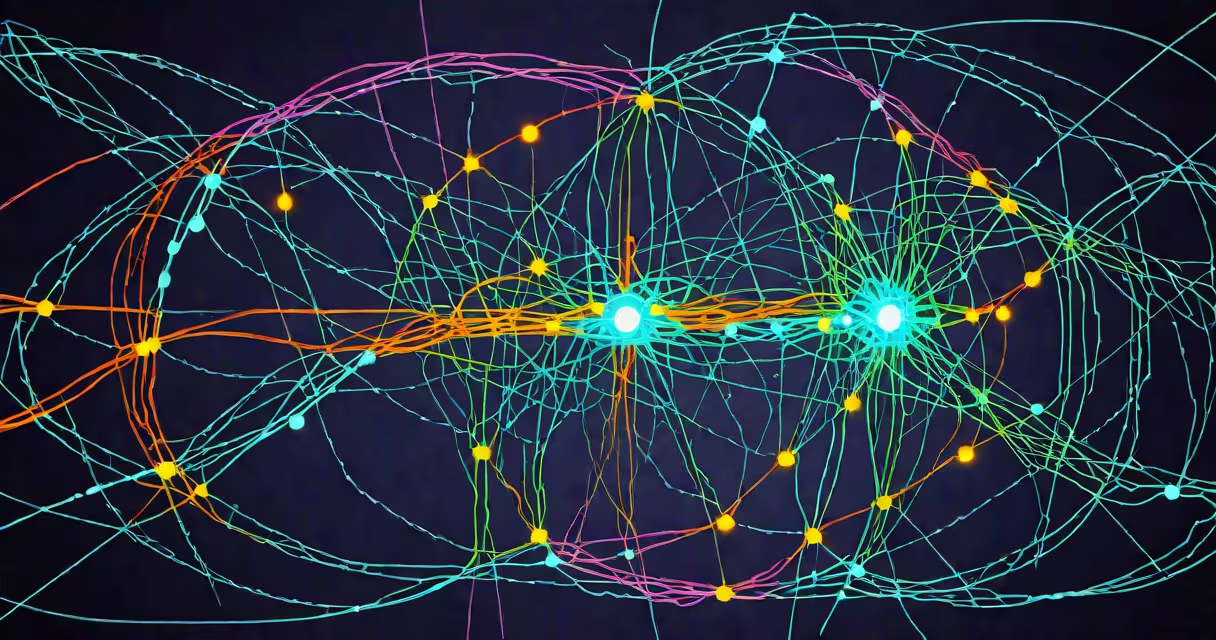
Electromagnetic fields result from electric charges in motion or from changing electric fields. They consist of interdependent electric and magnetic components that propagate through space as waves.
These fields originate from fundamental properties of charged particles. When electrons move-such as in an electric current-they generate both electric and magnetic fields. A stationary charge produces only an electric field. But once it accelerates or flows, a magnetic field emerges perpendicular to the direction of motion. This relationship is described by Maxwell's equations, the foundational laws of classical electromagnetism.
Electric fields exist around any charged particle, whether static or moving. Magnetic fields appear only when charges are in motion. Together, they form electromagnetic fields that can travel through vacuum at the speed of light (299,792,458 m/s). These fields carry energy and momentum, enabling technologies from radio transmission to medical imaging.
Electromagnetic fields are generated by accelerating electric charges. This acceleration disturbs the surrounding electromagnetic field, creating ripples that propagate outward as electromagnetic radiation. For example, electrons oscillating in an antenna emit radio waves. Similarly, electrons dropping between energy levels in atoms release photons-packets of electromagnetic energy.
Every time an electric current flows through a conductor, such as a copper wire, it generates a magnetic field encircling the wire. The strength of this field depends on the current magnitude and distance from the wire. This principle underlies electromagnets, electric motors, and transformers.
A changing electric field also induces a magnetic field, even in the absence of physical current. This displacement current term was added by James Clerk Maxwell to complete his set of equations. Without it, electromagnetic waves couldn't sustain themselves in free space. This insight unified electricity, magnetism, and light into a single theory.
Electromagnetic fields are categorized by frequency and behavior. The spectrum ranges from extremely low-frequency (ELF) fields to gamma rays, with visible light occupying a narrow band in between.
| Field Type | Frequency Range | Source Example | Common Use |
|---|---|---|---|
| Static fields | 0 Hz | Permanent magnets, DC power lines | Refrigerator magnets, MRI machines |
| Extremely low frequency (ELF) | 3-300 Hz | Power lines, household wiring | Electrical distribution systems |
| Radiofrequency (RF) | 3 kHz - 300 GHz | Cell towers, Wi-Fi routers | Wireless communication |
| Visible light | 430-750 THz | Sunlight, LED bulbs | Human vision, photosynthesis |
| X-rays | 30 PHz - 30 EHz | Medical imaging tubes | Diagnostic radiology |
Static fields do not vary over time and are produced by permanent magnets or steady currents. ELF fields fluctuate slowly and are associated with AC power systems. RF fields are used in wireless devices and broadcast signals. Higher frequencies like infrared, visible, ultraviolet, X-rays, and gamma rays involve increasingly energetic photons capable of ionizing atoms.
Non-ionizing radiation (radio waves to visible light) lacks enough energy to break molecular bonds. Ionizing radiation (UV and above) can damage DNA and is regulated for safety. The International Commission on Non-Ionizing Radiation Protection (ICNIRP) sets exposure limits based on scientific evidence.
Many assume all electromagnetic fields are harmful. This is incorrect. Natural sources like Earth's magnetic field and sunlight produce EMFs essential for life. Human-made sources such as cell phones and microwaves operate within safety standards established by organizations like the World Health Organization (WHO).
Another misconception is that electromagnetic fields require a medium to travel. Unlike sound waves, electromagnetic waves propagate through vacuum. Light from stars reaches Earth across 150 million kilometers of empty space. This property enables satellite communication and deep-space observation.
Some confuse electromagnetic fields with radiation. All electromagnetic fields are radiation when they propagate. However, not all radiation is dangerous. Radio waves are radiation but pose no known health risk at typical exposure levels. The danger depends on intensity, duration, and frequency.
Consider a 60 Hz power line carrying 1,000 amps. The electric field near the line measures approximately 1,000 volts per meter at ground level. The magnetic field strength is about 1.6 microtesla at 10 meters away. These values fall well below ICNIRP guidelines (5,000 V/m and 200 µT for public exposure).
Despite widespread concern, epidemiological studies have not confirmed a causal link between power-line EMFs and cancer. The WHO classifies ELF magnetic fields as "possibly carcinogenic" based on weak statistical associations-not biological mechanisms. This classification reflects uncertainty, not proven harm.
I once measured EMF levels near a residential substation using a calibrated gaussmeter. At 15 meters, the magnetic field was 0.8 µT-well below the 200 µT limit. The electric field was 300 V/m, still far below the 5,000 V/m threshold. Both readings were consistent with background urban levels.
Electromagnetic fields are not forces. They are conditions in space that exert force on charged particles. A field exists independently of a test charge. The force appears only when a charge is placed in the field. This distinction is important in understanding how EMFs influence matter.
For example, a compass needle aligns with Earth's magnetic field because the field exerts torque on the needle's internal magnetic domains. The field itself is invisible; its effect is observable. Similarly, a charged particle entering a magnetic field experiences deflection-but the field remains unchanged.
Maxwell's equations describe how fields evolve over time and space. They predict wave propagation, interference, and diffraction-all phenomena confirmed by experiment. These laws remain valid from radio waves to gamma rays.
Understanding what causes electromagnetic fields begins with charge and motion. From household appliances to cosmic rays, every EMF traces back to these principles. The behavior of light, radio signals, and medical scanners all stem from the same underlying physics.